Getting Steamed Up at Bugsworth Basin

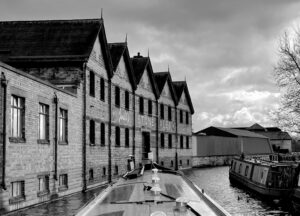
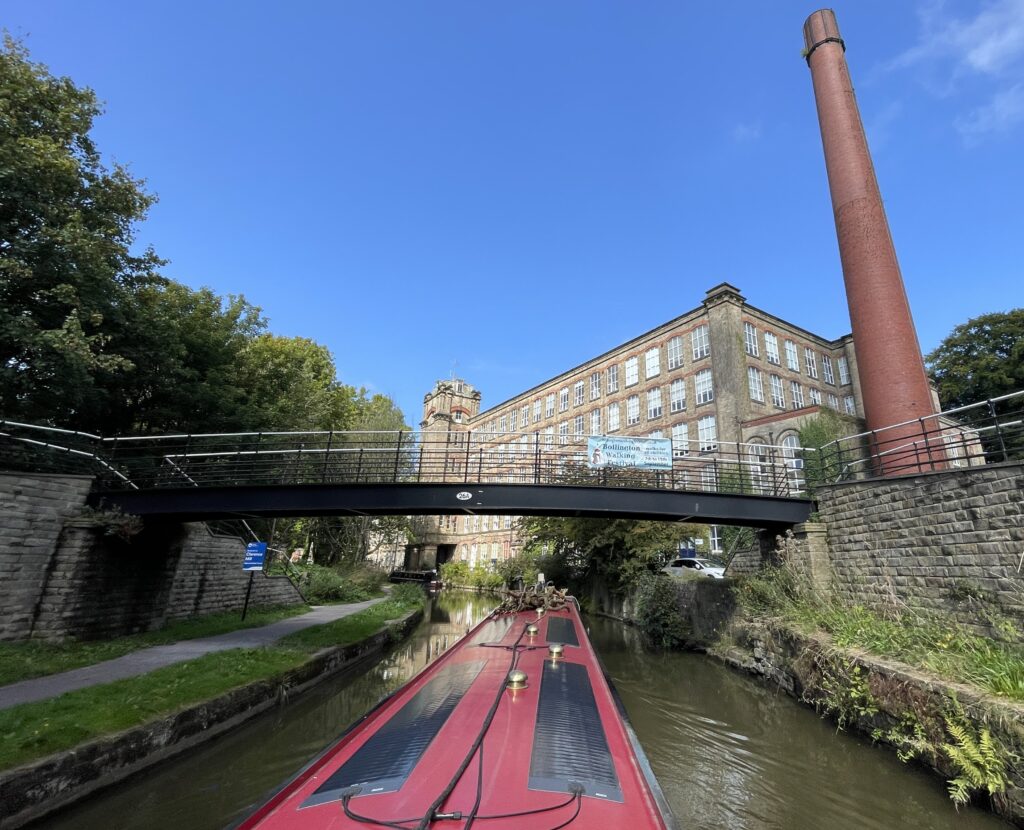
Clarence Mill on the Macclesfield Canal
Marple junction – turning on to the Peak Forest Canal

It already seems like a lifetime since we were driving around the North Yorkshire coast in the motorhome. We’ve spent the last few weeks back home on the boat dawdling our way up the Macclesfield Canal towards Marple. However, we did put a sudden spurt on when we noticed that the water level had dropped and heard of a leak further up. This is a summit level of just over 23 miles, so it wasn’t a little leak! You can forgive us for being slightly paranoid about getting stuck after last winter’s escapades.

Canal River Trust engineers stabilising the water level and working on the leaking sluice
Cheeky mallard

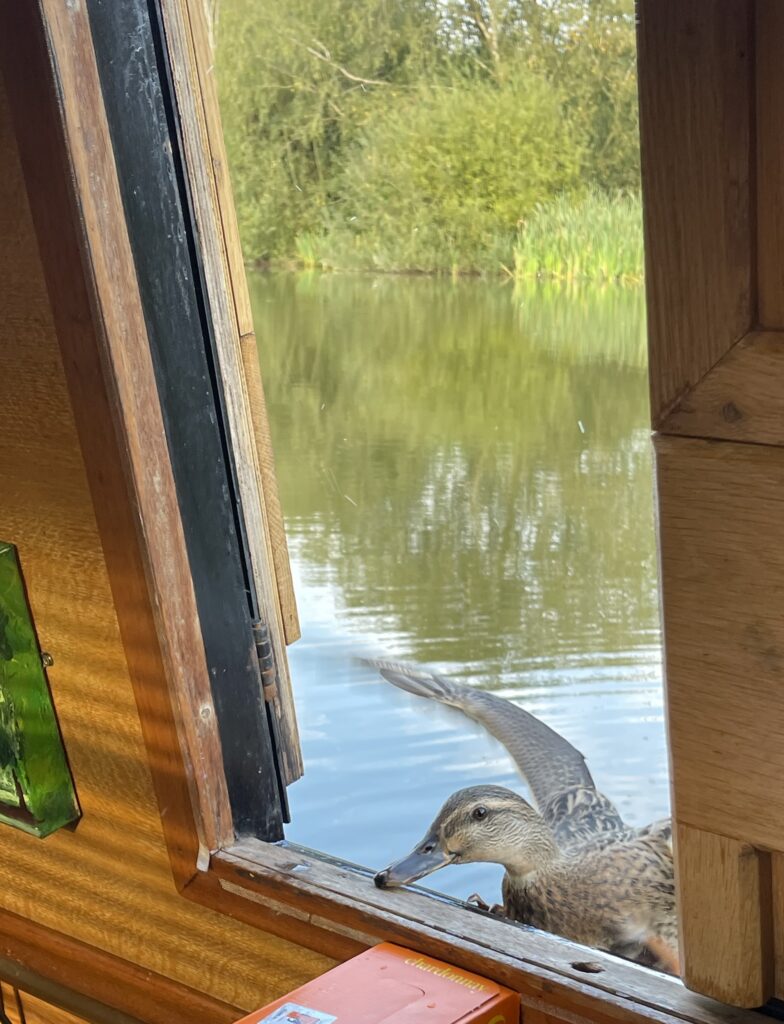
Having got past the leak we relaxed a bit and stopped on a wide reach (like a little lake) at Higher Poynton where I spotted a Kingfisher and made friends with a cheeky duck who kept flapping up into the side hatch (aka duck hatch!!).
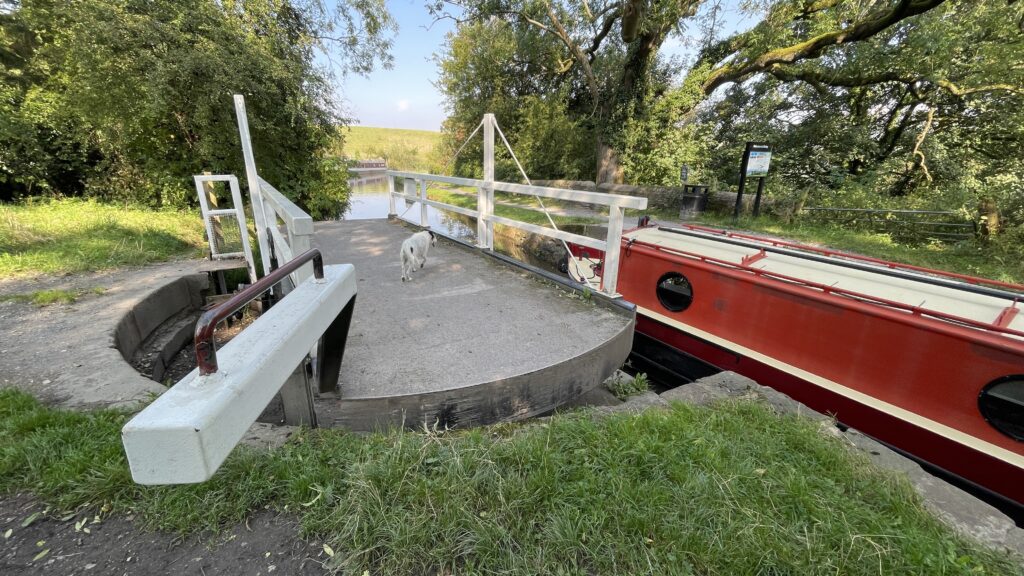


Higgins Clough Swing Bridge, Disley

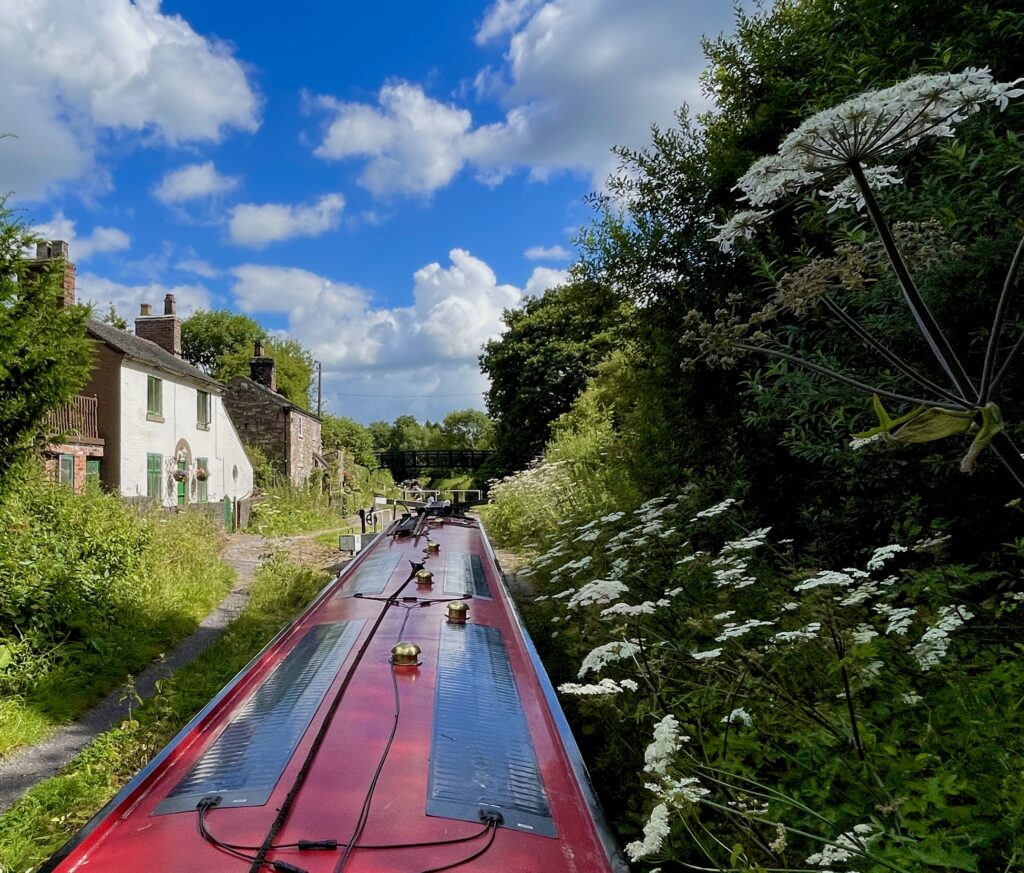
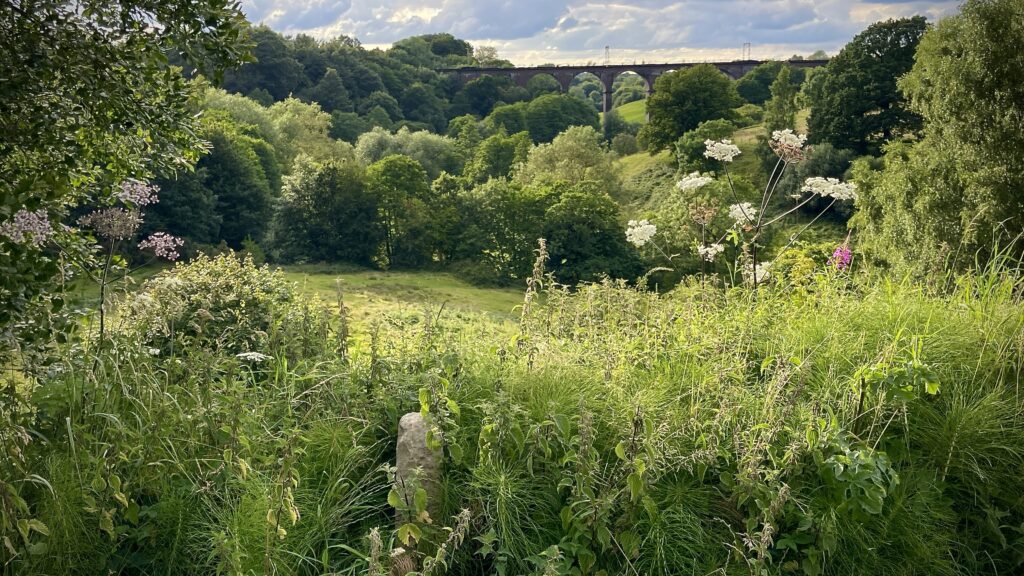
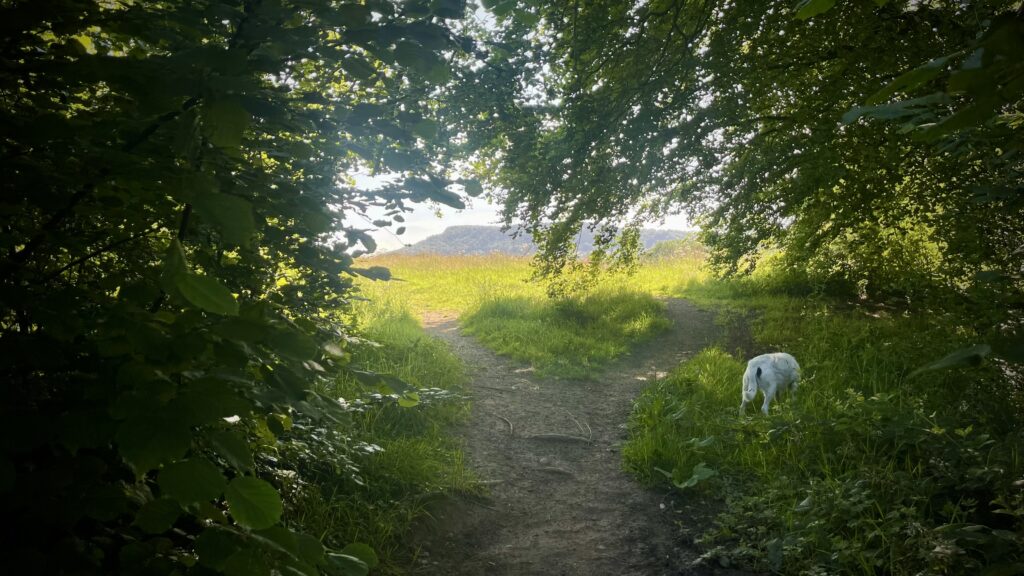
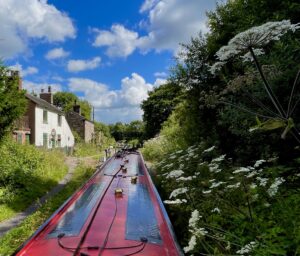
We trundled on through the swing bridges of the Peak Forest Canal, stopping for a few days for Ian to go on his barefoot wanders. The Millenium Walkway at New Mills is quite dramatic and was well worth the walk.
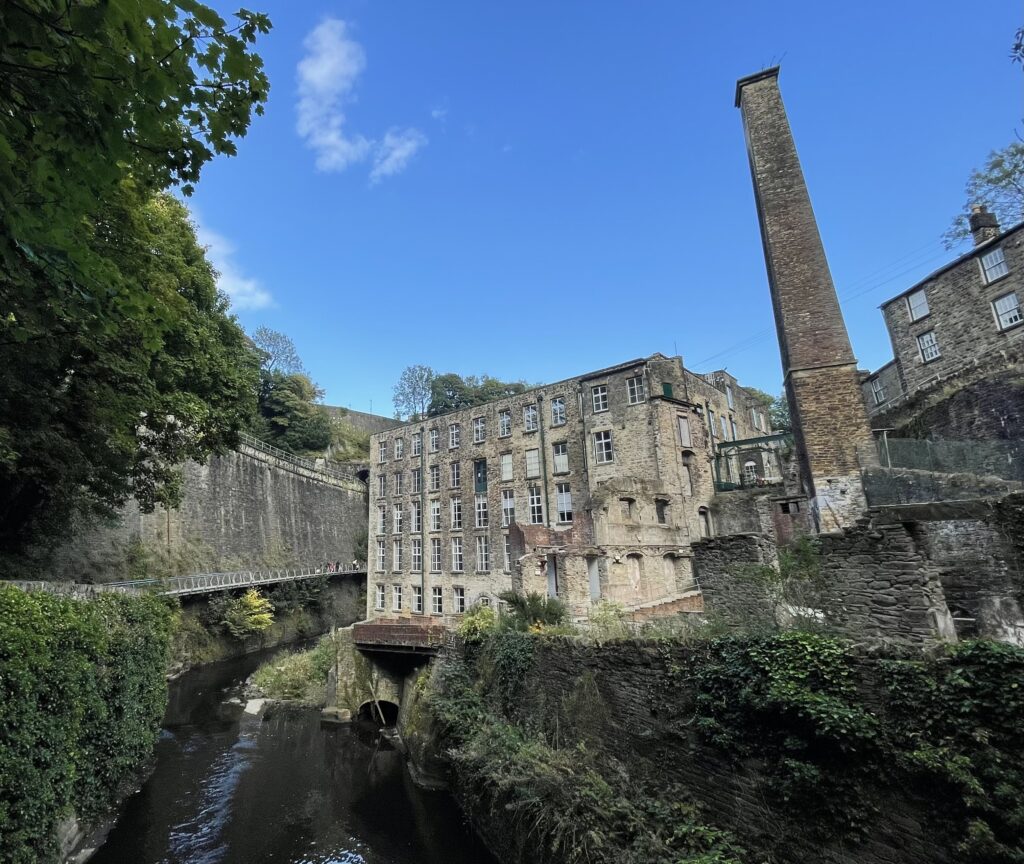
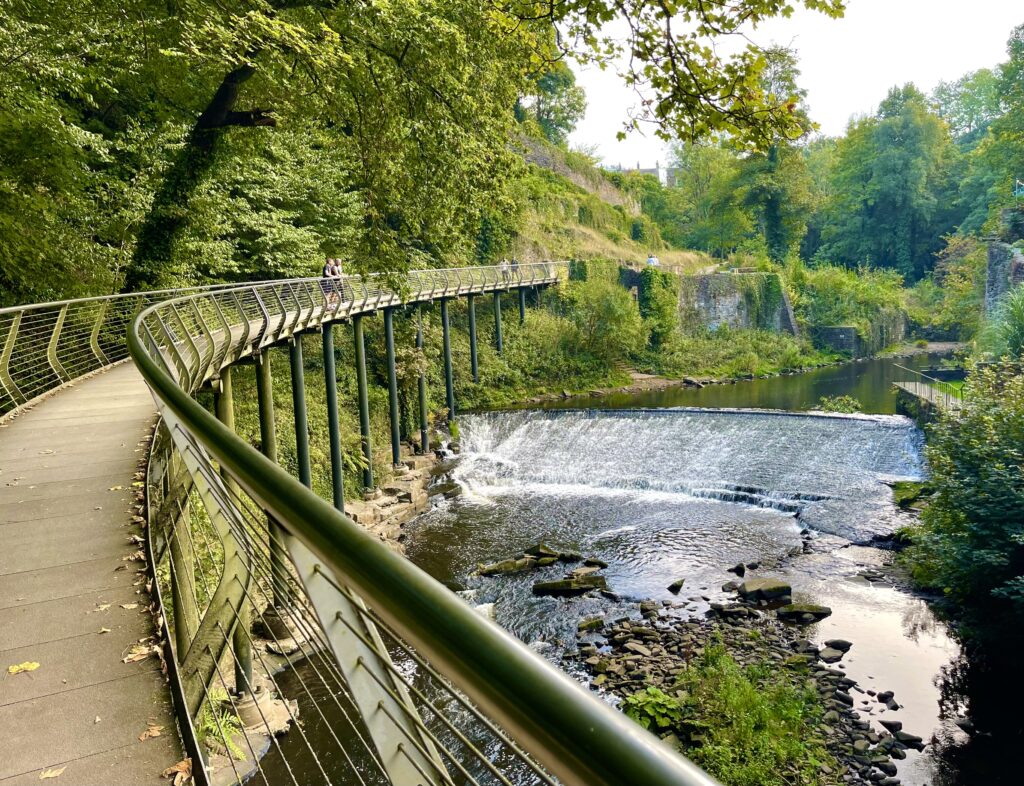
New Mills and the River Goyt
The Millennium Walkway in New Mills

Finally, we made it to our destination at Bugsworth Basin, a true favourite of ours, as it’s not every day that you get to moor up in an ancient monument! The basin was constructed at the end of the 1700s and has multiple arms that originally provided access to wharves and tramways. It was the navigable hub that linked the local quarries with the industries of the North West.
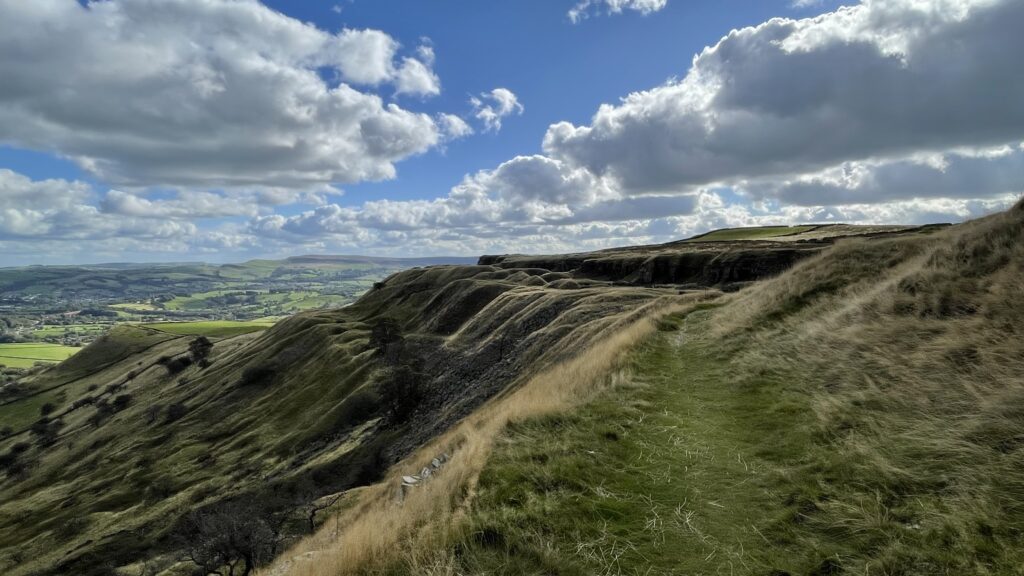
The carved out hillside of Chinley quarries above Buxsworth

Limestone for construction and architectural sculpture, gritstone for grinding and tonnes and tonnes of lime that was used everywhere, from farming to toiletries. Limestone is so versatile that I doubt the Victorian Industrial Revolution could have happened without it. Demand was high for these raw materials and in its hey day, there used to be around 160 working boats milling around the basin.

Bugsworth Basin in the 1800s
Moorings along the main arm of Bugsworth Basin

By today’s standards, I think the basin is looking busy, with about 30 boats moored up. And I’ve learnt a new word this week, Wharfinger, an archaic term for the keeper or owner of a wharf or dock. (If I’d read The Pickwick Papers by Charles Dickens, I would have known what a Wharfinger was). This person was responsible for the day-to-day activities including the maintenance and provision of the channels, docks, quaysides, slipways, berths, providing tide tables (where appropriate), resolving disputes and to warn of any latent hazards in the vicinity. Now more commonly known as … the Harbour Master. Bear in mind that during the 1800s, Bugsworth Basin was known as the largest inland port in the country.
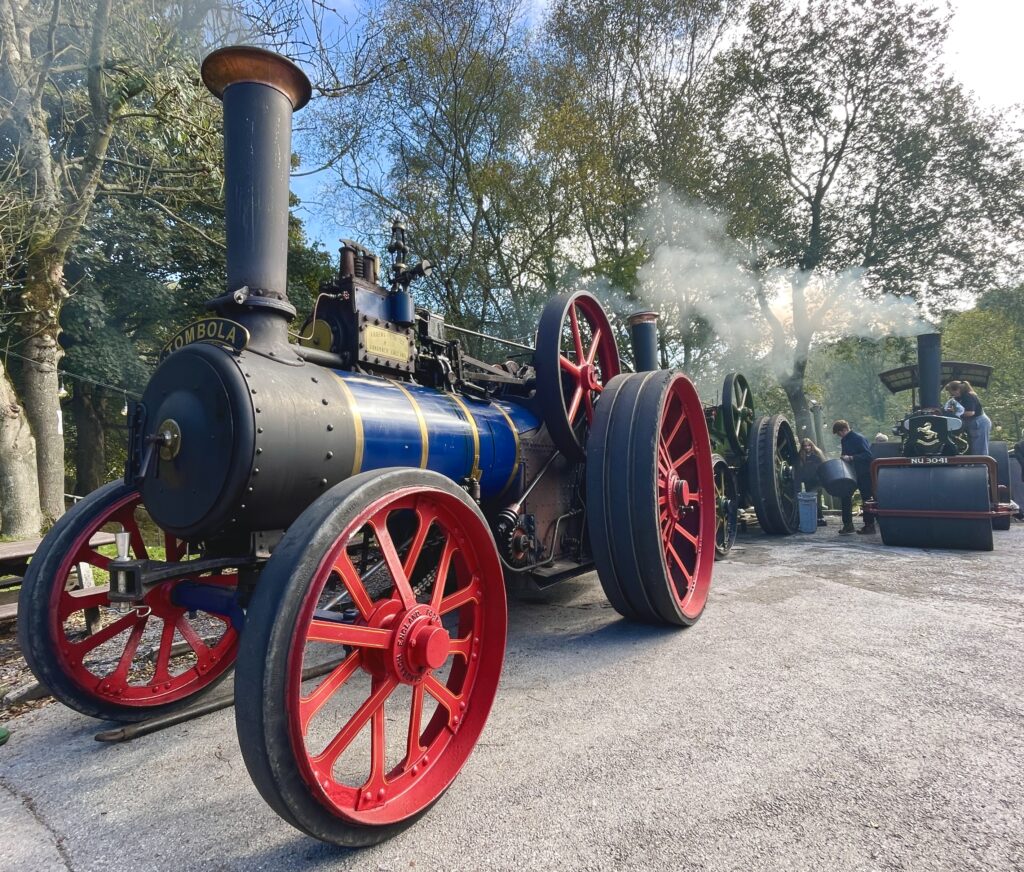
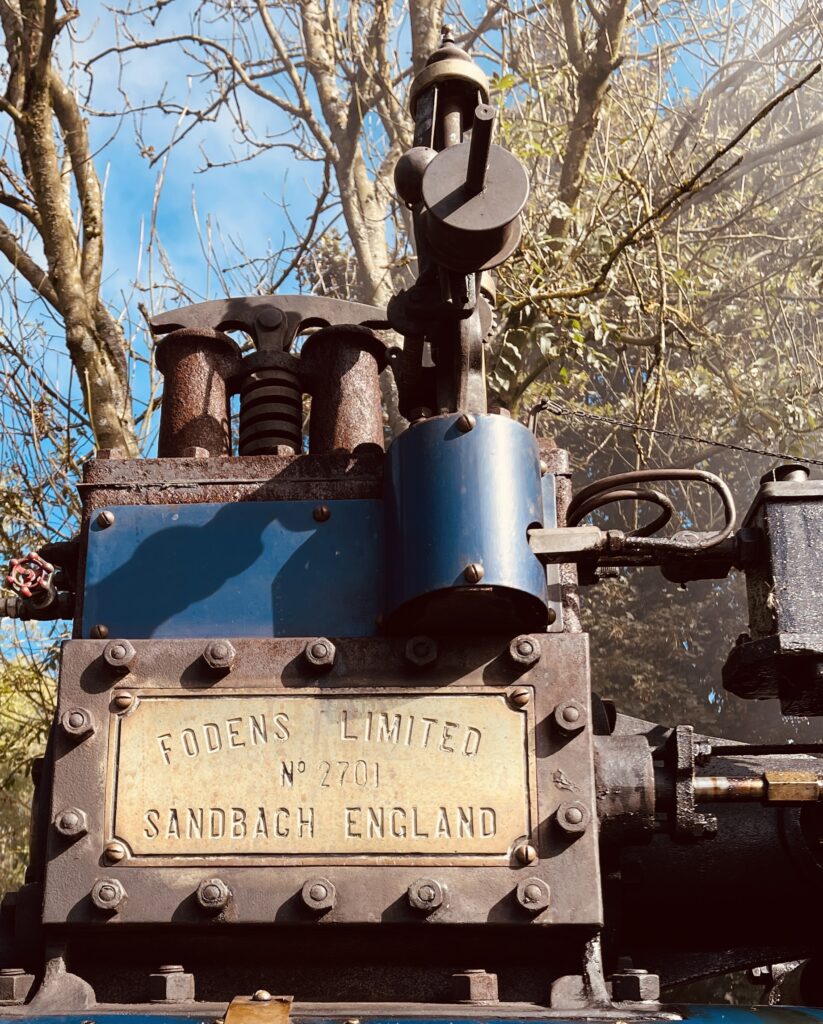
Fodens Engine 2701, Tombola

Our arrival in this area of the High Peak coincided with the annual Buxsworth Steam Weekend. That’s not a spelling error, in 1930 the villagers, with the support of the vicar and school headmaster, campaigned to change the village name and remove any association with bugs (this vote was repeated and won again in 1999!). Despite its small size and steep roads (1 in 7 is the maximum a steam engine can manage), the village managed to squeeze 3 engines in. On closer inspection we got another surprise, Engine 2701 (aka Tombola) had originally been built by Fodens, an engineering company based in Sandbach, just down the road from the Grammar school that Ian went to (although I think the engine might be a tad older than he is! [b***** cheek!!! – Ian]).
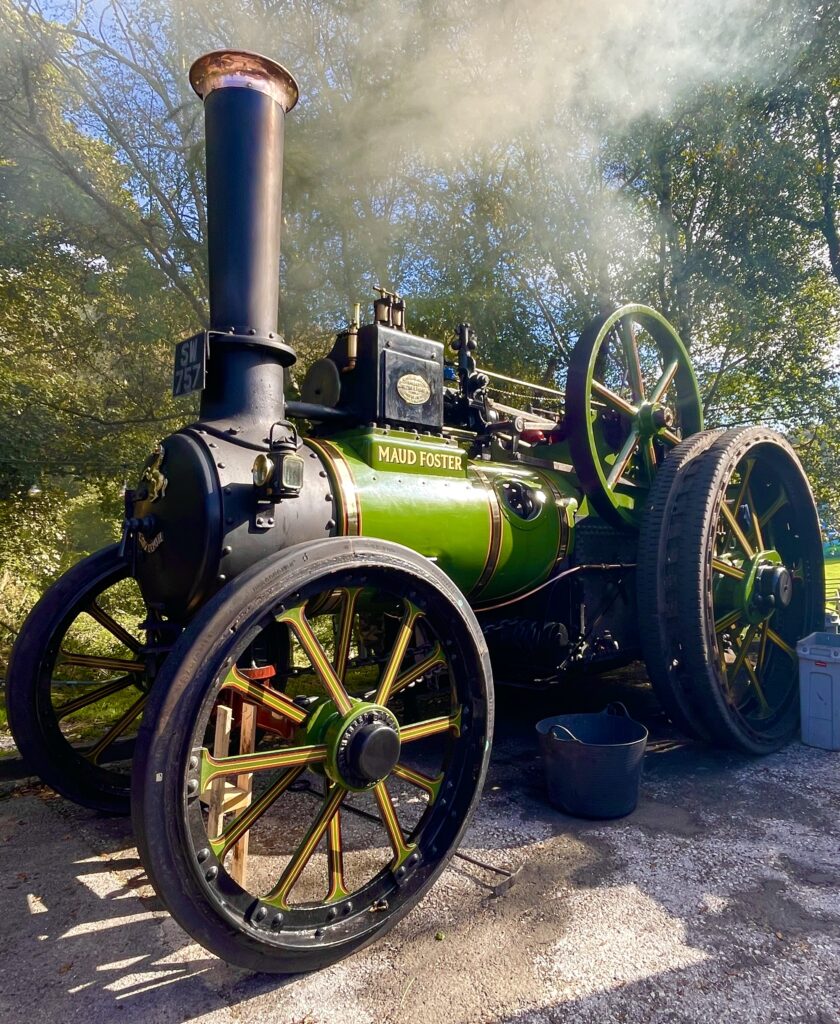
I do love the sight, sounds and smells of these massive metal beasts. The glowing colours, the shining brass, the puffs of smoke from the chimneys, the hissing steam erupting from the valves and whistles; it’s a real treat for all the senses. As a youngster in my hometown, I would sit by my bedroom window and listen out for the toots as our local traction engines rumbled slowly past on the main road heading to the next weekend summer rally. I guess I’m just an old nostalgic at heart. [Yep – nearly as old as me! – Ian]
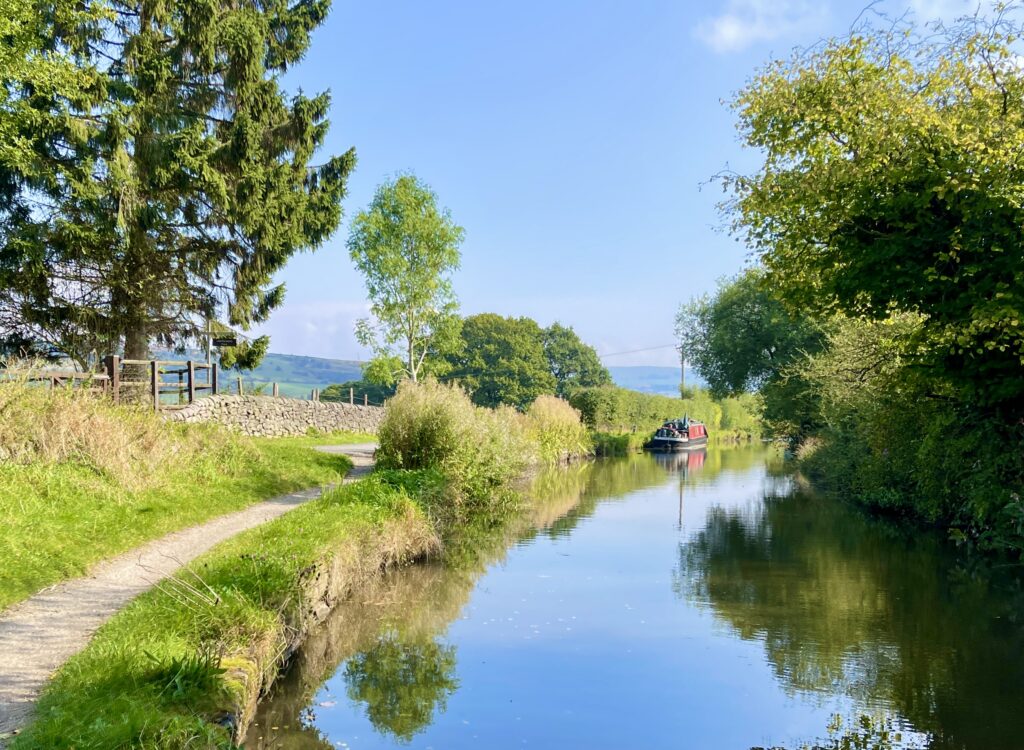
Enjoying the views of the Peak Forest Canal, near Disley


Drama on the coast

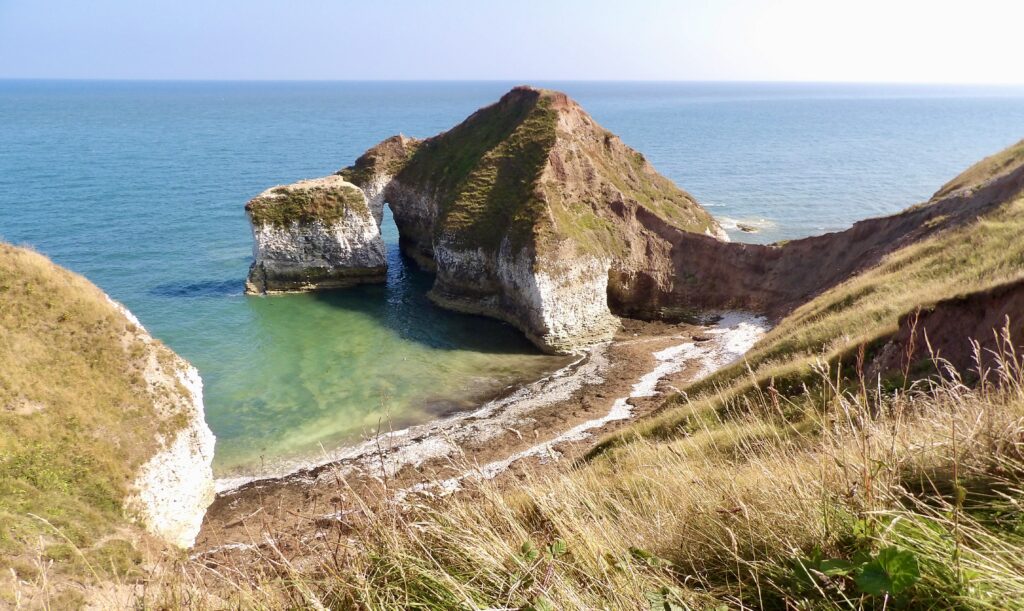
Flamborough Head

In September, we escaped from canal life for a few days and headed off in Hollie (our motorhome) across the Peak District to the North East Coast of England. Ian’s family are originally from Yorkshire, so they used to drive this route every Christmas. Thankfully the roads are much improved, and we did avoid the winter snow drifts on the moors around Snake Pass. It’s obviously been a while since Ian came this way, so he did make a few comments like “Where did that roundabout come from!”

Bempton Cliffs RSPB Nature Reserve

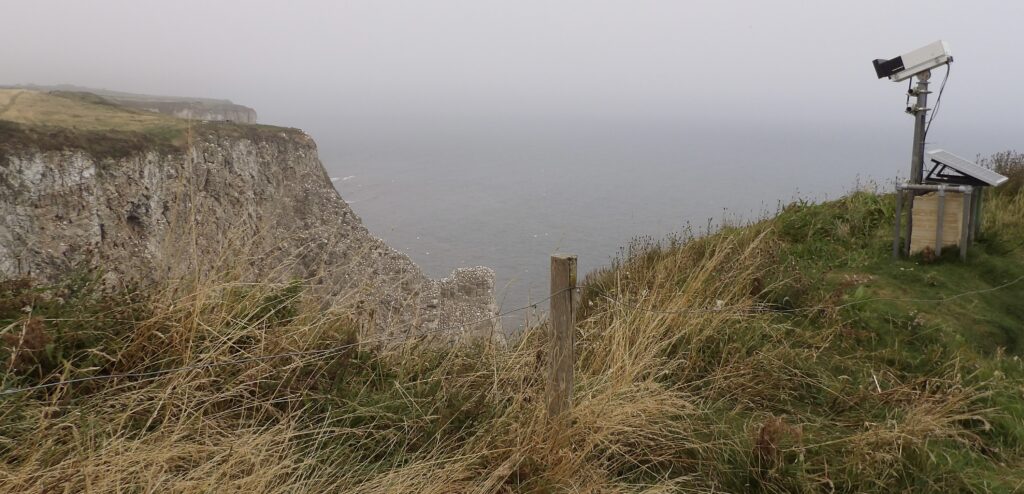
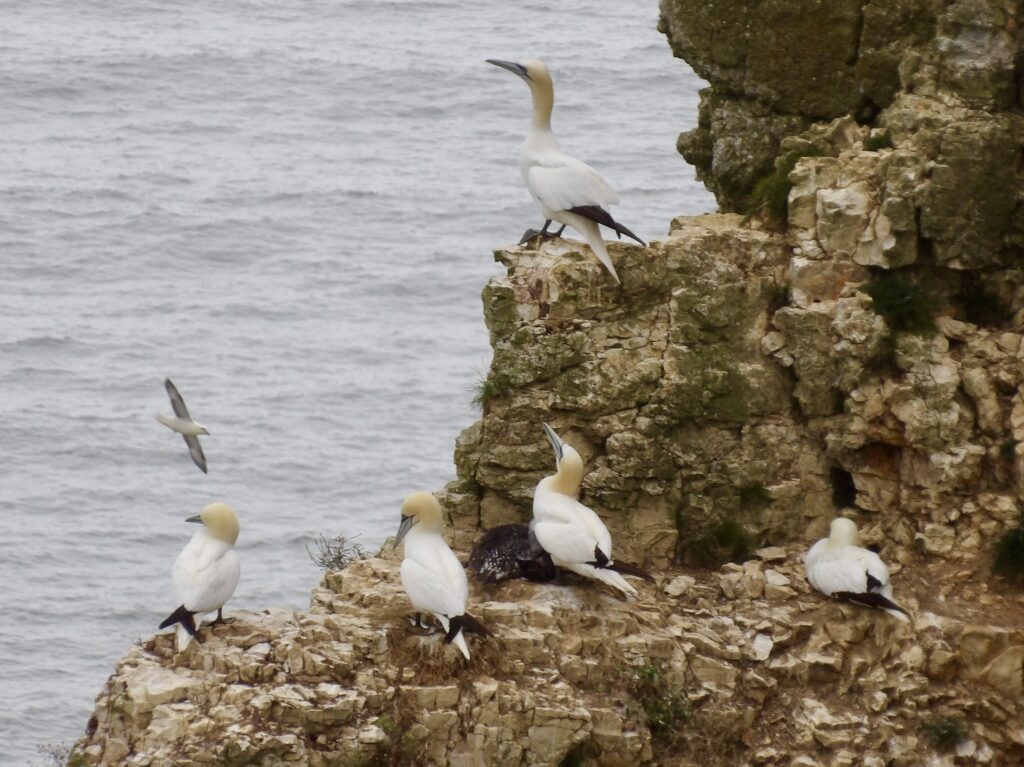
Our first adventure was to the RSPB Nature Reserve at Bempton Cliffs. Unfortunately, I’d failed miserably to do my research, and the puffins that I’d hoped to see had already left for the Bay of Biscay in July! Luckily for me, the gannets and the fulmars were still there, clinging to the steep rocky outcrops. I found the smell of the nesting gannets quite overpowering- strangely, Ian wasn’t really bothered by it.

Gannets on the cliffs and a fulmar circling below
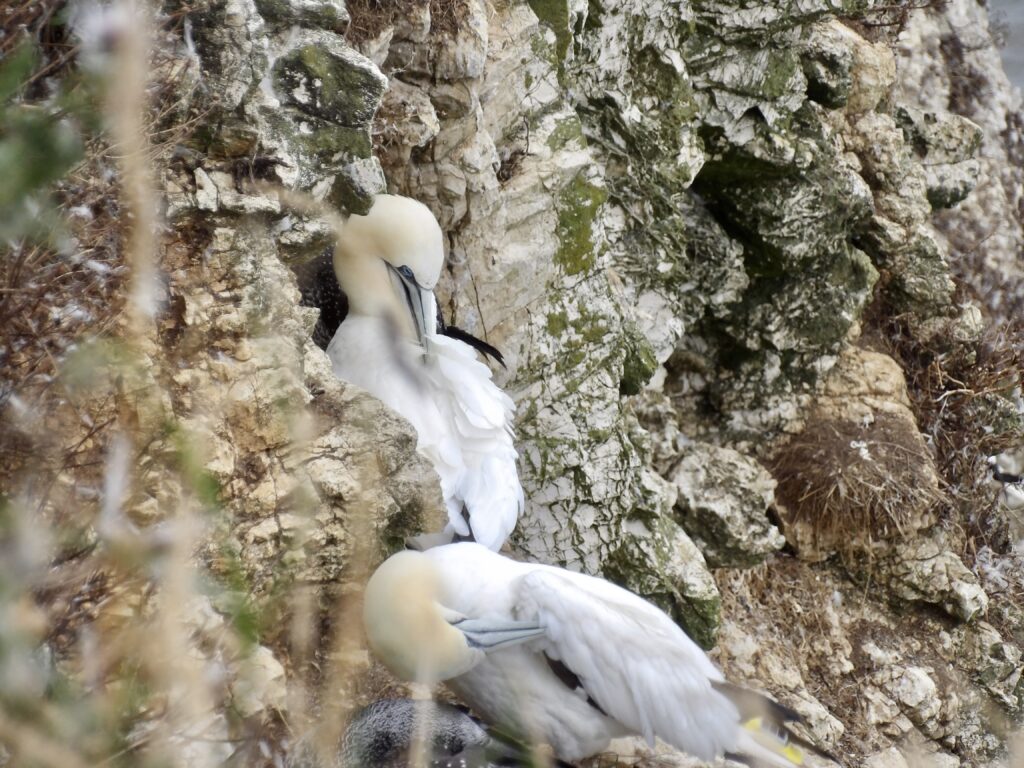
Gannets preening

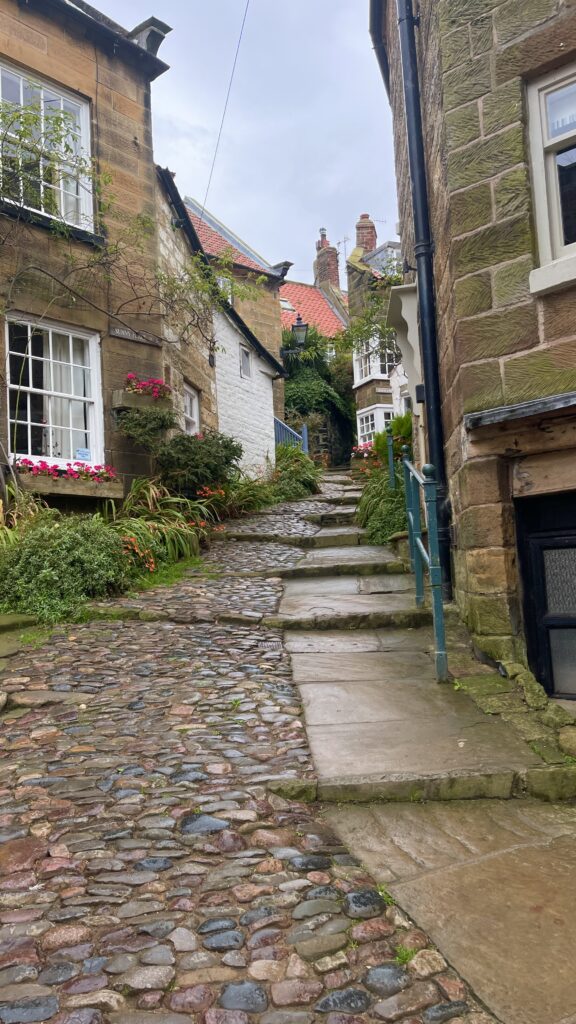
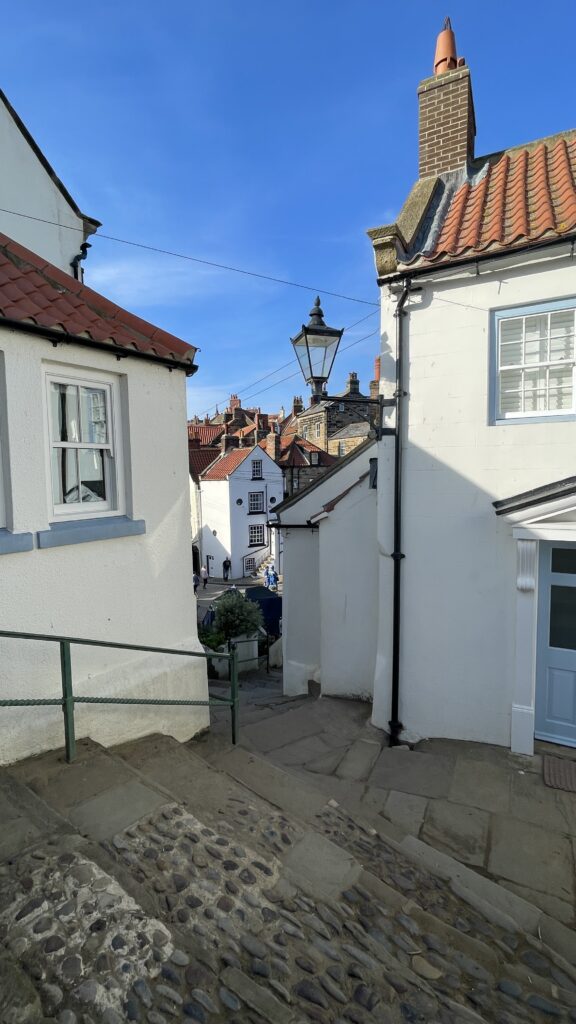
Travelling up the coastline, we made it to Robin Hood’s Bay. I’ve wanted to go there ever since I missed out on an “arty farty” school trip back in the early 80’s! The place does have a reputation as an artist’s paradise. It certainly has a lovely olde worlde atmosphere and is steeped in myths and legends. The old town or Lower Bay clings to a steep valley with a single winding road that cuts through a maze of steps and passageways between meandering rows of cottages. The cobbled road ends at the town slipway beside a curious tunnel that is reputed to be part of an old smugglers’ route.

Chapel Street, Robin Hoods Bay
Covet Hill, Robin Hoods Bay

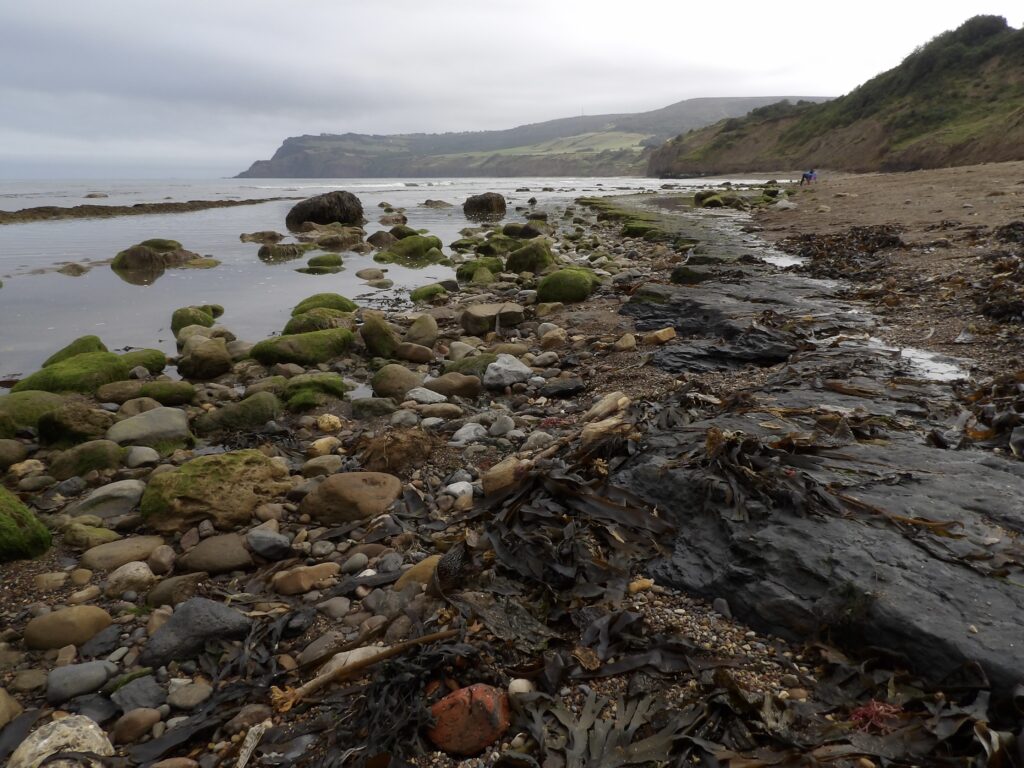
After wandering along the South Beach we took notice of the warning signs that we’d seen on the seafront, warning people to leave the beaches at least 2 ½ hours before high tide, and grabbed a warming cup of coffee at the quayside café.  Standing by the railings, we had an excellent vantage point to see the waves crash in below us and watch people retreat from the shrinking beaches.

South Beach of Robin Hoods Bay

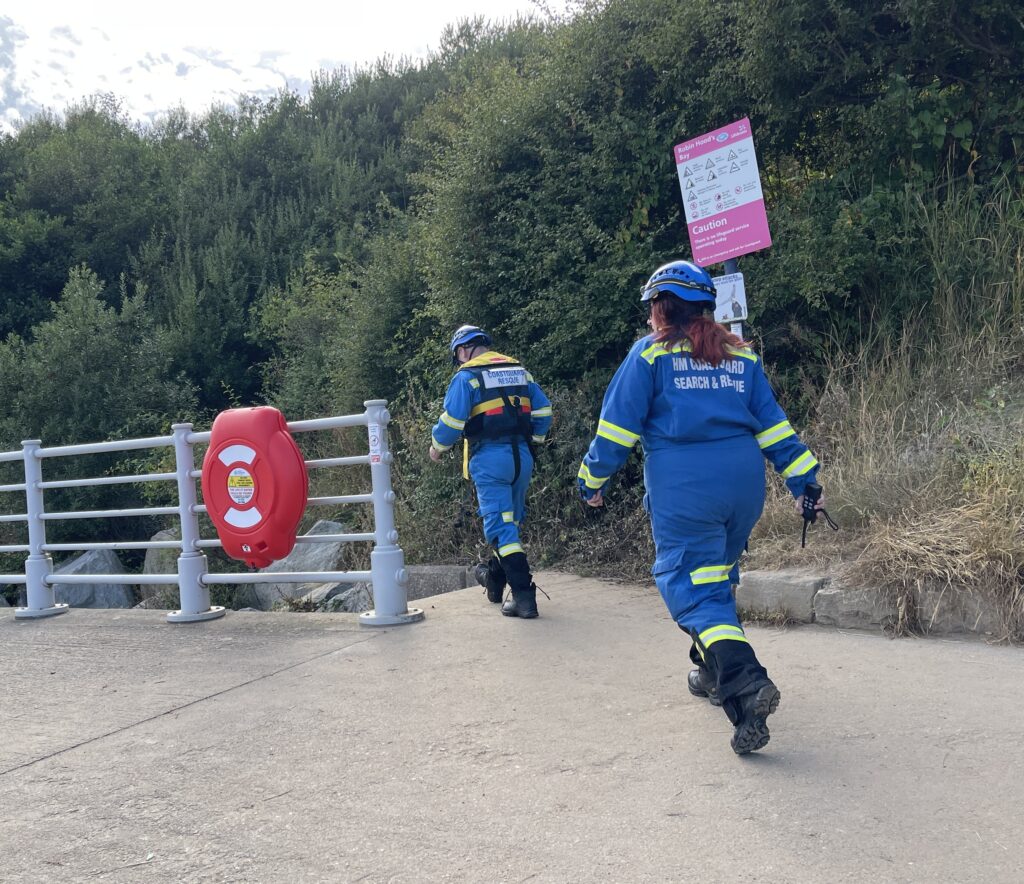
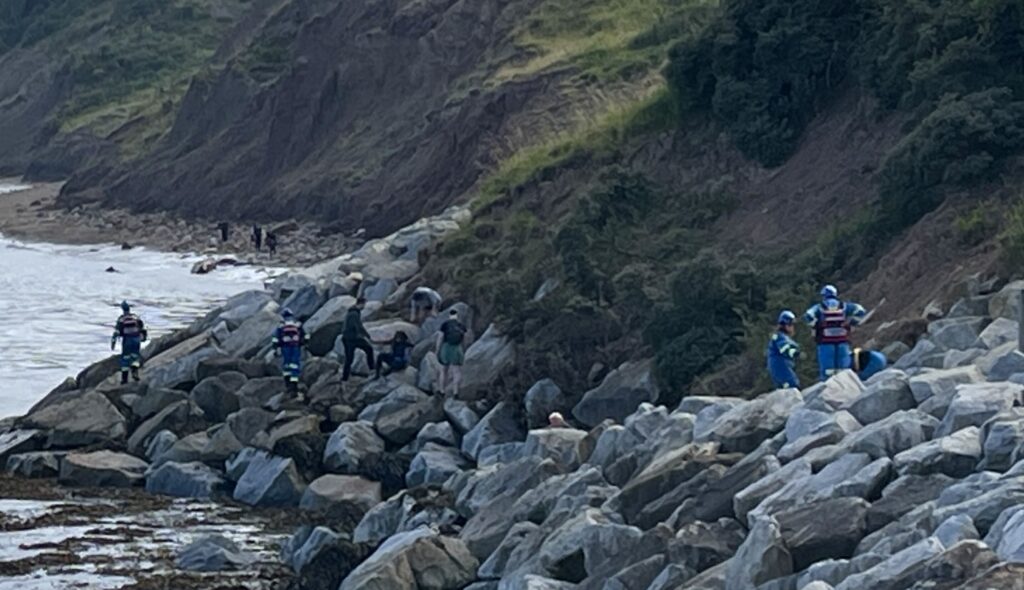
It was then that we noticed several people were staying on the beach and not making any moves to leave it. We just assumed this was normal and joked that it must be a daily event, that there must be alternative footpaths that we hadn’t seen. By now the tide was lapping around the base of the quay and people were wading on to the slipway. Suddenly there was a bit of a commotion, and we were quite shocked to hear that the café owner had called for the coastguard as they had recognised that the people on the beach were now stranded.


Three HM Coastguard teams attended and were there within minutes. Over the next hour and a half we stood and watched them safely recover fifteen people and two dogs. We also learnt that this was an extremely rare event, the couple beside us had been coming to The Bay for thirty years and had never seen this happen before! And there was me thinking that the Coastguard teams had been waiting for high tide in a local café! How wrong we were, and the rescue even made the evening news ( I should have sent my pictures!).

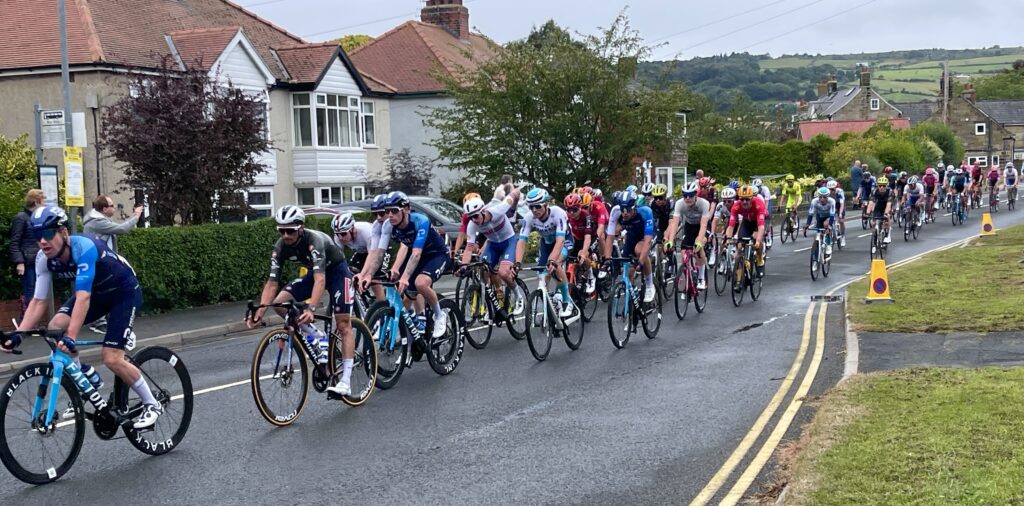
More excitement followed the next day as the Upper Bay road was closed for the Tour of Britain Cycle race to pass though the town and head up the hill past our campsite. How they didn’t crash into each other I will never know, but it was all quite exciting, at least for the few seconds that it took them to zoom past!

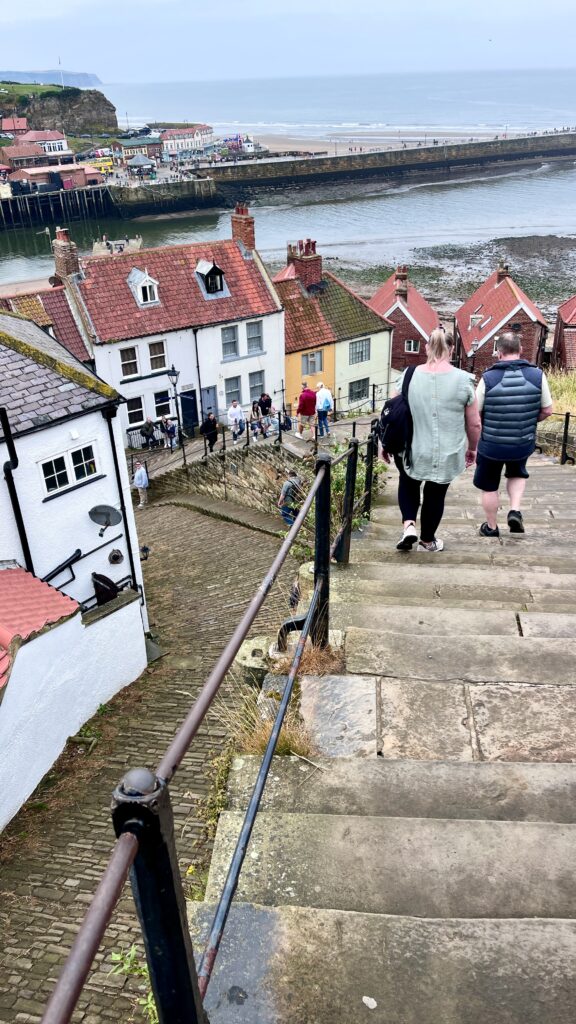
The 199 steps of Whitby

Our final destination was Whitby, the main fishing port for this area. It’s a stunning place to walk around, packed with history, and with the famous 199 steps that lead from the Abbey down to Church Street, a cobbled road, lined with Whitby Jet Jewellery shops.

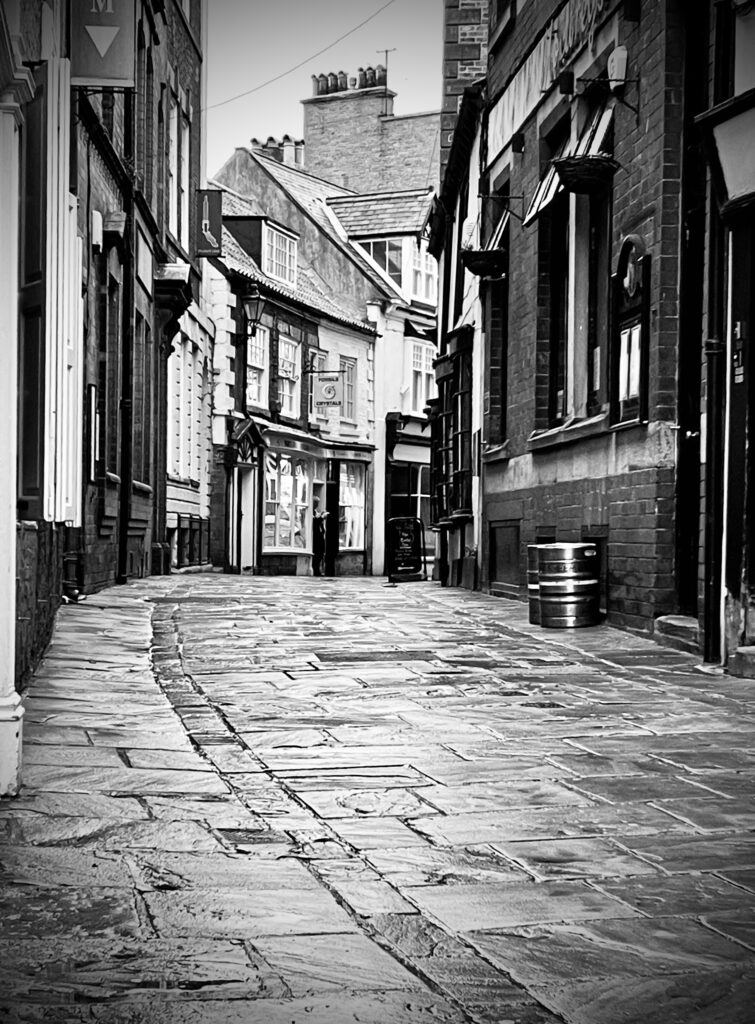
Grape Lane, Whitby

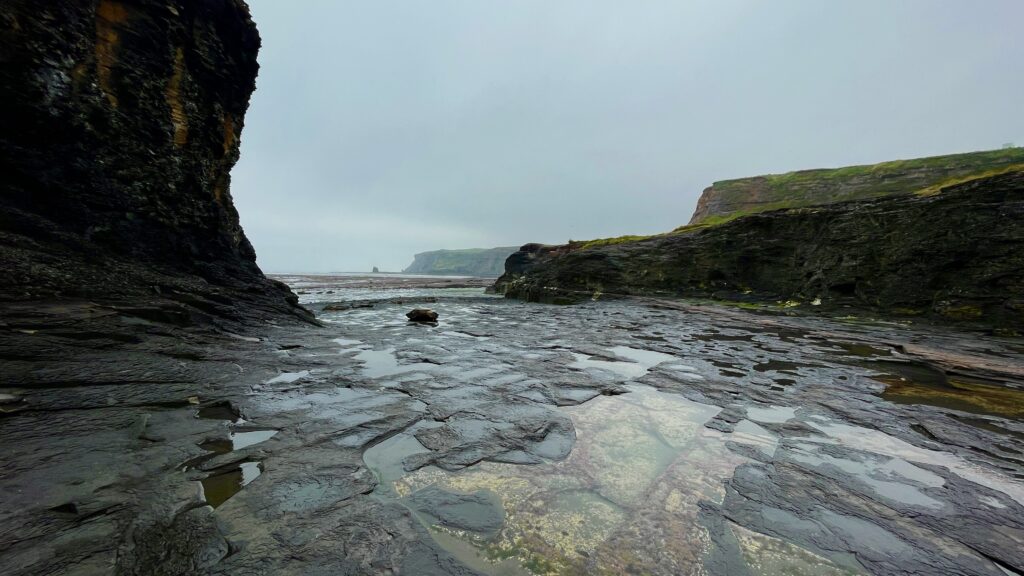
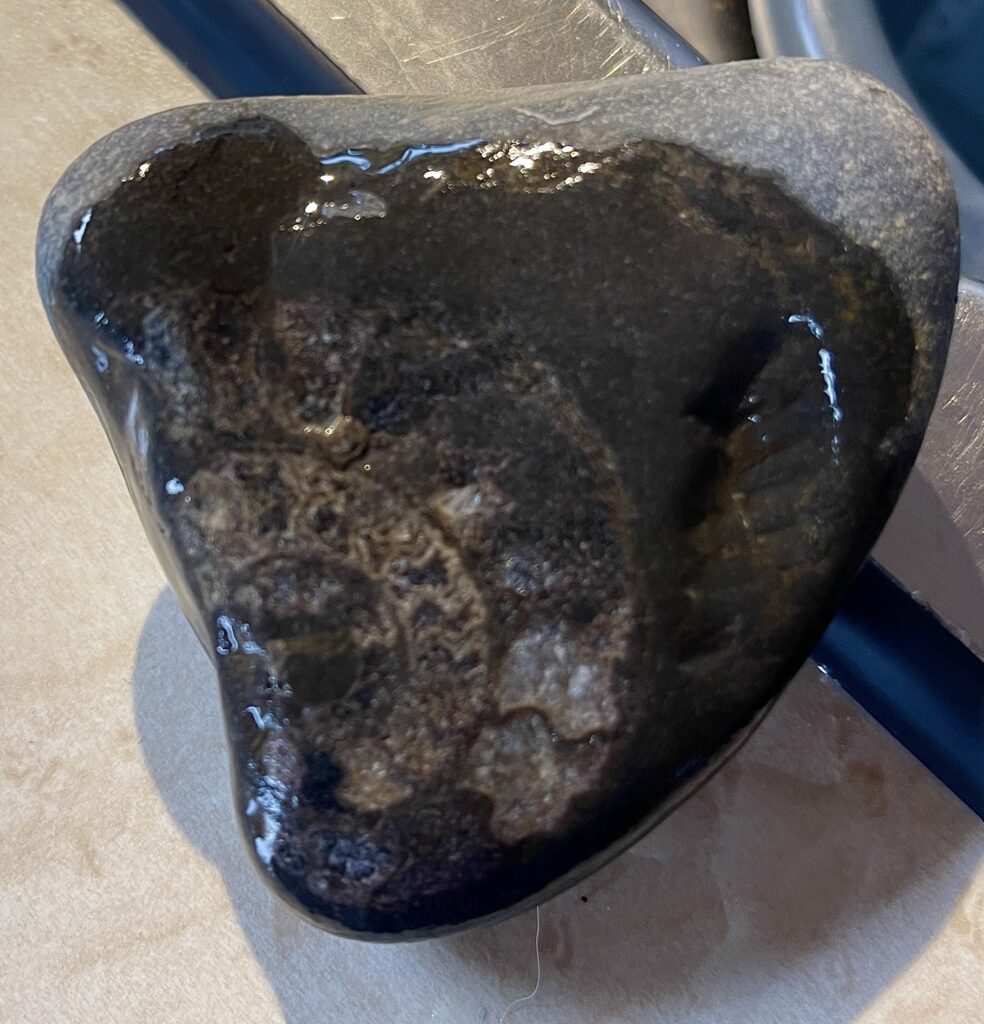
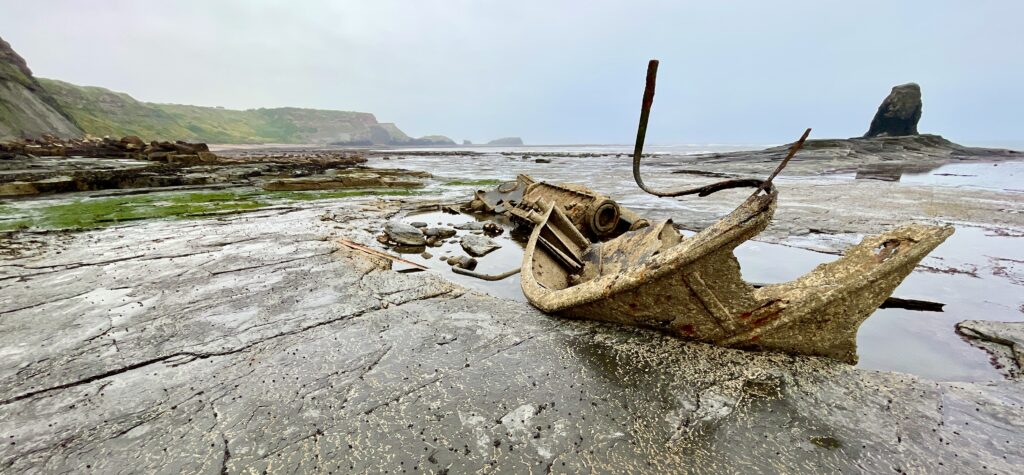
We had camped just outside the town near to Saltwick Bay, famed for its shipwrecks, fossils and black jet. I’d spent the previous day beachcombing and had found a few belemnites, an ammonite and a big piece of jet. Black jet is a semi-precious stone and is believed to help you cope with grief. When Prince Albert died in 1861, Queen Victoria wore jewellery made from Whitby jet until she died in 1901. This started a fashion that still continues today. So I decided to try and sell my lucky find to one of the jewellers, only to be told it was just a piece of slate.

Yorkshire’s jurassic coast where slate and limestone pavements hide fossils and dinosaur footprints.
Found on Saltwick Bay, a partial ammonite fossil waiting to be cleaned up

Never mind, it was fun finding the shipwrecks and the fossils. Time to head home for more adventures along the Macclesfield canal.

Shipwreck on Saltwick Bay

Bang on the Maccy

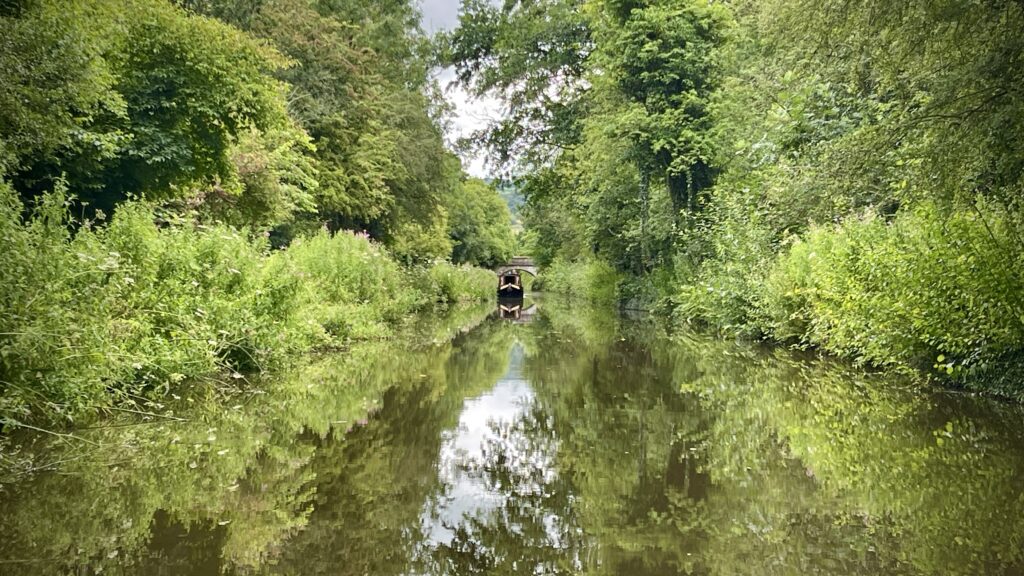
A tapestry of green on the Macclesfield Canal

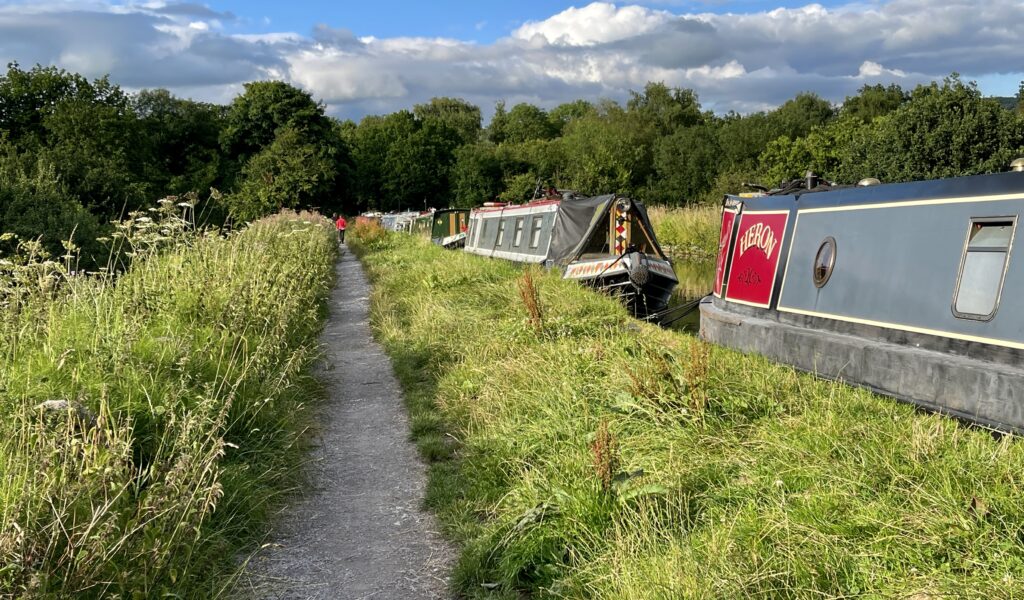
We made it back onto the Macclesfield Canal and even got our favourite mooring on the embankment that overlooks the Dane in Shaw Valley.

Hall Green Stop Lock

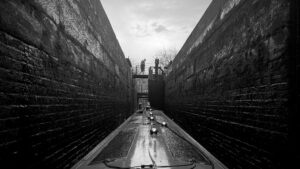
Passing through Hall Green Stop Lock, at the start of the Maccy, always gives us a feeling of arriving home, well, technically it is as we were both born within a 1/4 mile of this canal! No more locks for us until the Bosley Flight and we don’t plan to go up there for a while due to the hassle of getting to hospital appointments. As we’re not going to be moving any great distances for the next few months, this breaks the “Continuous Cruisers” rule that is a condition of our boating licence with Canal & River Trust (CRT). You can claim mitigating circumstances, so I’ve contacted CRT to explain the situation and to ask them to allow us some latitude in our length of stay in this area. They were very helpful after my knee replacement in 2022, so I’m hoping they will be again.

A green & pleasant land, Dane-in-Shaw
Popular mooring spot!

The shoulder reconstruction surgery went ahead as planned, so now I’m a one-armed bandit. No, he didn’t amputate!! It’s just how it feels having my right arm strapped up in a sling all the time! Ian’s been a very busy bee. The boat is looking very tidy with newly painted gunnels and he’s currently doing the welldeck. Passers-by, both walkers and boaters have all suggested he’s doing the painting equivalent of a rain dance, and to be honest, despite the dry forecast on one day, that’s exactly what happened- it poured down just after he’d started!

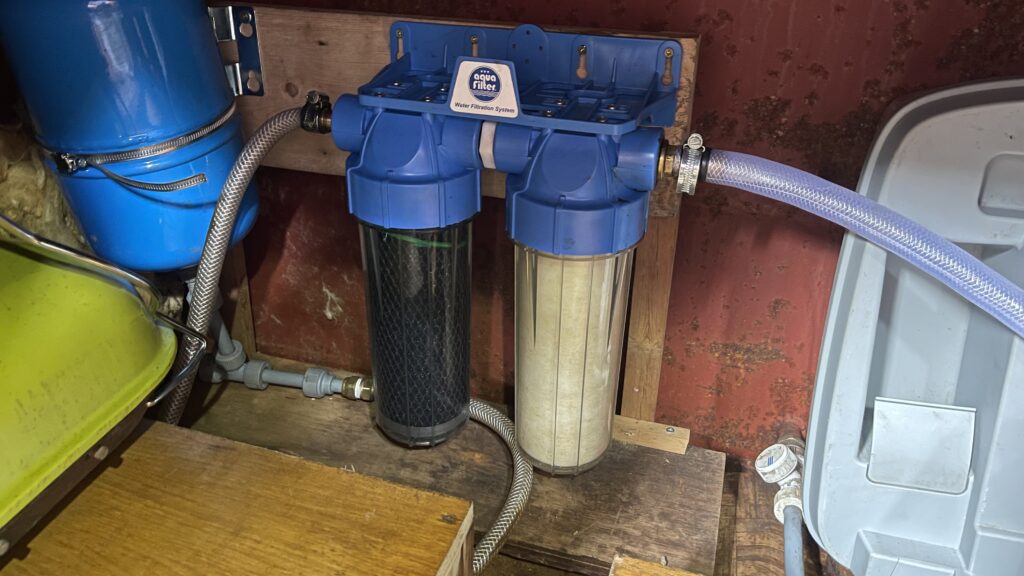
New water filter system

The water from our reconditioned water tank is still bit wiffy, so he’s fitted a filtering system to mitigate this. That proved to be a bit of a nightmare as, despite trying different connectors and the trusty PTFE tape, various joints kept taking it in turns to leak. But, after three days of battle, swapping the position of the filters and switching to thread seal, Ian won! It’s something we probably should have done years ago.

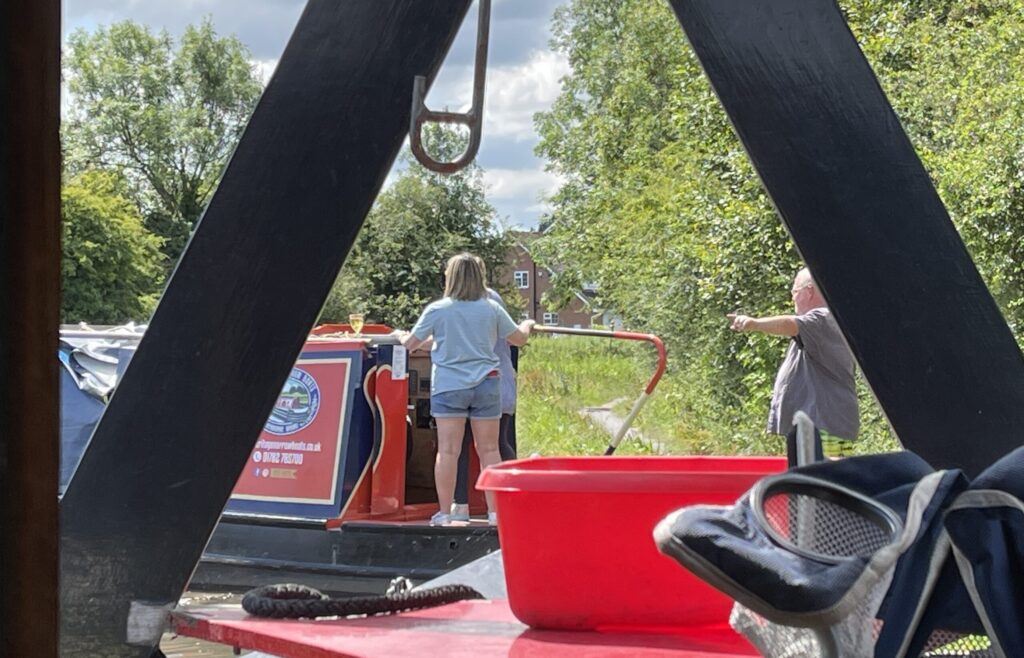
Action required to assist hire boaters

You’d think that being moored up would be uneventful, but we forgot to factor in the nearby marina with its fleet of hire boats. At the weekend, Ian literally had to jump ship to help a crew discover how to take a runaway dayboat out of neutral so that they could steer it. And yesterday, we were rammed. The noise was horrendous, and it rocked the boat so badly that our stuff went flying off the shelves inside! Having started out as hire boaters, we totally understand that there is a learning curve to steering these beauties, but an apology is always appreciated! We did politely suggest to the helmsman that next time he could at least try to use reverse to stop the boat from crashing!

Walking towards Bosley Cloud

Weather permitting, Ian has also been taking the opportunity to do regular walks up Bosley Cloud with the dog. The views across the Cheshire Plain are quite stunning. Whilst I’m feeling physically restrained, my mind isn’t, so plans are afoot for the next few month’s travels, both near and far. I always love having something to look forward to and the calendar is now bursting with scribbled plots and plans!

On top of the World – The Cloud

Return to Base

Threatening skies over the River Trent at Shardlow

We are on a mission! We have ten days to get back onto the Macclesfield Canal in time for me to have yet another operation. This time it’s a reconstruction of my right shoulder from an event that took place 10 years ago when our, then new to us, dog decided to try and rip my arm off.

Passing through the open the flood gates at Redhill on the River Soar

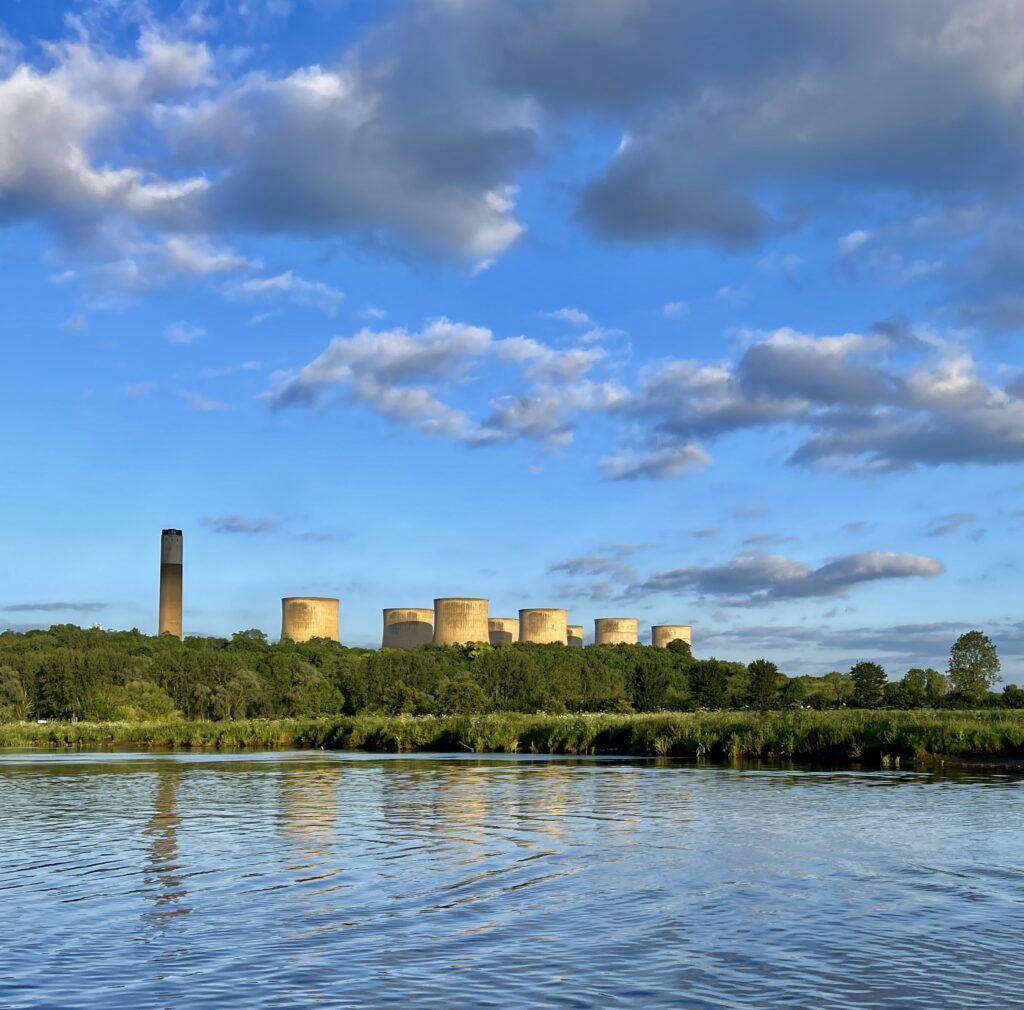
Collecting Heron from Redhill Marina near to Ratcliffe on Soar, I worked out that we had 45 locks and just over 70 miles to cruise. With concerns over stoppages, we’ve ploughed on doing long days; averaging 2.5 mph (wow!),  queuing at locks, chugging on through hail, torrential rain and gale force winds. We’ve made it in six days and now need a few days to recover!

Watching the hail from a safe place!

Joining the queue at Sandon Lock


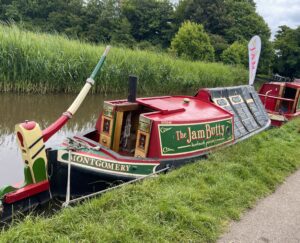
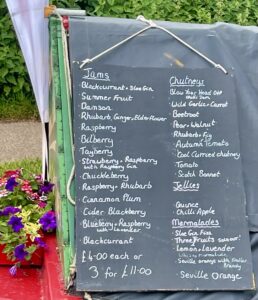
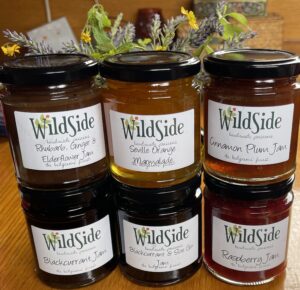
Along the way we passed through Great Haywood and spotted the Jam Butty Boat, so of course we had to stop and stock up with jams and marmalade; choosing was a demanding task with such a fine array of amazing flavours!

The Jam Butty

Tough decisions had to be made!

A full store cupboard

Moving the boat every day is something that we haven’t done for a long time, it’s what we used to do for a family holiday! We’d drag the kids off and spend two weeks of forcing them into hard labour cruising a canal circuit like the Cheshire Ring or the Four Counties Ring (lots of fresh air- it was good for them).

Feeling more at home with the narrow locks and bridges  at Fradley Junction 

Since becoming liveaboards, we are now rich in time and can cruise for as long as it takes to find the next place to moor, anything from a few minutes to a few hours. Then we usually stay put for three or four days to go exploring and enjoy the scenery, so moving everyday has been quite a shock to the system!

Stoke Top Lock in Etruria

We’ve discovered that a newly painted water tank delivers very smelly, chemically scented water. Thankfully we already have a filtered drinking water tap which mitigates this, but it has meant that we’ve needed to flush the water tank five times during those six days of travelling.  It takes about 2.5 hours to empty a full tank of water, at 10 secs/litre, and yes, we were that bored that we measured the flow rate. On the plus side, we now know that our tank is a whopping 900 litres and means we could probably last for 3 weeks without finding a waterpoint for a refill (instead of the 7-10 days rule that we’ve been following for the last 15 years).

The distinctive iron ore stained waters of Harecastle Tunnel

The next few weeks are going to be pretty boring for Ian, so I’ve come up with a cunning plan to keep him happy – it’s boat paint touch up time; roof, gunnels, foredeck, front lockers and even the red triangle of the cratch! (Bloomin’ list keeps getting longer! 🤣 – Ian) He’s going to need all that extra water from our repainted tank…..for showering!!

Hall Green Stop Lock at the end of the Macclesfield Canal

Cruising Big Ship Style

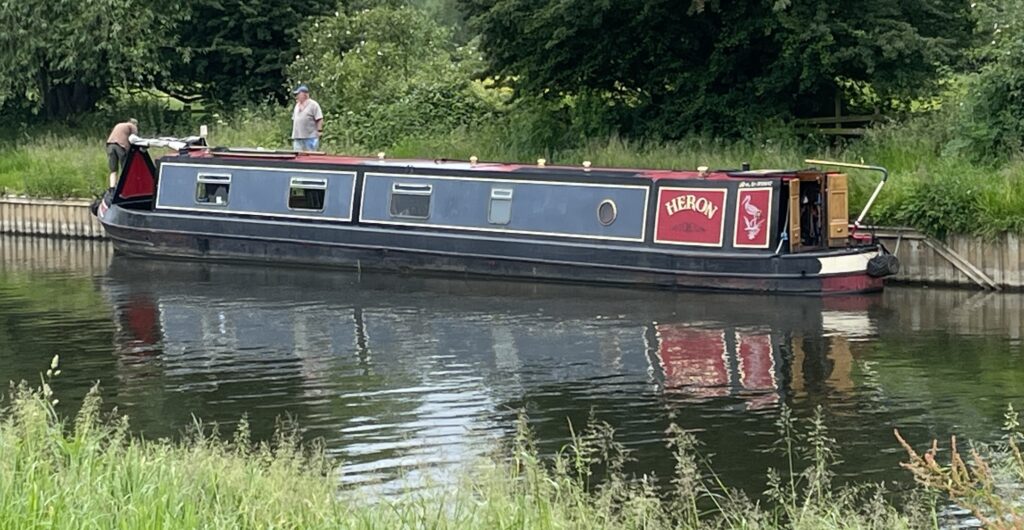
It’s been a strange few weeks and I’ve almost had separation anxiety from our poor boat! Heron was left at Red Hill Marina for a rather delayed clear out and repainting of the inside of her freshwater tank and a complete sandblast and repaint of her hull. I feel guilty because we weren’t there to see what was revealed on the base plate when they discovered she needed a bit of welding. Nothing drastic (huge relief), but she is beginning to show her age of 27 years (not sure if there’s such a thing as a boat:human age conversion, if she was a dog she’d be well over a 100 and you’re allowed a few rust spots at that age).

So while our narrowboat’s being dealt with, the poor dog got put into kennels and we disappeared off on a plane to Malta! Poor dog, more guilt. But we’ll make it up to both of them!

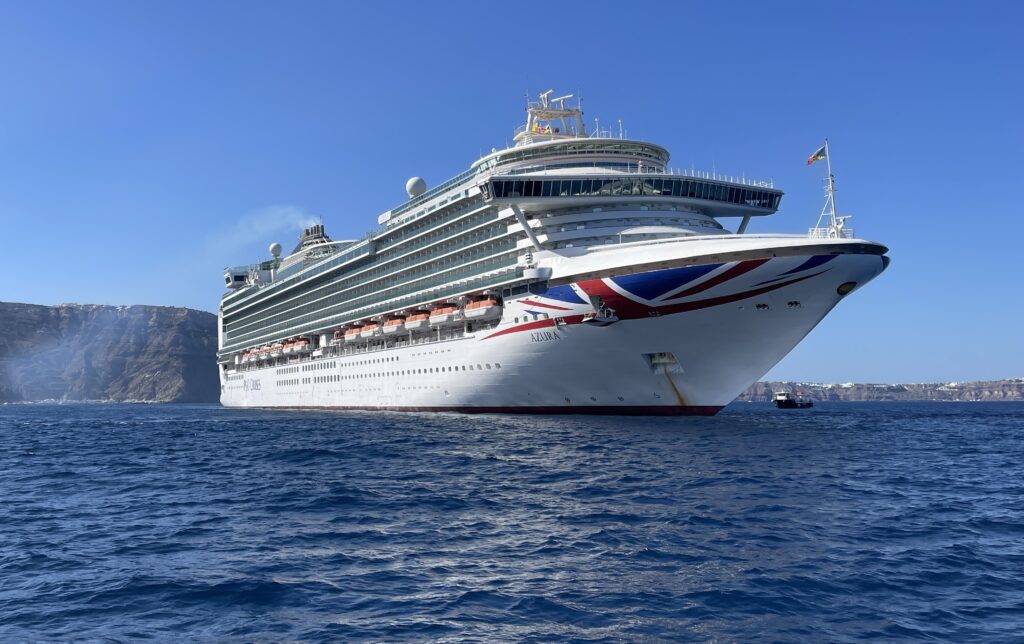
P&O Azura at anchor in the caldera of Santorini

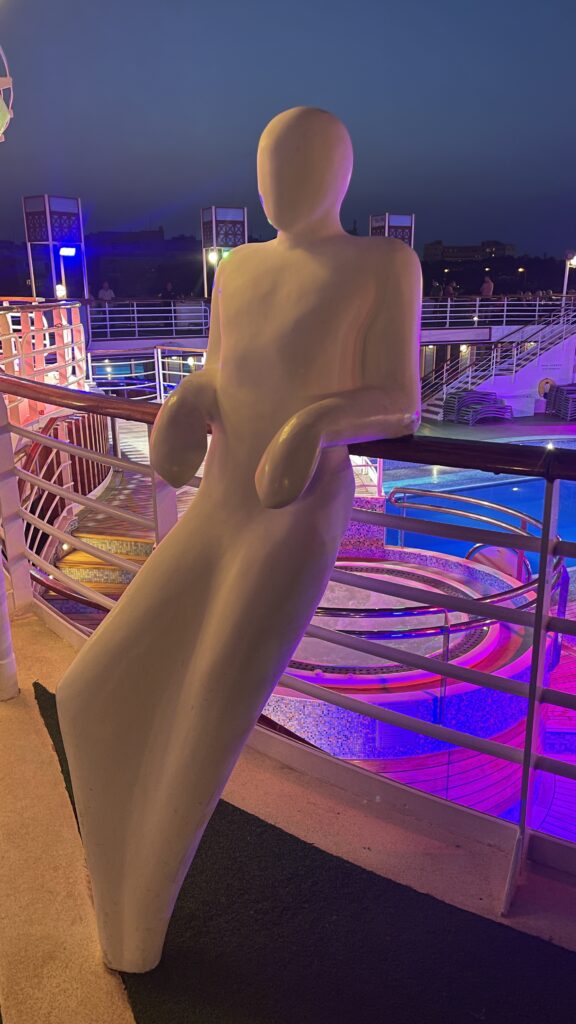
Our 14 night Mediterranean cruise has been wonderful, but not without its dangers! We discovered that sun beds are notorious hazards on a ship (that’s if you can find a vacant one). Sun beds prefer to be left alone with only a towel for company, they like to hide your sun spray under them and they like to trip you up causing bruising or a break to your little pinkie toe (especially if you’re wearing flip flops).

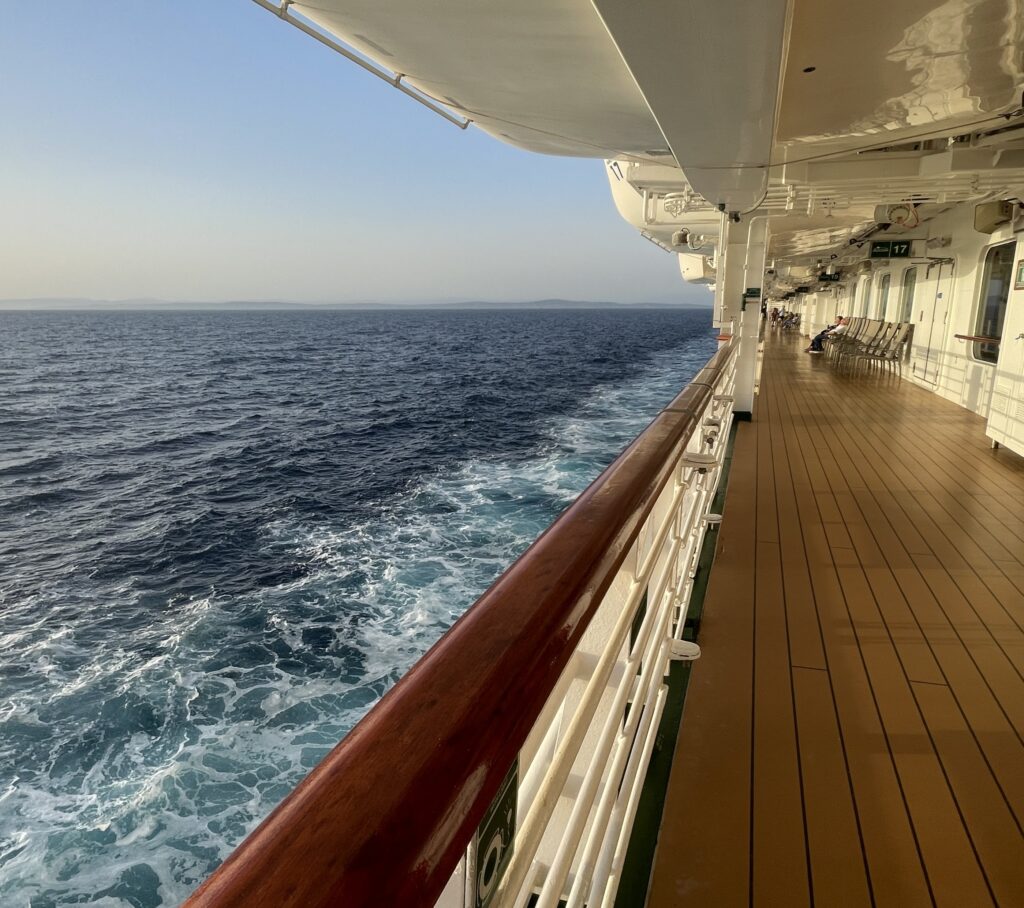
Going for a promenade on deck 7

“Echo & the Funny Men” by Andrew Sinclair


Despite the trauma of dealing with sun beds, the rest of the ship was fairly safe. The sea days gave us time to relax. Time for me to do some crafts, or try line dancing (don’t ask, I haven’t done structured dancing in over thirty years, it was not a pretty sight) or join in with a vocal workshop (Walking on Sunshine and Dancing Queen). Ian would find a well behaved sun bed to chill out with.


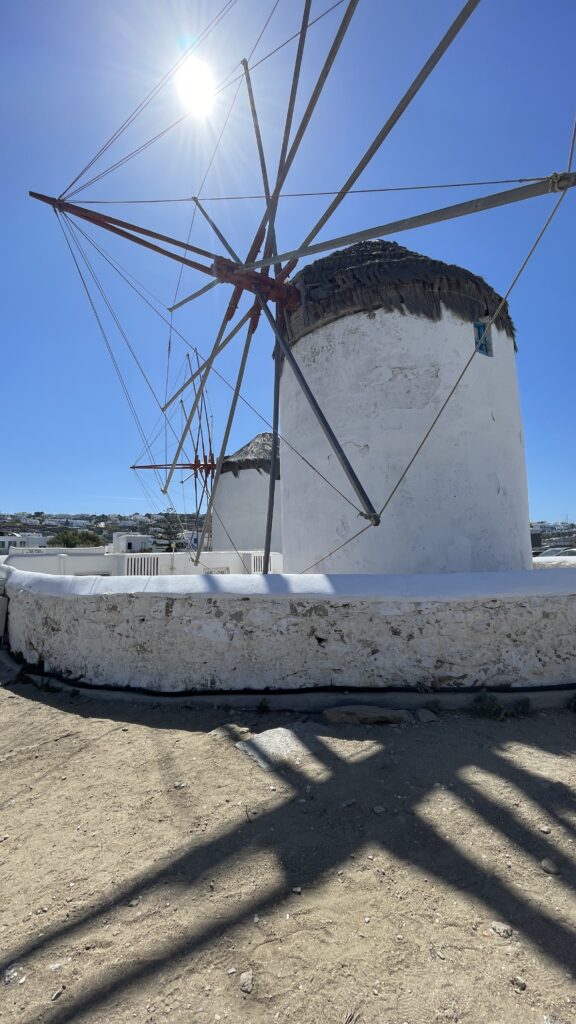
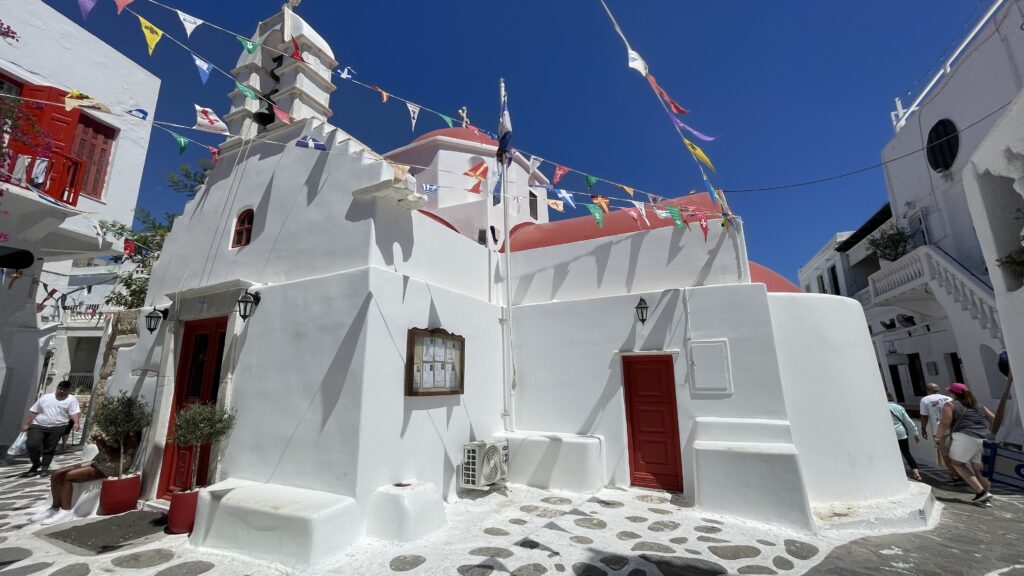
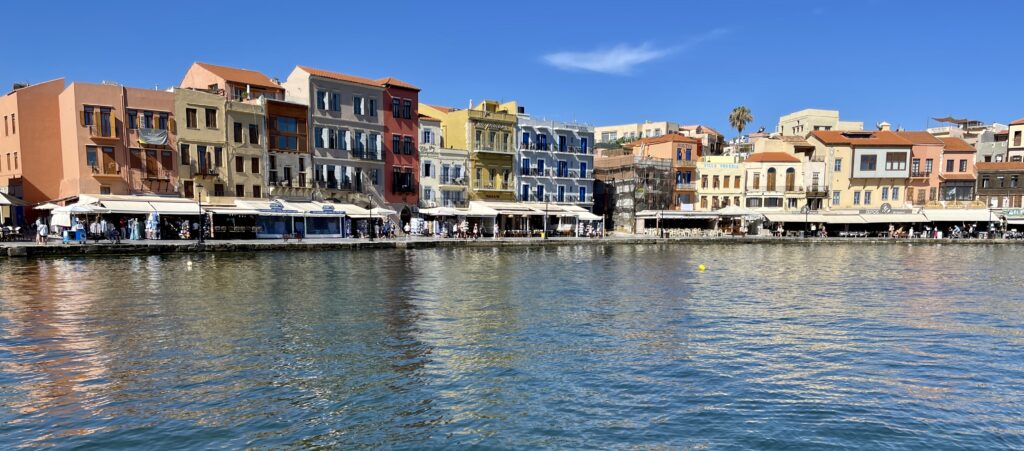
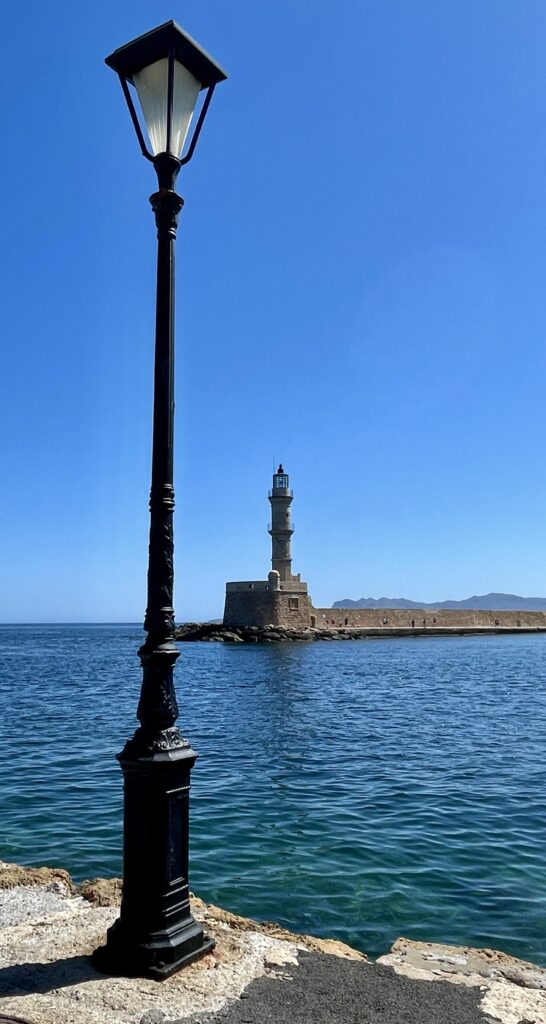
In our first week we headed to Greece, calling in at Mykonos, Chania (Crete), Athens and Santorini. We found windmills in the first port and in the next, a 700 year old venetian harbour with stunning lighthouse. I do wonder how many tubs of white paint they use each year to maintain the beautiful white buildings and the weirdly painted granite pavements!

The windmills of Mykonos

One of the many white painted chapels in Mykonos

The Old Venetian Harbour, Chania

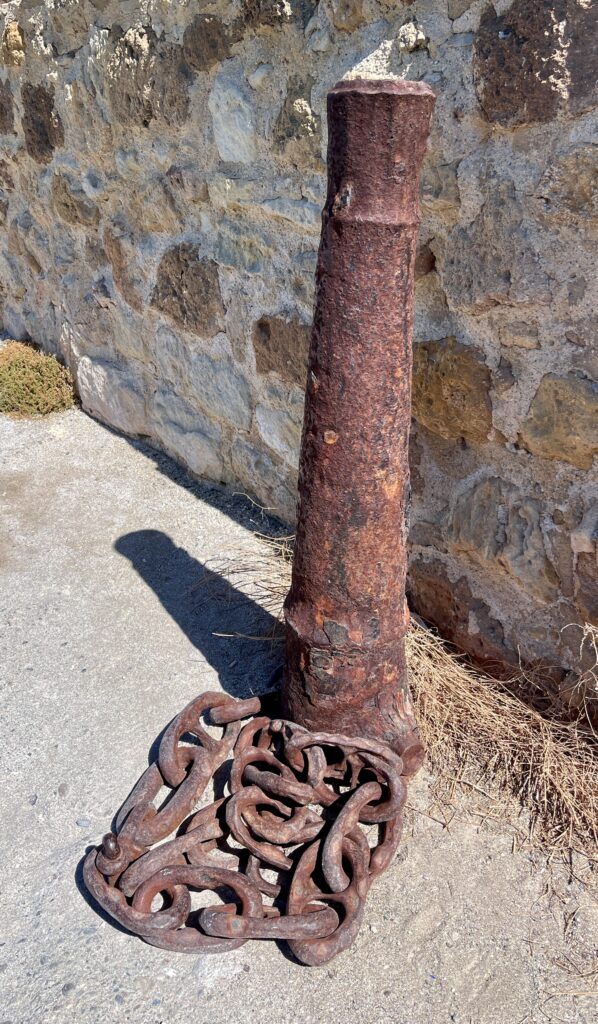
Repurposed cannon in Chania harbour

The 700 year old lighthouse,  Chania

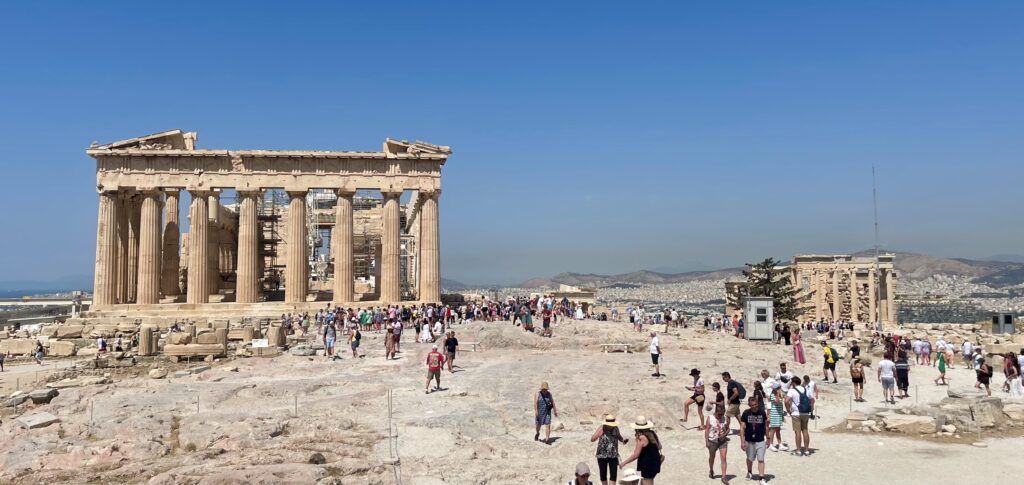
The Parthenon on the Acropolis, Athens

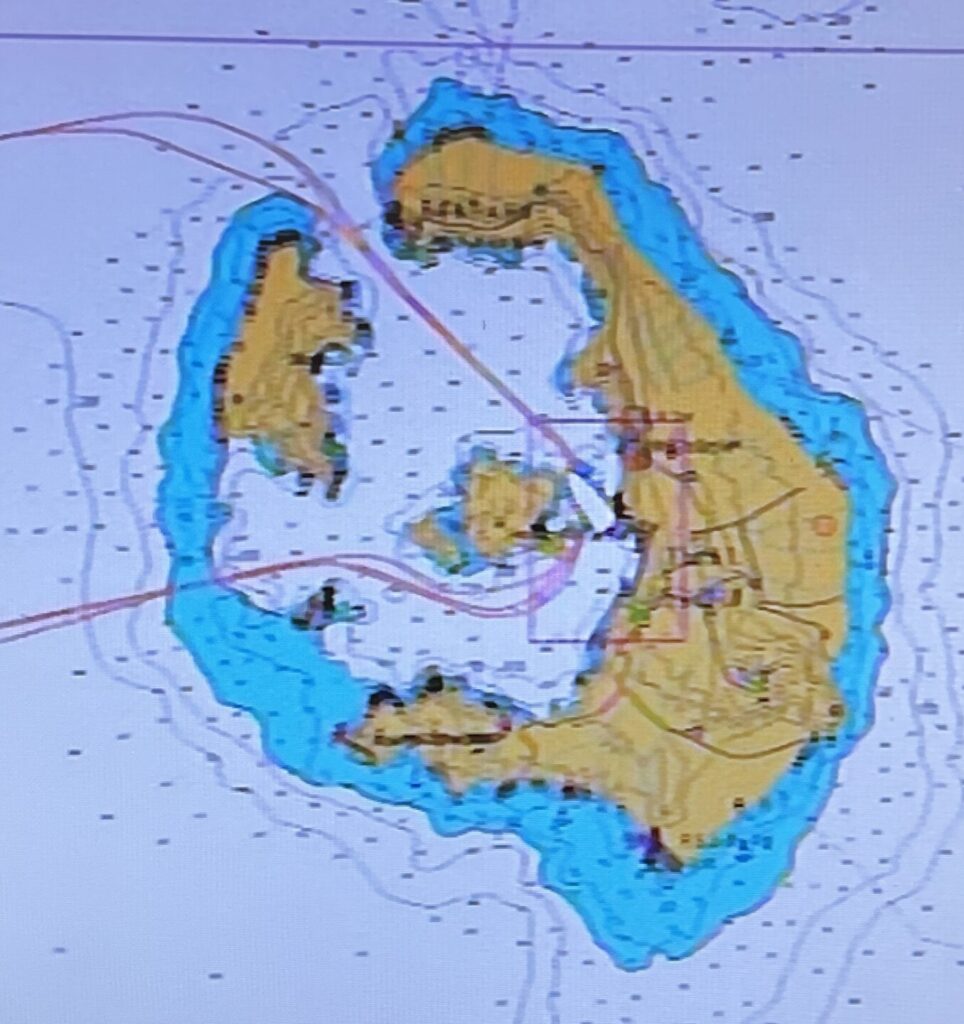
Map showing MV Azura in the Caldera of Santorini

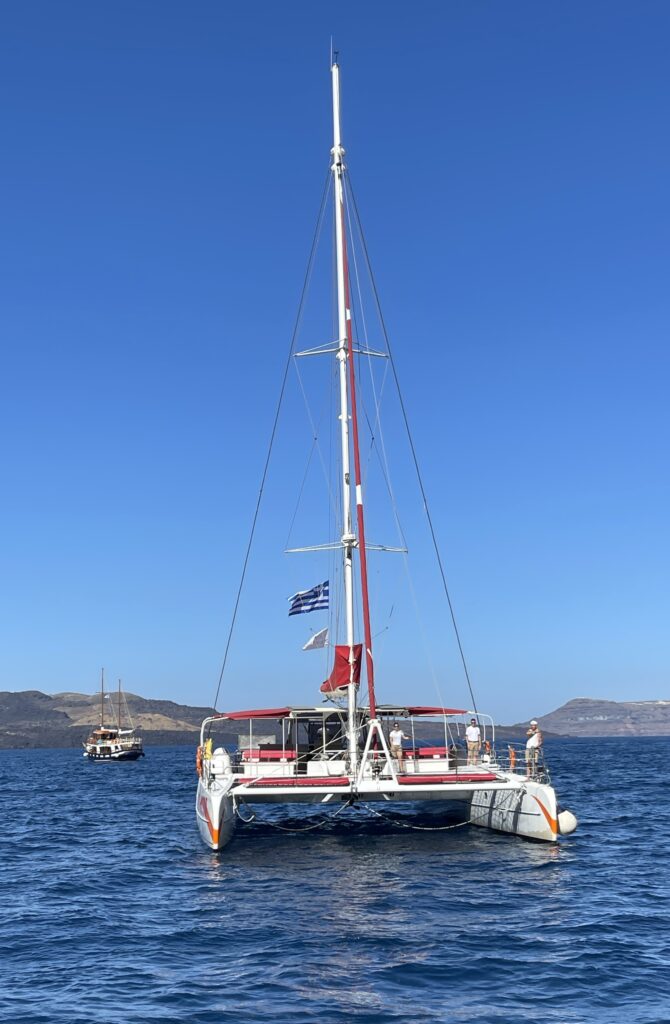
On to Athens and soaring temperatures of 38 degrees, climbing up the acropolis to see the Pantheon was a truly amazing experience. The views were incredible but sadly, so was the heat and we ended up in a crush of tourists trying to leave the top before we all baked. The following day was a complete antidote, in Santorini we played the geology card and opted for a catamaran trip around the caldera which included swimming in sulphurous mineral waters and an onboard BBQ.

Returning to Fira Port below Santorini on the catamaran


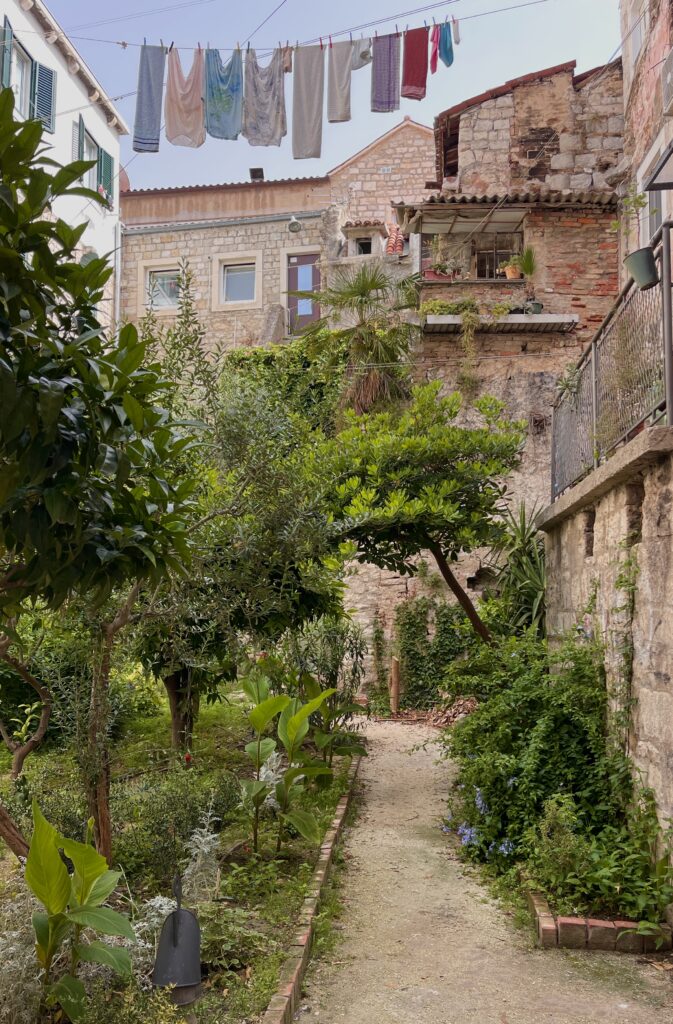
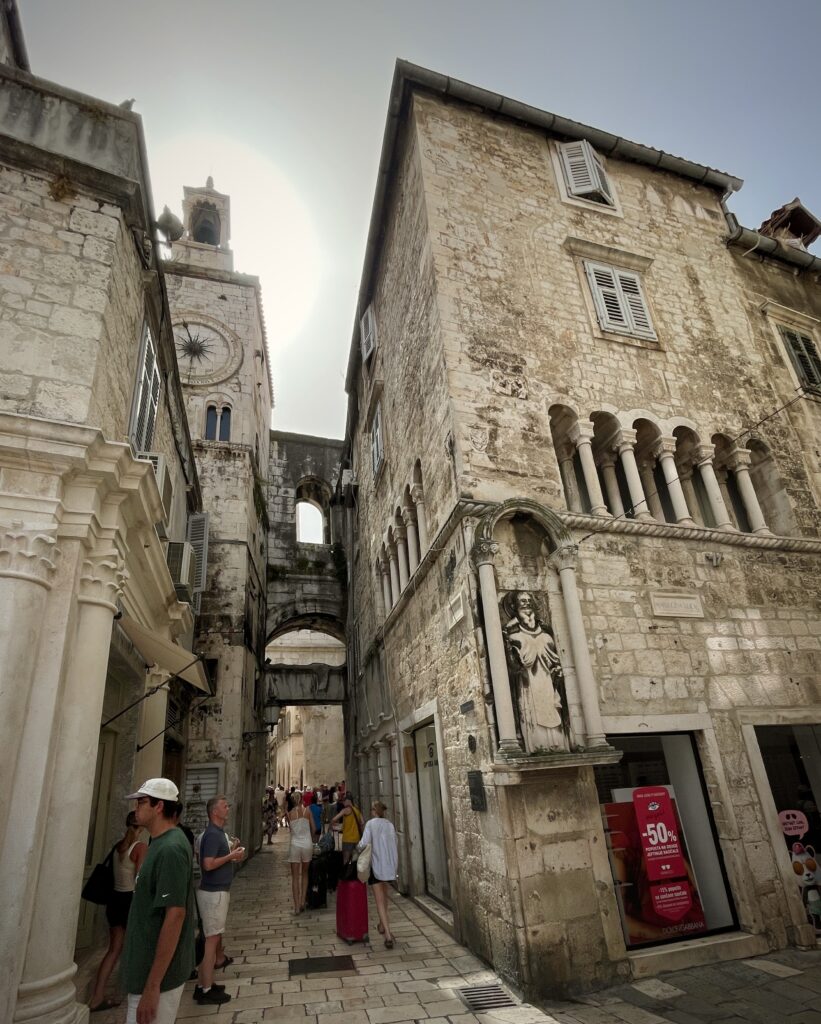
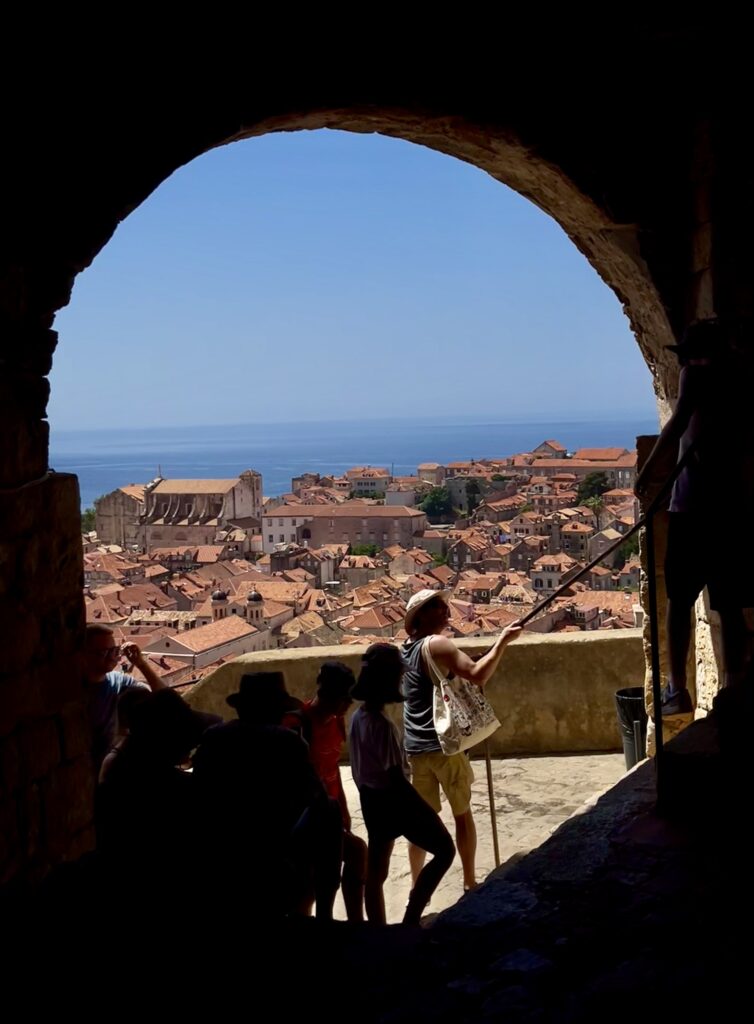
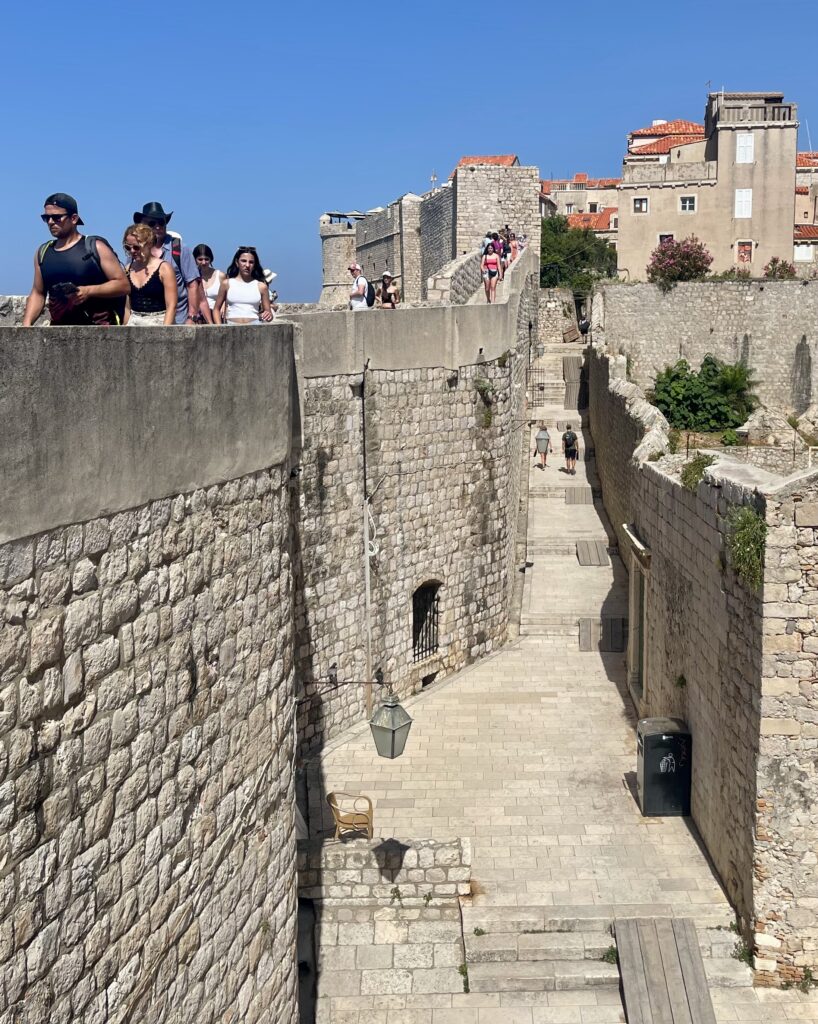
The second week took us to Croatia visiting Split and Dubrovnik, famed as back drops for Game of Thrones. Ian turned himself into a wet rag walking the city walls in Dubrovnik, the steps, the height and the roof top views were simple stunning. 

Around the back streets of Split 


Split

Views across the rooftops of Dubrovnik

Walking the 3km of Dubrovnik City Walls


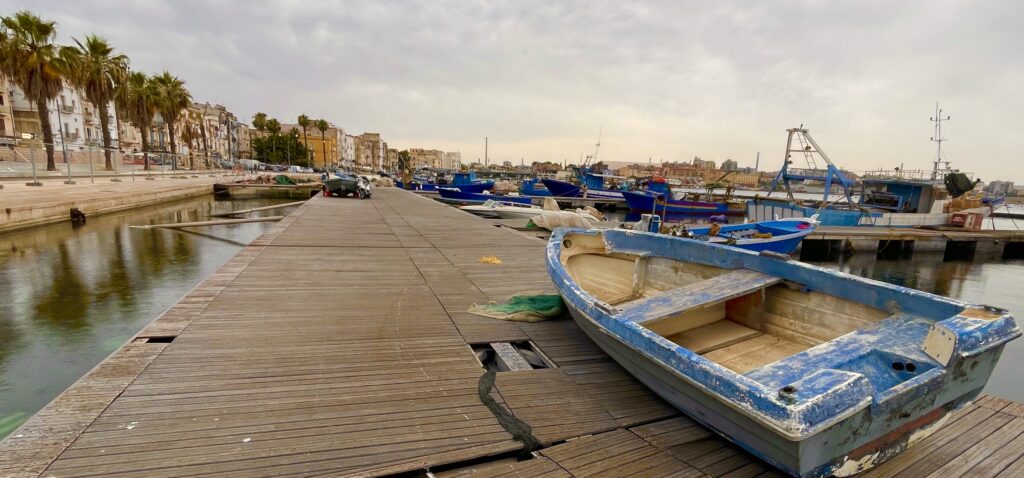
Heading back to Greece we stopped at Corfu and we reminisced of our first visit (BC-Before Children) to the nearby island of Paxos. Our final port was in the arch of Italy’s boot and the city of Taranto. It’s a town of two halves and I’m glad we walked around the old town together, as it is a sad place, rundown and dilapidated, a total contrast to the clean, modern and expensive new town which is across the swing bridge

The fisherman’s port at Taranto, Italy

Heading home to the UK, we’d heard about power cuts at Manchester Airport but the only issue we had was the baggage carousel  kept shutting down, it took ages to collect our cases, but at least we got them back. Now it’s time to make it up to the dog and the boat. We’ve got ten days to get the boat back on to the Macclesfield Canal before the next adventure starts!


A Lazy May

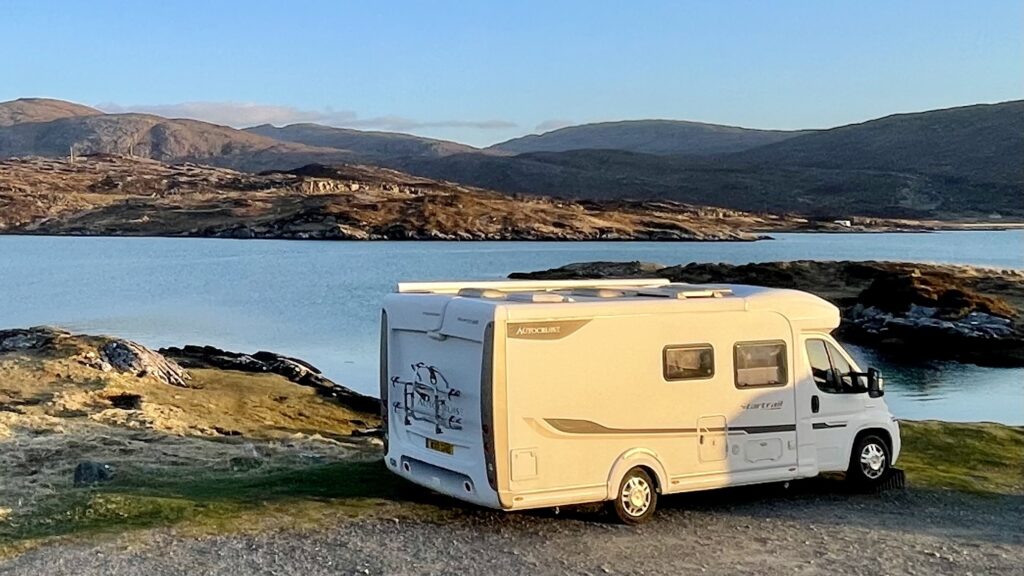
Our hero, Hollie the motorhome on the Isle of Harris

It was time to get back to the boat, but our planned lazy May began with a  rather  expensive hiccup. After the trip to the Hebrides, Hollie the van/motorhome was due some serious TLC. Time for a full service and MOT plus new tyres and a look at the injectors that had caused some of the problems during our trip. We had intended being back on the boat the following day, but Hollie was proper poorly and was being kept at the garage. The poor mechanic couldn’t believe her engine even started, let alone had driven us the 1500 miles around Scotland. As Hollie is also our accommodation when we’re visiting our hometown, we ended up sleeping on a fold out bed for three nights in Grandma’s study while Hollie got fixed!

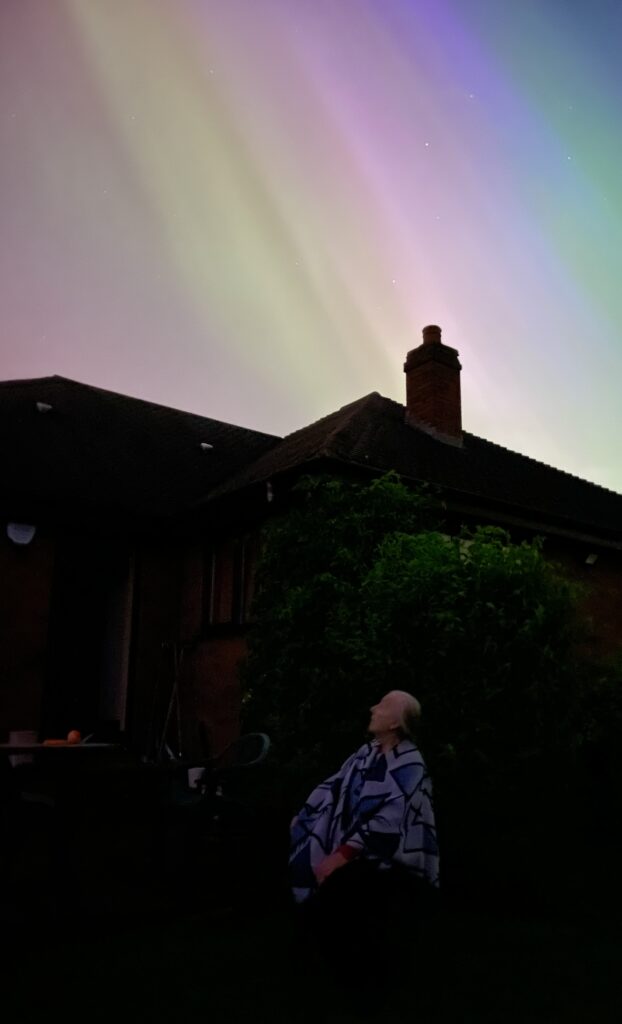
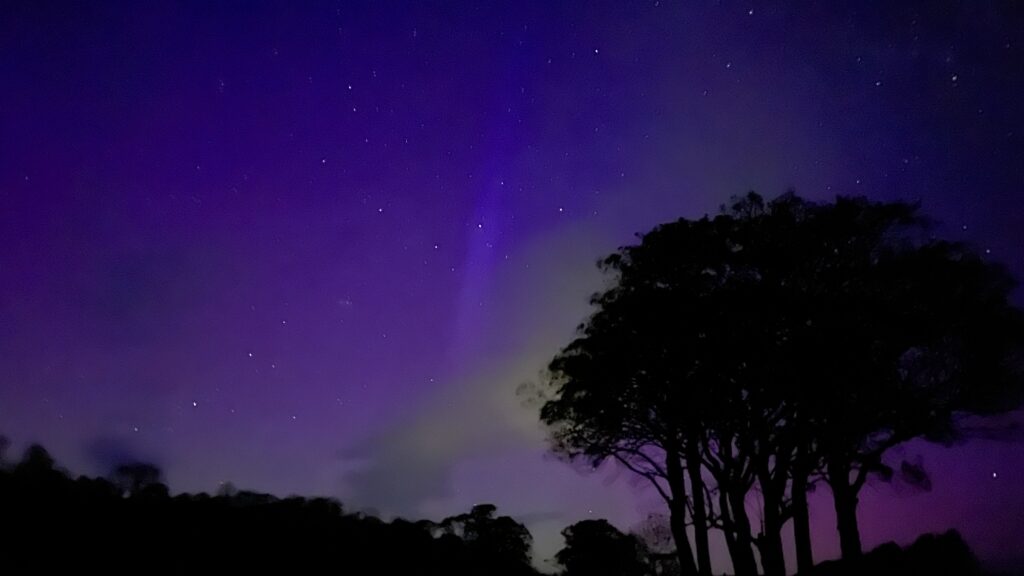
A corona of the Northern Lights over Cheshire

Eventually they let Hollie out with a caveat (come back if she’s struggling again) and we are hoping it was all a ruse to keep us in Congleton for a few extra days. The highlight of that extra time was spending an evening watching the Aurora Borealis in the back garden with our family.  Sadly, the colours weren’t strong enough for everyone to see but we could all spot the moving shapes and we agreed that I’m a bit bonkers. I get really excited when I see the lights dancing!

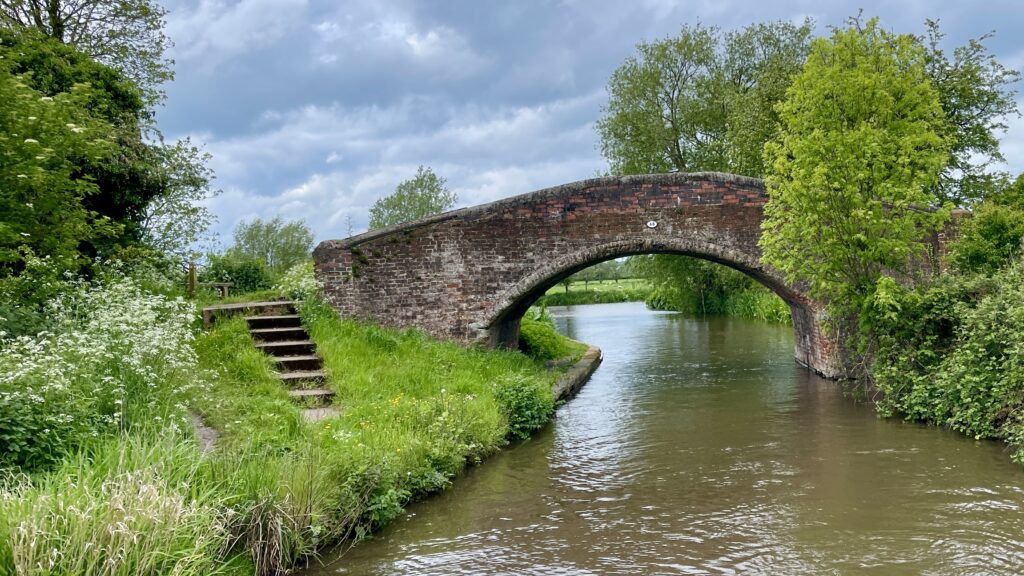
Bridge 68 on the T & M

Now we can finally make it back to the boat and it’s Heron’s turn for some TLC.  During June she’s going to be lifted out of the water, have her bottom washed (hull gritblasted) and a new black coating applied (2-pack epoxy – the boat version of an expensive waterproof!). The water tank is also going to get cleaned and painted with the same stuff, it’s only 17 years overdue! So, we are on a mission to get Heron to the boatyard by June 3rd. We could probably do the whole distance in four days as it’s only 44 miles and 26 locks but we have three weeks. So we’re taking our time and enjoying the scenery! We’re on stretches of canal that we’ve cruised many times before with very familiar locks, tunnels, bridges and pubs to mark our way. In fact, it was in this area, some 35 years ago, that we hired our first boat from Jannel Cruisers in Burton upon Trent and fell in love with narrow-boating and canals.

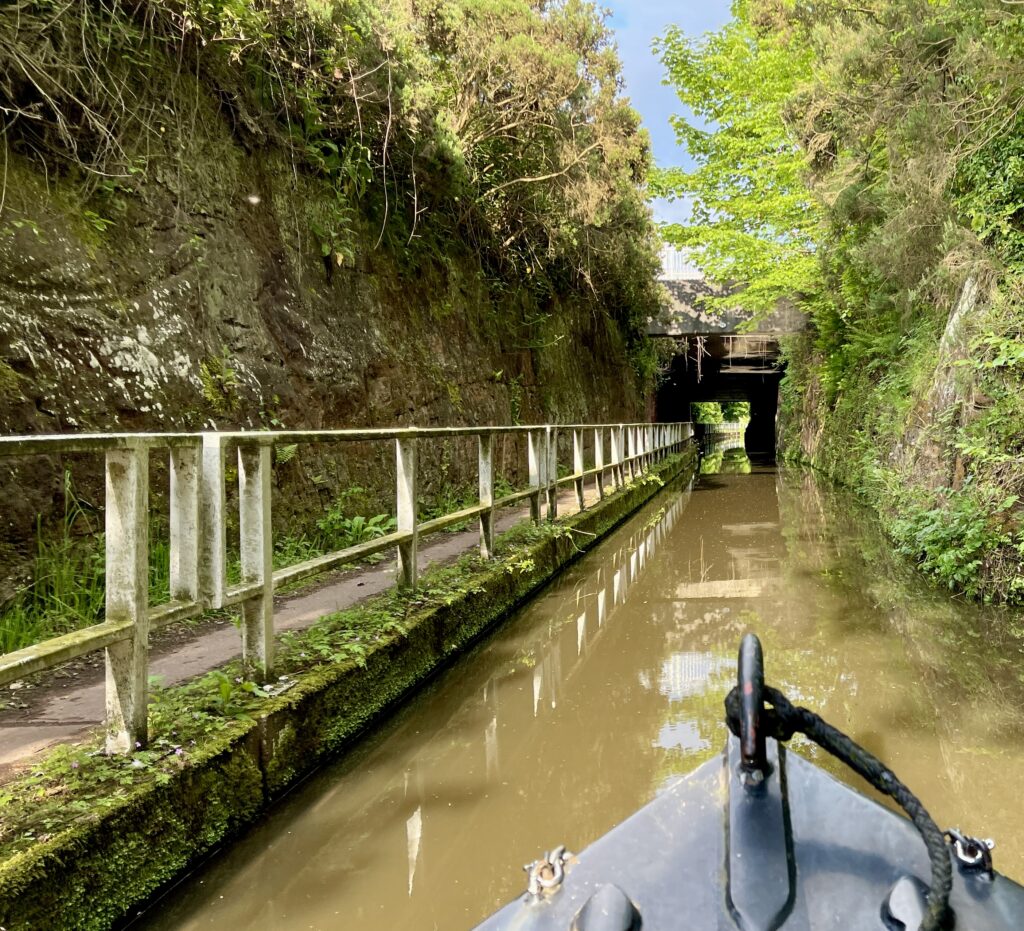
Armitage Tunnel

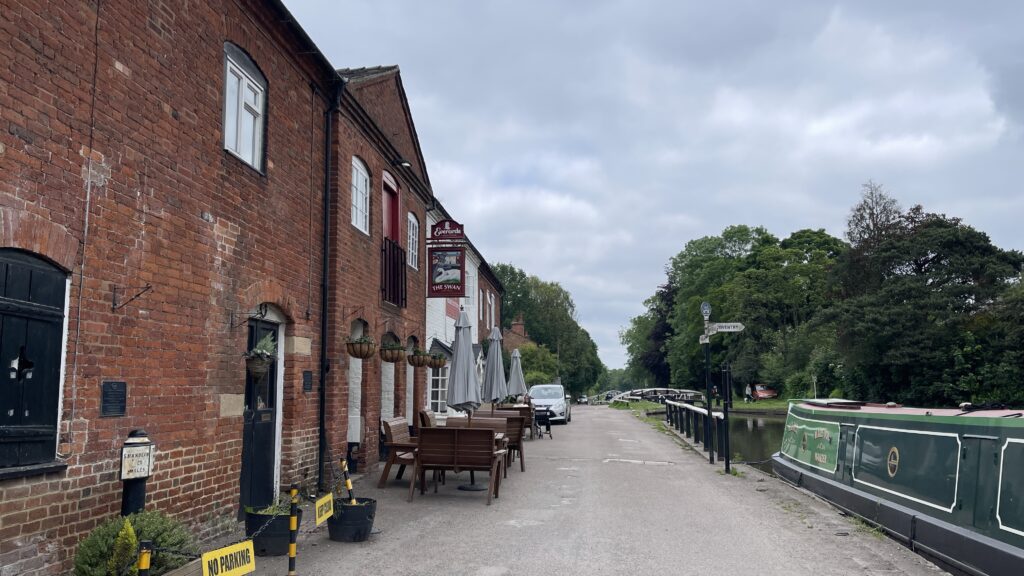
We’ve had a few days on Tixall Wide then headed south along the Trent & Mersey Canal (T&M) to Fradley junction. The only disaster so far has been to run out of coffee beans. This was quickly remedied by Ian and the dog doing a 2 mile round trip to the nearest convenience store. In all the time we’ve been boating, this is the first time that we’ve actually stopped and had a meal at The Swan at Fradley Junction. And despite how strange it sounds, Ian definitely recommends the chicken burger with curry sauce!

The infamous Swan pub at Fradley Junction

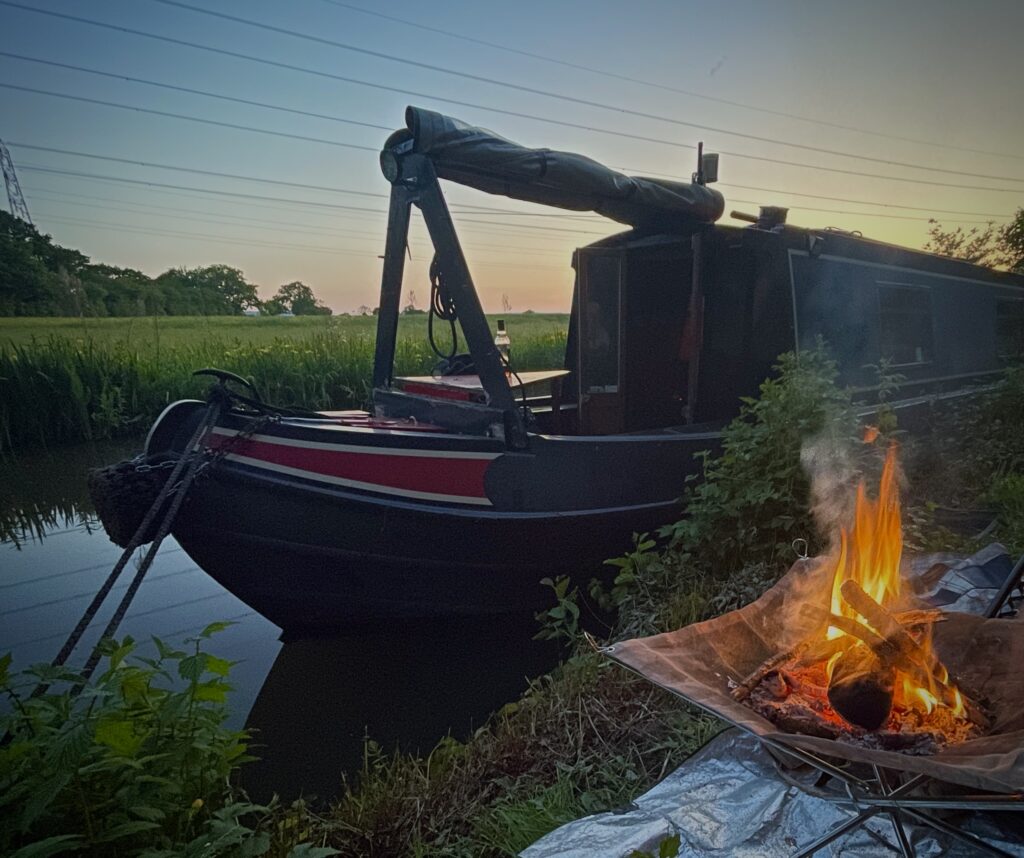
It’s been lovely to experience some dry weather. The hot sunny days have brought out the flowers; the May blossom is dusting the hedgerows with white snow and the yellow irises are reflecting sunlight onto the water. The whole place is bursting with new life, there are mallard ducklings, moorhen chicks and cygnets everywhere. Sammy and the Barefoot Boater have been for some longer walks, and in the evenings we’ve relaxed outside to the sounds of Song Thrushes having a sing off with the Blackbirds and watching the moths being chased by bats. Whilst in the cabin, the spiders (big scuttling things that watch you and drop down onto your legs) are planning a takeover of the boat. The wide grassy towpath has given us space to set up deck chairs and burn a few logs in the fire pit; me happily burning marshmallows and Ian sipping his favourite malt. I should admit it – I had some of his whisky too!. It is nice to be home, to be lazy and to stay “still” for a while before our next adventure begins!

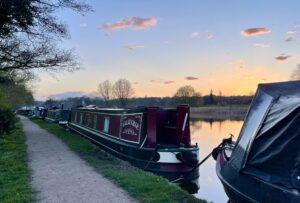
An evening on the towpath

The last few days

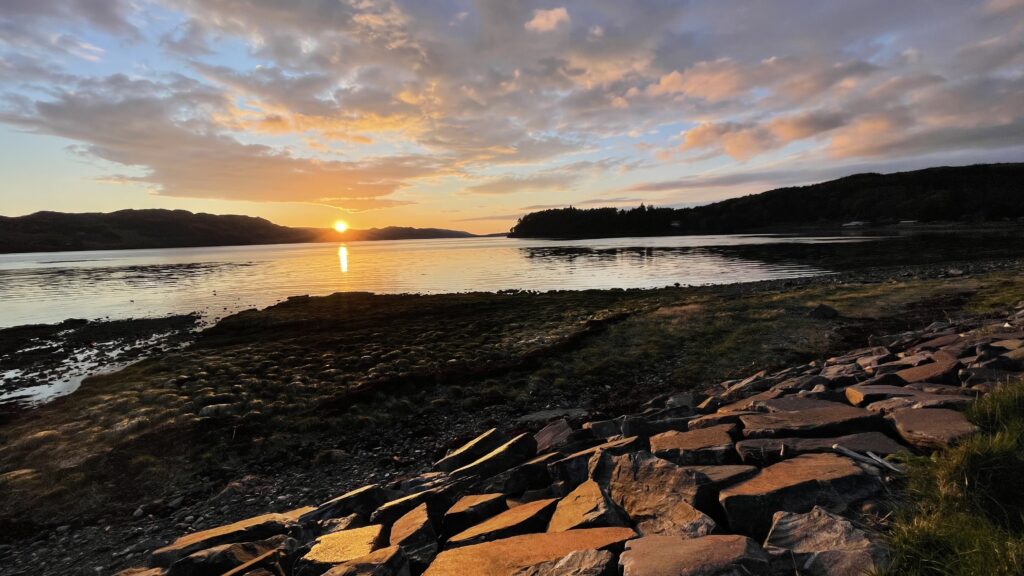
Sunset over Loch Ewe

Our ferry from Stornoway docked at Ullapool on the mainland and we drove on to a campsite at the end of Loch Ewe, to be met by the most stunning sunset of the trip. During World War Two, a Polish Army unit was based on this site, one of many protecting the coastal communities against German attack. From 1941-44, Loch Ewe was a base for Arctic convoys. These ships provided essential supplies to war torn Russia along a route described by Winston Churchill as “the worst journey in the world”.

Poolewe Font or Cup Stone

The morning brought a few more surprises when we found a neglected Pictish stone and a Font or Cup stone in the local cemetery. This five hundred year old stone has a hollowed-out bowl that is believed to hold sacred water that will never dry out and is reputed to have healing powers for warts and other ailments.

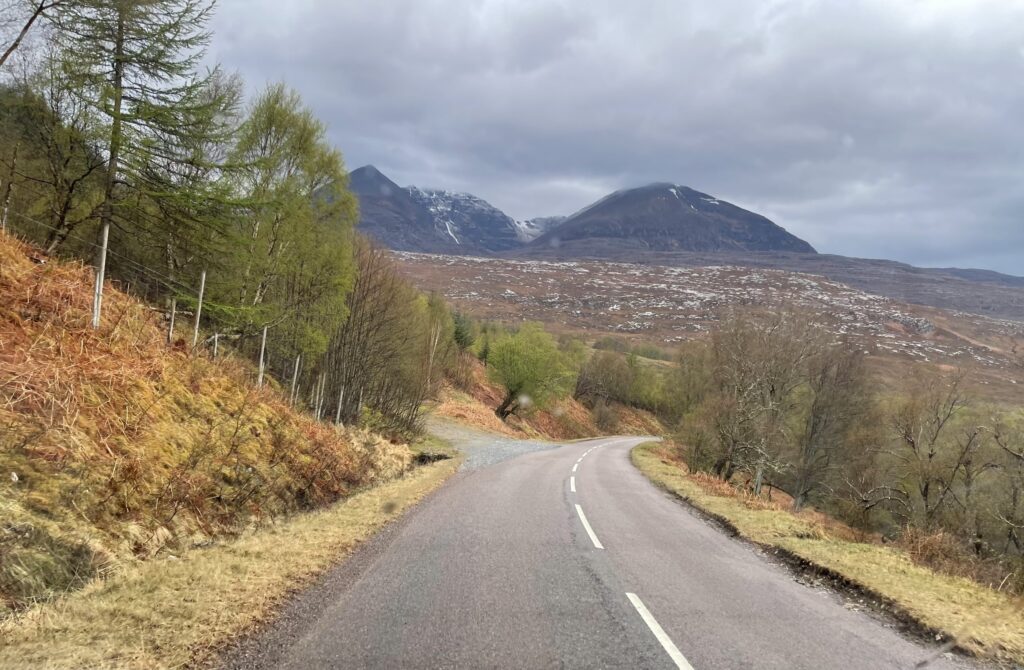
Spectacular scenery on the NC500

Maybe you already know this, but motorhomers have a tradition of waving to each other as they drive down the road (it’s a fifty/fifty chance of a reciprocal wave). Our current route was along a stretch of the NC500 and which is very popular with motorhomes and campervans. Unfortunately, our wing mirror didn’t survive one of these friendly encounters as the other driver strayed across the road and took out the indicator light on it. As you can imagine it was a bit of a loud bang, and no, they didn’t stop, Ian was not very happy.

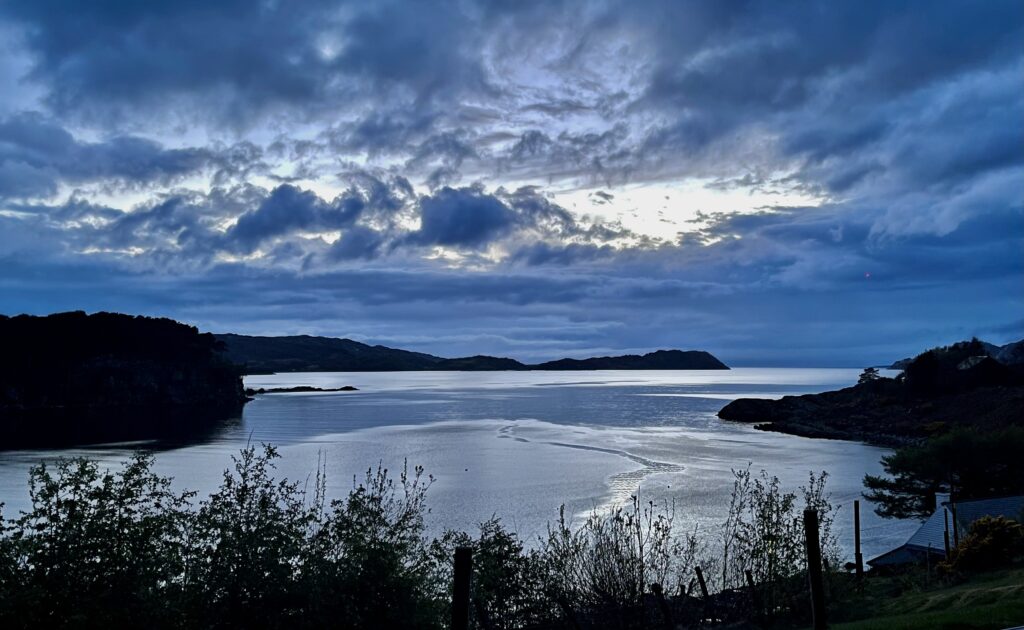
Evening view of Loch Shieldaig

Following the coastline, we continued south to Loch Shieldaig and a campsite which we’d originally booked four years ago when we hired a motorhome to try it out. But that was the year that Covid hit and everything got closed down, so we never made it. As it took us so long to get there, we booked an additional night. To our delight we had a lovely view of the Loch and Shieldaig Island where there was a nest of White-tailed eagles, which we caught glimpses of as they soared above the loch. Ian’s aunt and uncle loved this place so much that they named their home after it. I obviously wanted to know what the name translated to, expecting something like paradise or nirvana, I was a bit disappointed to discover it’s Gaelic for “herring bay”.

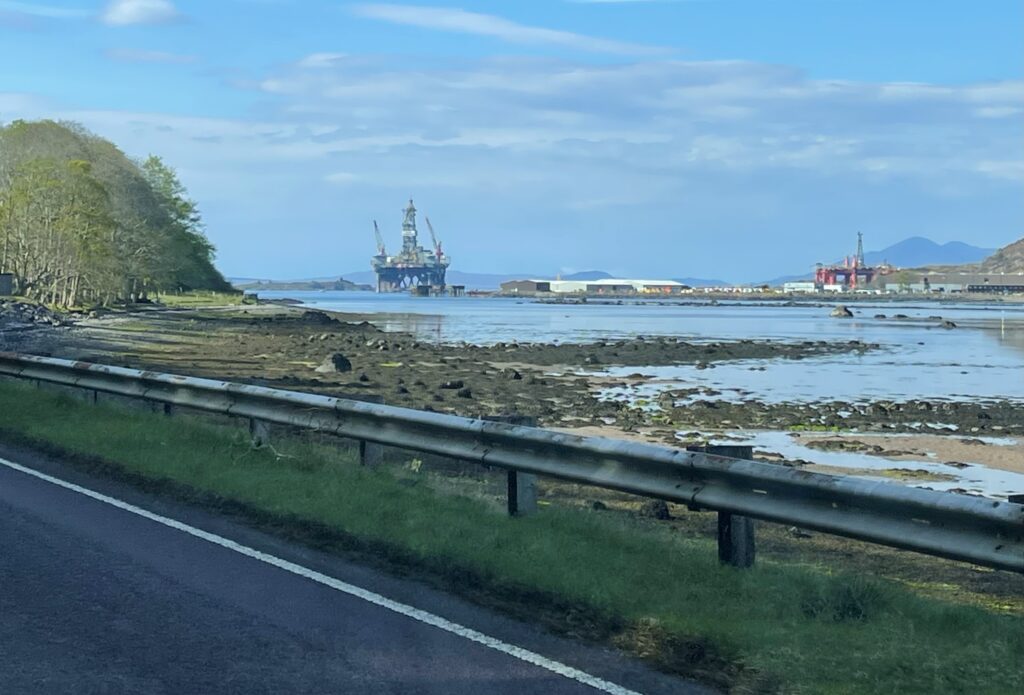
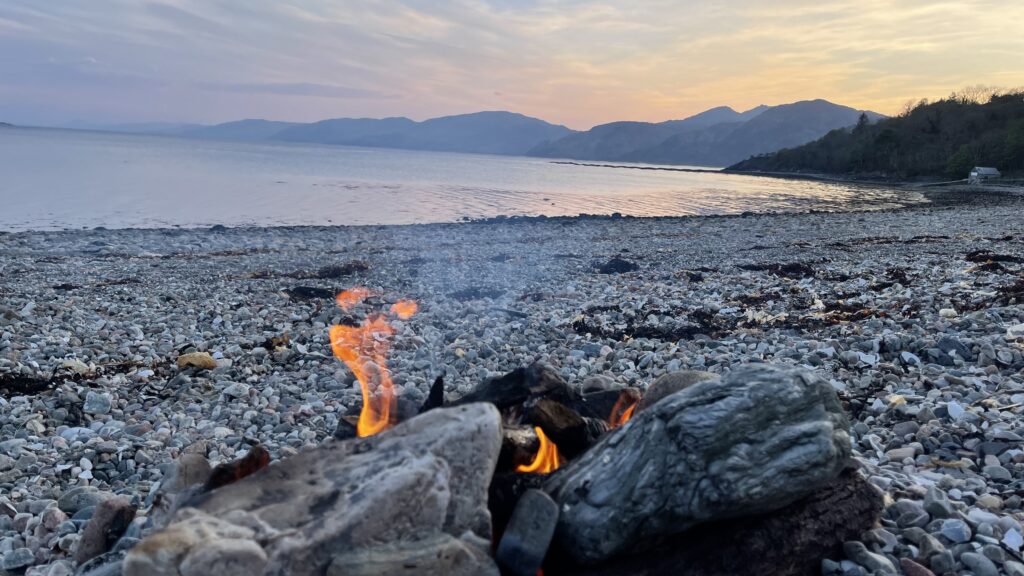
Weirdly the next day found us driving past oil rigs! I honestly didn’t know that they floated!! Onwards to Invergarry to collect an Amazon parcel containing the new indicator light from the smallest Post Office I’ve ever seen. It was literally a brick sized shed in a layby. Next up was two days of amazing warm sunshine and swimming in Loch Linnhe with views towards Glen Coe. For our last night by the sea, we built a bench from a beam of driftwood and had a beach fire. It was a beautiful evening. As we sipped our single-malt, the sun lowered behind the mountains, and it felt like the earth was sighing and relaxing into night, one that ended with another amazing, but very purple, aurora. Perfect.
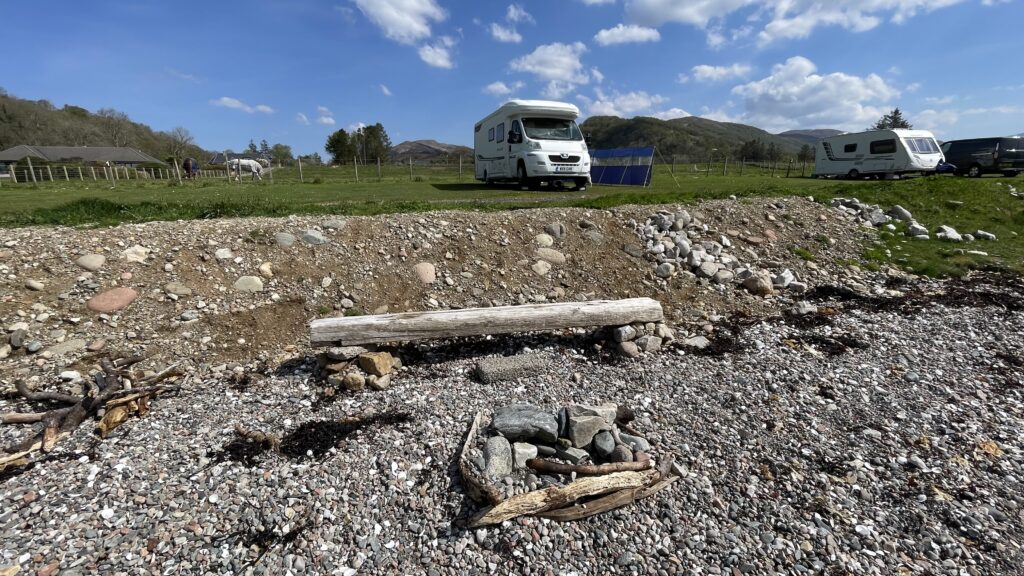
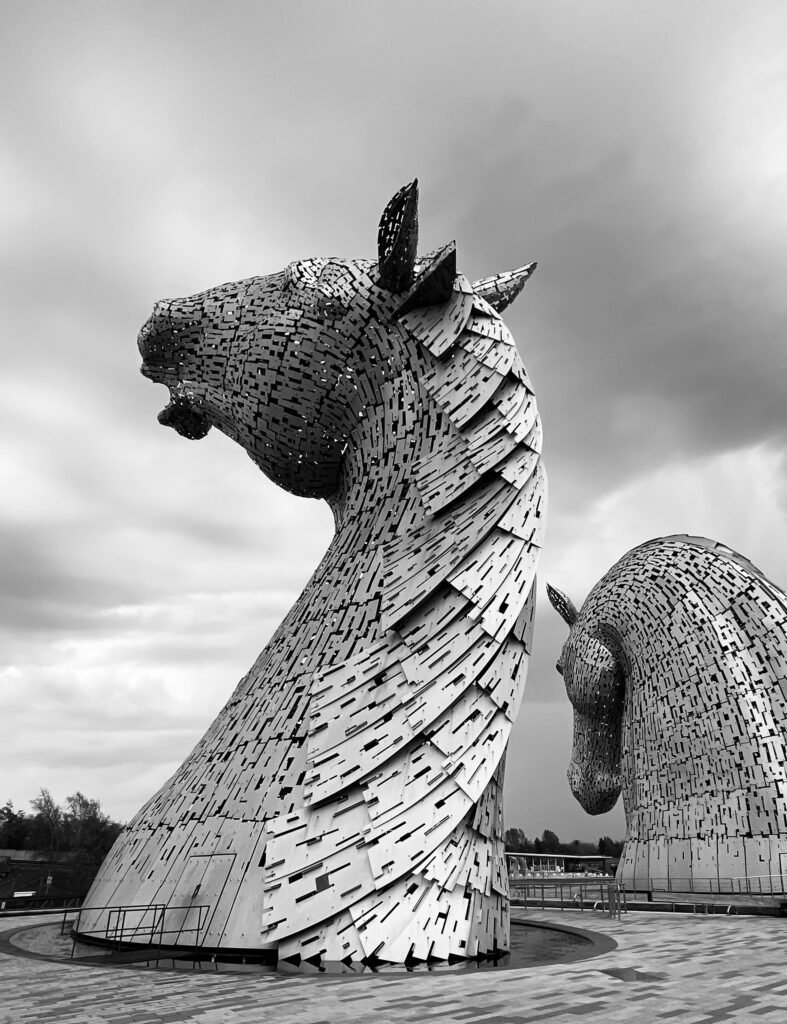
Onich Campsite by Loch Linnhe
A perfect evening on the beach
The Kelpies by day

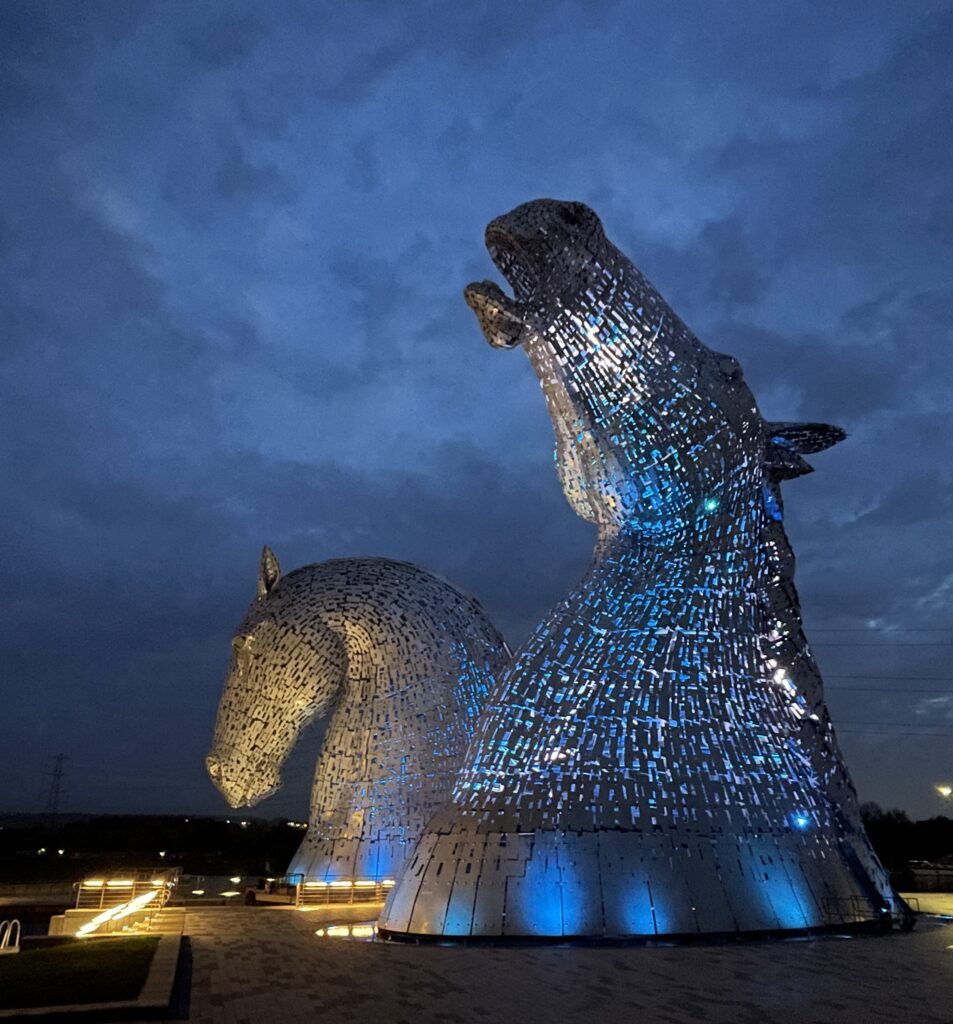
Two final destinations on our list obviously had to include something to do with the canals in Scotland. First up, we spent a night with about fifty other vans in a carpark and a view of the Kelpies alongside the Forth & Clyde Canal.

The Kelpies by night

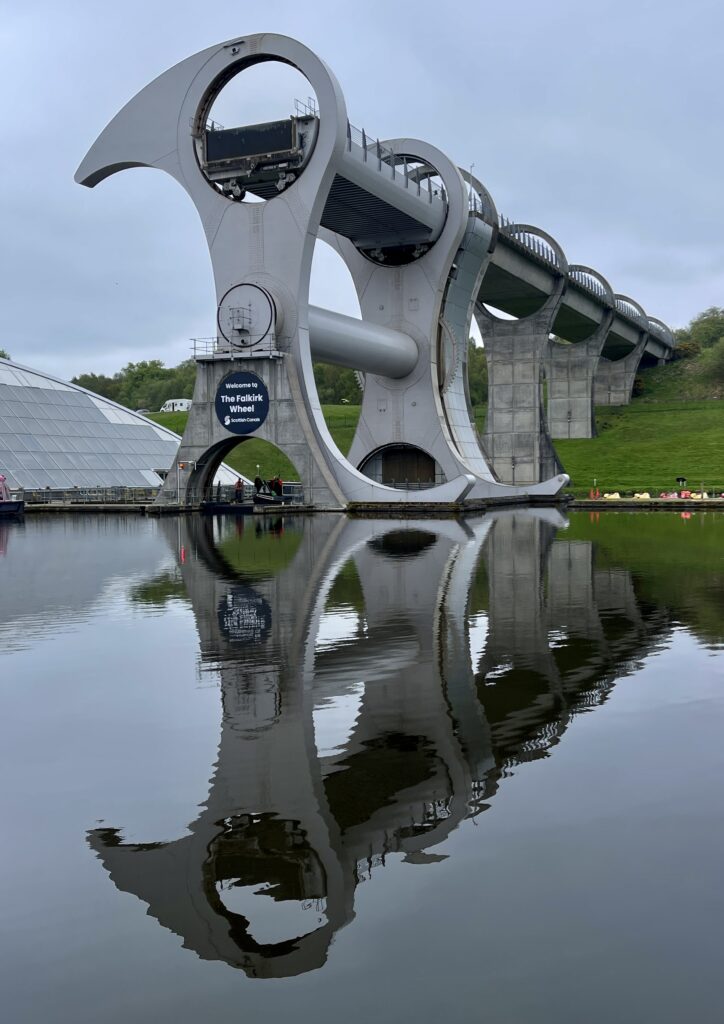
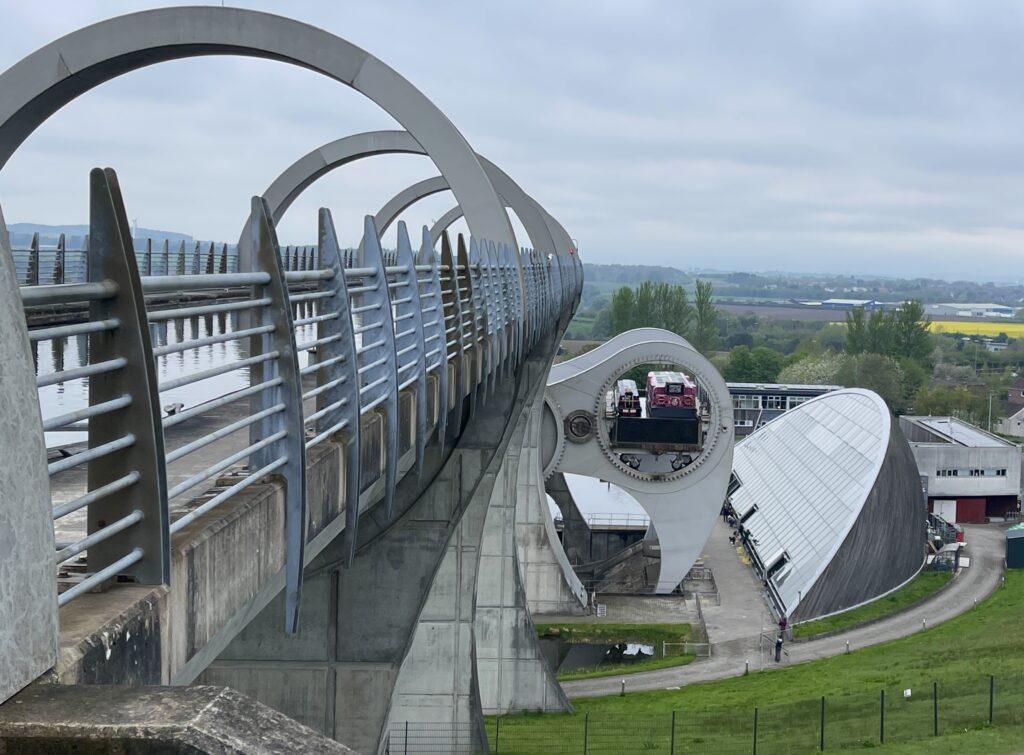
Then on to the Union Canal to watch the Falkirk Wheel in action. Canals, canals, home is calling, and as much as we’ve absolutely loved our escapades in the Hebrides, we can’t wait to get back home to the boat to avoid the Scottish midges and enjoy the late spring sunshine (we hope). Before we headed back south of the border, we rounded off the trip with a wonderful evening catching up with some much missed Scottish friends.

Falkirk Wheel
Falkirk Wheel rotating


PS The next trip to the Western Isles is already in the planning stage, there’s so much more to see!

A final glimpse of the Aurora

Harris & Lewis – The Long Island

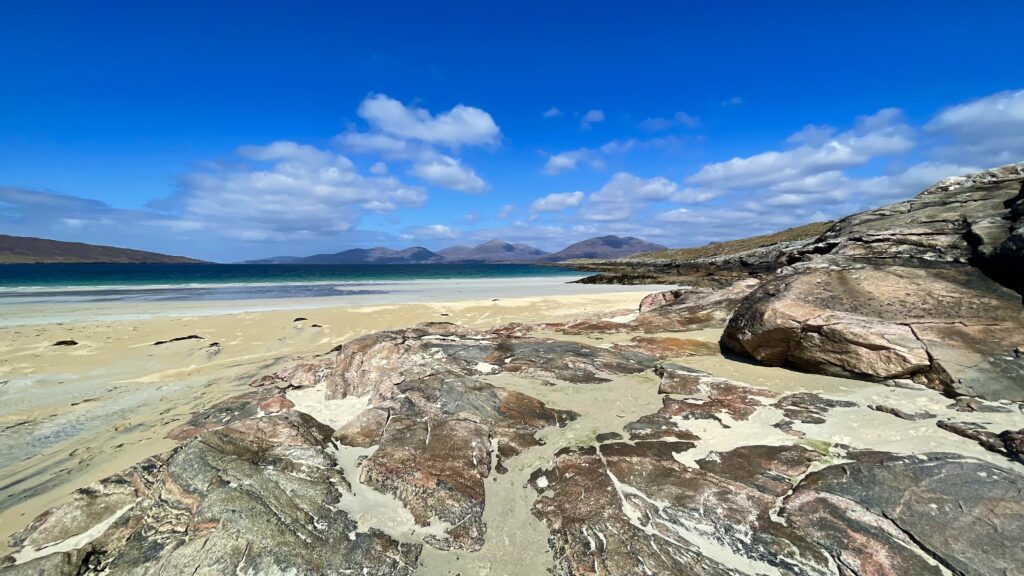
Luskentyre Beach

We crossed on the ferry from Uig on Skye to Tarbert on Harris and traded the majestic landscape of Skye for a moonscape of rocky outcrops. This pinkish white layered crystal is about 3 billion years old and is some of the oldest rocks on the planet. It’s called Lewisian gneiss and is believed to bring peace and healing. This rugged landscape frames the golden sands and the emerald green waters of the lochs. Ian is loving his dips in the sea, on one day he had three swims each one on a different beach and quite happily “Freezing my **** off!”. Personally, I prefer the air temperature to be above 10 degrees Celsius before taking the plunge into water that’s probably nearer to 5.   
Challenging roads

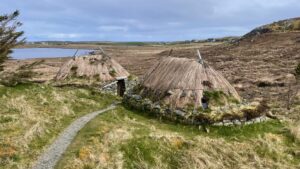
Harris and Lewis are really two parts of one island which has also been known as an t-Eilean Fada , Gaelic for The Long Island. The roads on the “Long Island” are mainly single track with passing places and either, very soft verges (gives you a sinking feeling), or steep side edges (not good to catch your axles on). We’ve had the joys of nudging past a range of beasties, from Highland Cattle, with massive horns that could rip the side of the van in half, to bleating sheep, wild goats (also with vicious looking horns) cute little ducks and strutting chickens with a death wish. Once past the mountain range, on the lower third of the island that separates Harris from Lewis, the landscape becomes a soft peaty moorland. The sparse landscape of the moors stretch out to the horizon, appearing bleak and empty. But dotted around are the shielings, small stone huts traditionally used in the summer to watch over cattle, which prove this to be fertile grazing land, rich in nutrients and wildlife.

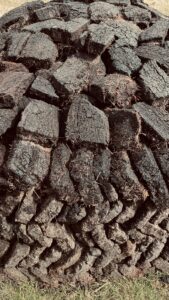
Stacked peats at Arnol

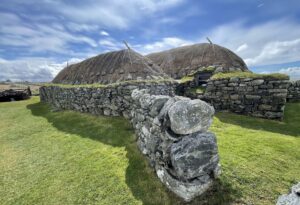
The Black House, Arnol, Isle of Lewis

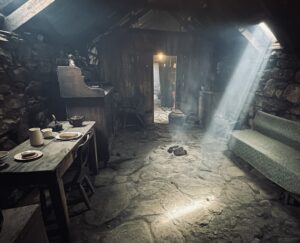
Smoky peat fire inside the Black House

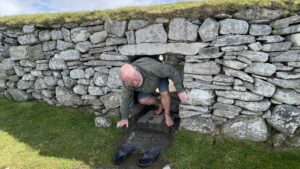
Ian demonstrating height restrictions of a ruined Black House

We saw a lot of evidence of peat cutting across Lewis. The right to cut the peat is specific to a property with profiles up to 20ft deep. The best banks have peat that’s denser and blacker, this higher carbon content burns hotter and longer. There were “cruachs” , or stacks of peat, at the Black House at Arnol. I thought the dried peat would be crumbly, but it was surprisingly heavy and hard with a deep earthy smell. Inside the thatched long house, the smouldering smoky fire keeps the thatch free of pests and rooms free of tourists, as they cough their way outside! Personally, I love the woody smell as it reminds me of home and campfires.

The Norse mill and drying kiln, Lewis

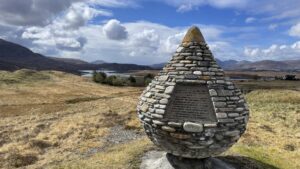
Monument to the Hebrideans who protected Bonnie Prince Charlie, Arnish, Lewis

There seems to be far more evidence of human occupation on Lewis. From ancient stones, historical monuments, and memorials of past heroes to the sad sight of numerous stone ruins and derelict crofts. The migration away from the Western Isles started after the Jacobite rebellion of 1745, causing the clan system to end and breaking people’s ties to the land. This was followed by the “Little Ice Age” during the mid-late 1700’s, caused by falling volcanic ash from eruptions of the three famous volcanoes  on Iceland– Katla, Hekla and Laki. These years became known as the Year of the Black Snow, Year of the Black Spring and Year of the White Peas (imported from Holland to avert starvation). Destinations for starting a new life were often in North America, particularly Carolina, New York and Pennsylvania. 

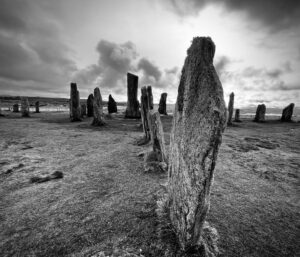
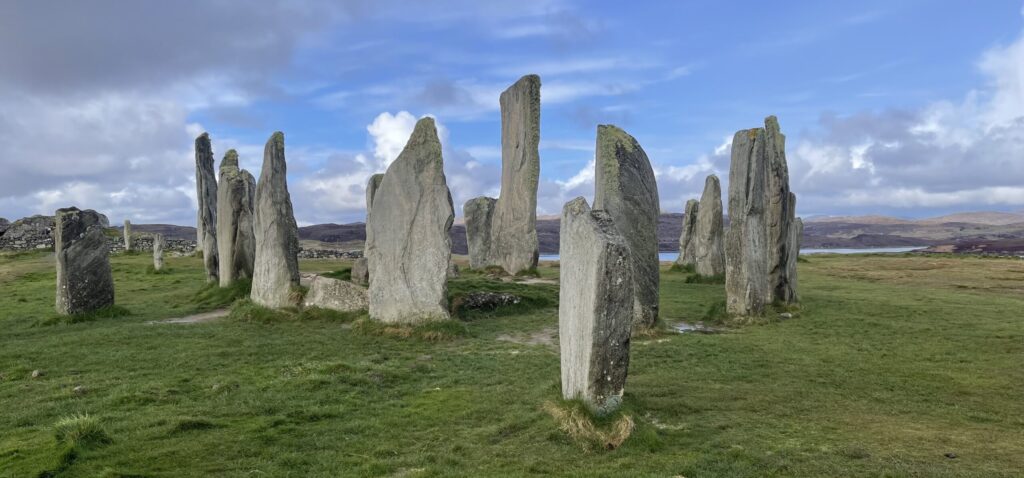
The Callanish Stones

Callanish Stones, Lewis

One of my goals was to see the main Callanish Stones site. We arrived earlyish and just managed to beat the rush. There was one person paying homage to the stones, so we did keep our distance. Weirdly, their voice was the only sound up there. It was very strange, but there was an absolute silence and a stillness to the air. As soon as we walked down the hill, we could hear every day noises and birds singing.  

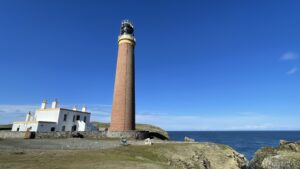
Butt of Lewis Lighthouse. Windiest spot in UK 

Our time on these isles has been blessed. We’ve seen sea eagles, and storm petrels and oyster catchers and Ian says he’s heard more cuckoos (but I think he’s making that up!)(No I’m not!!! – Ian). The weather has been kind and I’ve had another glimpse of the northern lights. It’s now time to catch the ferry from Stornoway, back to the mainland at Ullapool. We have discovered that we can tell how bumpy a journey has been by the amount of loo roll that’s unrolled itself and piled up on the floor in the shower room! It really can take an age to roll it back up again!

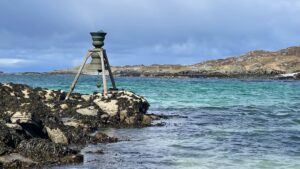
Time and Tide Bell at Bosta Beach, Lewis

Learn about this and 11 other Time and Tide Bell here timeandtidebells.org

Over the Bridge to Skye

Sunset over the dark volcanic sands of Glenbrittle Beach

It was a drive of 421 miles to the Skye Bridge and we nearly didn’t make it, we were 9 miles short when our 14 year old diesel engine started tapping. Thankfully we had a breakdown/recovery service and amazingly, a tow truck turned up within 30 minutes. Our superhero mechanic used his size 8mm spanner to re-secure our fuel injectors, and to our immense relief, we were off.

The Cuillins

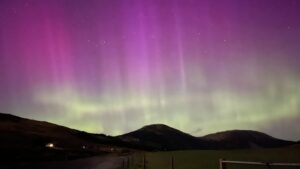
Camping by the beach at Glenbrittle, in the shadow of the Cuillins, was fabulous. The following day Ian walked up to Coire Lagan and then came back down for his first dip in the sea (too cold for a full immersion). I walked along the beach and picked up two bags of rubbish (mainly bits of fishing nets) and, in the early hours of the morning, got to see a magnificent display of the northern lights.

Aurora over Glenbrittle

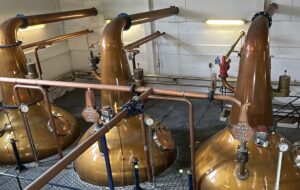
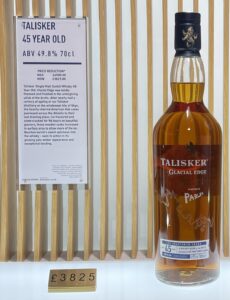
The following day we moved to a park up on Carbost pier and walked to the nearby Talisker Whiskey Distillery. Yes, we did! Of course we did! The full tour and tasting experience. And, as we feel very strongly that you should always support local industry and businesses, we did purchase a couple of bottles that were within our (stretched) budget rather than the ones that weren’t! (We will quietly ignore the fact that they are now part of one of the world’s largest drinks companies!)

The three of the stills at Talisker

The one that got away!


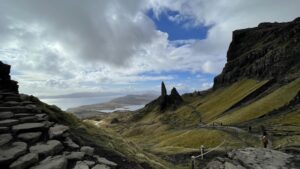
The next few days were spent appreciating and exploring the Trotternish landslip, the longest example of thermally altered basalt in the UK. The towering Old Man of Storr, is an edifice that gives the whole island a thumbs up! Dramatic and majestic, it featured in the 2012 sci-fi film Prometheus. Ian made it to the top to take this fabulous pic.

The Old Man of Storr

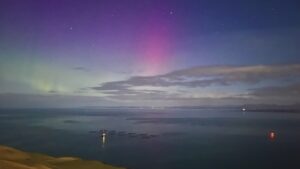
That night we parked on a muddy track with a view across the Sound of Raasay. And, with a red aurora alert, I was desperate for a clear, dark sky. It was a long wait but finally at 10:42pm there was a glimmer of red on the camera. I was out of that van faster than a meteorite could say “shooting star” and started taking pics when I got rudely interrupted by a distraught family who’d driven their hired motorhome too far off the track and got stuck in the mud “Can we borrow your grip mats?”. By the time I’d sorted them out, the light show was over, and the clouds were back.

A brief glimpse of the lights over the Sound of Raasay

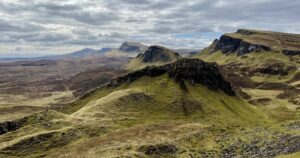
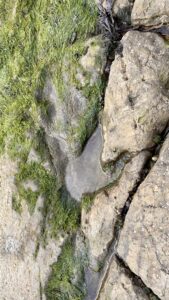
Up early again and Ian got another impressive walk in along the Quiraing. This immense flood basalt landscape was labelled “a nightmare of nature” by the Scottish poet Alexander Smith. The scale is incredible with a central raised plateau known as the Table and the Needle, a jagged pinnacle rising to 120 feet (37 m) above the surrounding landscape. The park up that day was by An Corran, the beach at Staffin where dinosaur footprints can be found in the rocks.

The Trotternish Ridge  from the Quiraing

Megalosaurus footprint on Corran beach

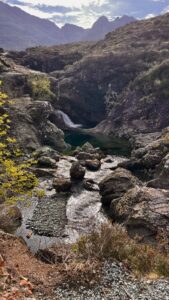
Our final treat was the tourist trap of the Fairy Pools at the foot of the Cuillins. These waters are a vivid aqua blue and popular for wild swimming. Ian did make it to the top pool, but the queues for a dip in the frigid waters put him off. I also admit to just finding amusement in watching people posing for photographs under the direction of their over enthusiastic partners. You don’t need to understand someone’s language to appreciate their meaning!

The lower Fairy Pools, Glen Brittle

We even managed to fit in a first, in-person visit with one of Heather’s friends. They met online, taking part in an online choir during lock-down, but this was the first time they met face-to-face, and it was a little emotional. We loved the visit and were very envious of the view from their house. But Ian says we couldn’t live there because there’s nowhere to moor a narrowboat.

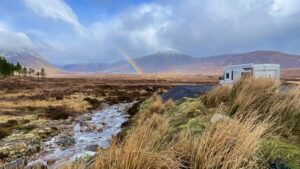
It’s been strange that on every day that we’ve been travelling any distance, we’ve seen rainbows. They are usually quite small and low, stretching across the foot of a hillside or along a glen. We even saw them as we sailed to Harris on the ferry from Uig to Tarbert. Perhaps they are a sign of hope because we left Skye as we had entered it, with engine problems. This time the van was billowing out white smoke and kangarooing on and off the ferry. Driving around to the nearest garage, we discovered it had closed about 4 years ago! But somehow, the engine now decided to behave itself, so we drove on to a nearby spot to recover from all the excitement.

Rainbow across Glen Coe – one of many on this trip

Time for Tixall

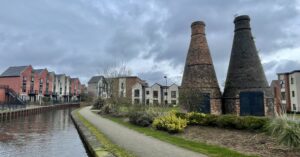
Bottle kilns beside the Caldon Canal

We were going to take our time heading south on the Trent & Mersey (T&M) to Great Haywood, but with the promise of a sunny Easter weekend, we opted to push on in the hope of getting a good spot at Tixall Wide before the Bank Holiday rush. As we headed into Stoke-on-Trent again, it’s always a joy to see these iconic bottle kilns. During the 19th century and at the height of production in the “Potteries”, there were over 2,000 of these kilns in Stoke. Sadly, these are two of the 47 left standing.  Many can be seen in the Longport conservation area and they are still used in Middleport Pottery, but this pair aren’t far from Milton China in Hanley.

Descending Top Lock at Etruria

Descending the Stoke Five Locks, we were fortunate to have help from a chap known as “Rob the Lock” who cycles along the tow path helping boaters through them. Apparently if you’re lucky enough to meet this gentleman he’ll also offer to help with shopping, water and laundry runs. He’s been doing this for 20 years, but despite this being our home area, this was our first meeting!

Heading past the former Joules Brewery in Stone

Heading south, we got to Stone, the site of 2 previous breakdowns. This time, we didn’t need to get the tiller welded back on. And the alternator didn’t give up. Success!


Back in February 2022, Tixall Wide was our first destination as liveaboard boaters  and we were hit by two storms during our stay. The muddy tow paths were horrendous, and the lake had a couple of potential breaches (small leaks), which we did photograph and report to CRT. So we were pleasantly surprised to discover that remedial work had been done and the complete length of the tow path from Great Haywood to Tixall Lock had been re-laid and new Armco (steel piling) inserted along the edge of the lake to prevent those scary little leaks.

The sun sets over crowded moorings alongside Tixall Wide

This was quite timely as the land around has become waterlogged over this winter and the adjacent pastures have been flooded for many months creating a new wetland. This has given me a chance to use my binoculars and spy out a few wading birds such as egrets and oyster catchers.

Dawn light across the adjacent wetland

As usual in the UK, the Spring weather has been rather mixed, but we are loving the occasional warmer days. We’ve opted for a longer stay here and Ian’s been off on his barefoot walks whilst I’ve been knitting, baking, reading and bird watching. It’s a hard life.

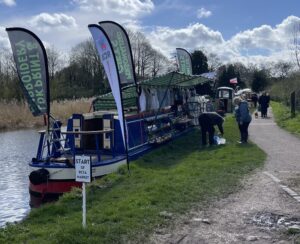
Easter Floating Market at Haywood Junction
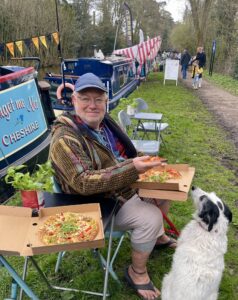
Enjoying an alfresco lunch


Over the Easter weekend, there’s been a Floating Market down by Hayward junction of the T&M. This is always worth a visit, there was a lovely atmosphere and we HAD to stop by the cheese boats and a few of the crafty ones (including Snoot Loot selling boxes of dog treats). It was great to see children filling out quiz sheets and shuffling around the sellers looking for names of the boats and their wares. Lunch was freshly cooked stone baked pizza followed by coffee and cake at one of the café boats before the mile walk back to our boat.

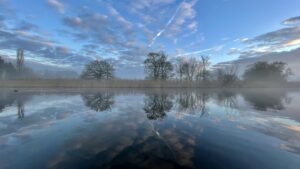
A still morning on the water

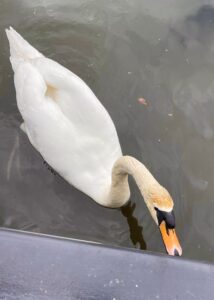
It’s also been a time for reflection (pun intended) with some very dramatic sunrises and sunsets. Despite some spells of very wet weather, the sun has been resilient and we’ve soaked it up along with the birdsong and enjoyed chatting with the gongoozlers who wander along admiring the boats. Unfortunately we do have one visitor who’s not so friendly. There’s a young swan who attacks the side of the boat with his beak, the noise inside our steel home is rather loud and my only mode of retaliation is to wave the washing up brush at him through the duck hatch – I don’t think he’s getting the message and I probably look like a wild washer woman!! (Probably??? – nothing probable about it – Ian)

My nemesis