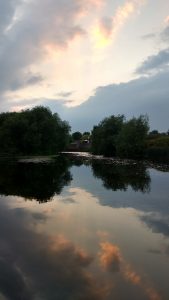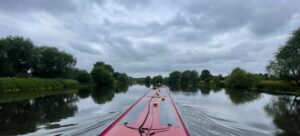
We are on a mission! We have ten days to get back onto the Macclesfield Canal in time for me to have yet another operation. This time it’s a reconstruction of my right shoulder from an event that took place 10 years ago when our, then new to us, dog decided to try and rip my arm off.
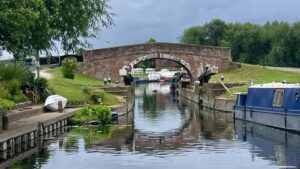
Collecting Heron from Redhill Marina near to Ratcliffe on Soar, I worked out that we had 45 locks and just over 70 miles to cruise. With concerns over stoppages, we’ve ploughed on doing long days; averaging 2.5 mph (wow!), queuing at locks, chugging on through hail, torrential rain and gale force winds. We’ve made it in six days and now need a few days to recover!
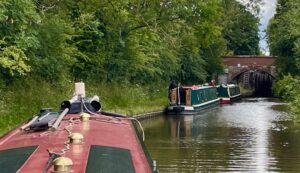
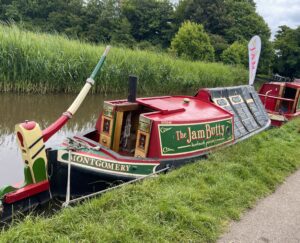
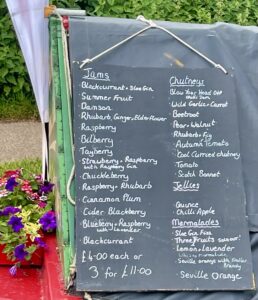
Along the way we passed through Great Haywood and spotted the Jam Butty Boat, so of course we had to stop and stock up with jams and marmalade; choosing was a demanding task with such a fine array of amazing flavours!

Moving the boat every day is something that we haven’t done for a long time, it’s what we used to do for a family holiday! We’d drag the kids off and spend two weeks of forcing them into hard labour cruising a canal circuit like the Cheshire Ring or the Four Counties Ring (lots of fresh air- it was good for them).
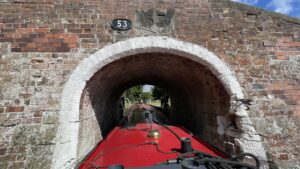
Since becoming liveaboards, we are now rich in time and can cruise for as long as it takes to find the next place to moor, anything from a few minutes to a few hours. Then we usually stay put for three or four days to go exploring and enjoy the scenery, so moving everyday has been quite a shock to the system!
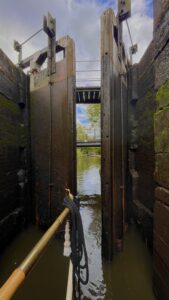
We’ve discovered that a newly painted water tank delivers very smelly, chemically scented water. Thankfully we already have a filtered drinking water tap which mitigates this, but it has meant that we’ve needed to flush the water tank five times during those six days of travelling. It takes about 2.5 hours to empty a full tank of water, at 10 secs/litre, and yes, we were that bored that we measured the flow rate. On the plus side, we now know that our tank is a whopping 900 litres and means we could probably last for 3 weeks without finding a waterpoint for a refill (instead of the 7-10 days rule that we’ve been following for the last 15 years).
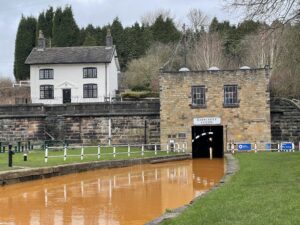
The next few weeks are going to be pretty boring for Ian, so I’ve come up with a cunning plan to keep him happy – it’s boat paint touch up time; roof, gunnels, foredeck, front lockers and even the red triangle of the cratch! (Bloomin’ list keeps getting longer! 🤣 – Ian) He’s going to need all that extra water from our repainted tank…..for showering!!
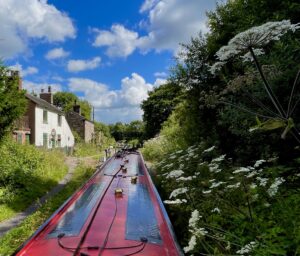
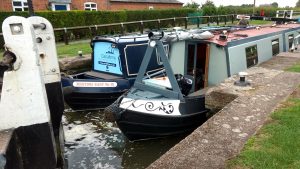 This end of the Trent and Mersey sometimes feels like a motorway compared to the Macclesfield Canal. It is wider and deeper, but that’s nothing compared to what was coming later today.
 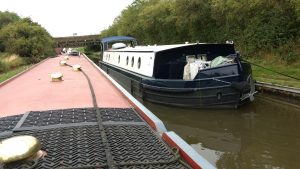 With the wider locks, you start to see widebeam boats. I know people get these wide canal boats because they effectively get twice the interior space for the same length of boat. But we have never been drawn to them. They restrict you to a specific set of waterways which a narrowboat doesn’t. Our 57 foot narrowboat makes all the connected english waterways accessible to use. A widebeam just wouldn’t.
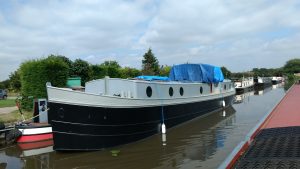
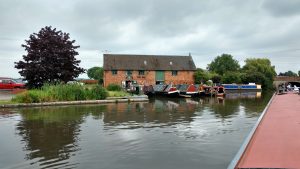 Late morning, we arrived in Shardlow, a famous inland waterways port. Shardlow is always bustling with boats and today was no different. Passing through Shardlow, we reached the Derwent Lock, the last on the T&M (or first for those heading the other way). And on this stretch, some of the boats are even bigger.
  It becomes obvious here that you are about to pass on to a very different waterway. Having passed the flood lock with its flood warning lights, at Derwent Lock there are other warning boards about water levels and the risk of navigating when the Trent flow is high. Thankfully none of these warnings apply today. So we descended Derwent Lock and ventured out onto the River Trent.

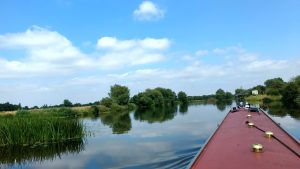
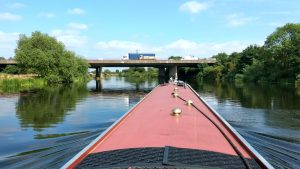
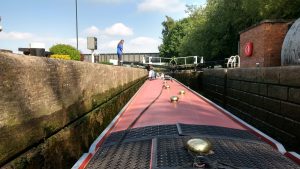 It is a short-lived excitement, as we soon reach Sawley Cut. River navigations have weirs and locks at regular intervals. The weirs help to retain enough depth in the reach above them to allow boats to operate without grounding. The locks allow boats to bypass the weirs and descend to the level below. Locks are usually situated in a man made channel called a cut. Sawley Cut
  is another busy boating destinations, with a large marina, public moorings and services. Sawley Lock is electrically operated and manned by lock-keepers. We took on some water and then descended the lock onto the last stretch of the Trent for us, passing Trent Lock and Erewash Canal before turning on to the River Soar.
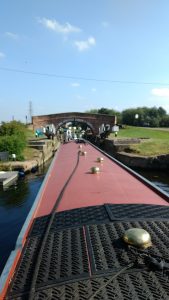 The Soar is not nearly so wide as the Trent, but is definitely a river and not a canal. There is a detectable flow, which we are now working against. The flow also means you need to be aware of how the navigable channel can vary in position, especially on bends. And there are a lot of bends!