“Hurrah!” we said, CRT (Canal and River Trust) had lifted the stoppage further up the Macclesfield Canal which meant that we could escape up on to the Peak Forest Canal and head to Whaley Bridge and a favourite mooring spot at Bugsworth Basin.
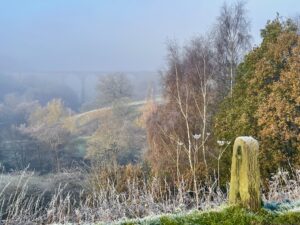
We got the Christmas decorations up, stocked up with provisions for about two weeks and set off to refill with water on the way to Bosley Locks. First problem was we were a bit late setting off, a boater going past us shouted that the water tap was frozen but when we got there it had defrosted … and someone else was already using it!
The sun was due to set around 4pm, so by the time we had topped up the water tank, there was only an hour of daylight left.
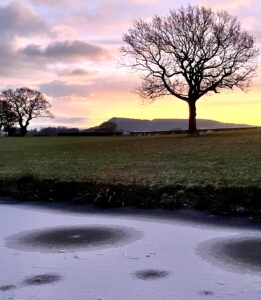
Recognising defeat, we decided to pull over on a long sweeping bend that gives a lovely view of the local hill called The Bosley Cloud, or The Cloud as my Dad always preferred to call it. (Cloud is from the old English for “clud” or rock). By now it was cold and overcast, time for a brew and a nice hot stew.
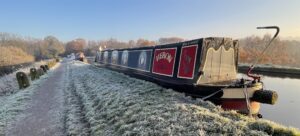
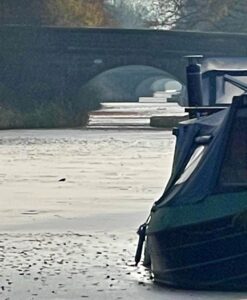
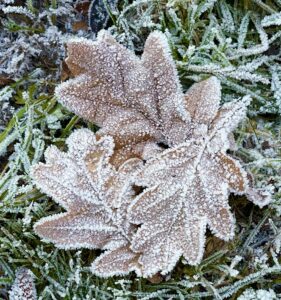
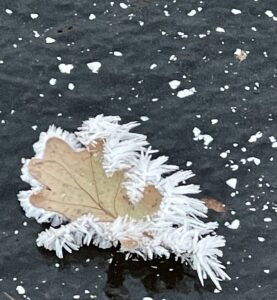
By the following morning our plans were completely scuppered, the canal had frozen. As a courtesy, boats don’t move when there’s ice across the canal. Just like on a road, ice on a canal is a hazard, it can make steering a nightmare and the edges of ice sheets can chip away at the blacking (the specialised black paint) on the hull leaving bare metal exposed to rust. The noise of the ice banging against the metal hull is horrendous.
Narrowboats are usually constructed of three different thicknesses of steel plate, as a general rule, the cabin roof is 4mm thick, the boat sides are
6 mm and the hull is 10mm. The hull is also protected from corrosion by having 4 anodes attached under the water line. Every 2 to 4 years the boats are pulled out of the water to be jet washed and re-blacked. The anodes are checked and replaced if needed. Heron was done about 2 years ago and it cost us about £700, so it’s not a cheap job, but very necessary. So if the canal is frozen we stay put to protect the hull, and hope that everyone else does too.
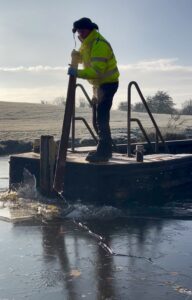
That first day a work boat came past. Thankfully, they were being careful by going fairly slow and using a plank to break up the ice sheets in front of their boat, but since then, the ice has got thicker, and no boats or ducks have been past.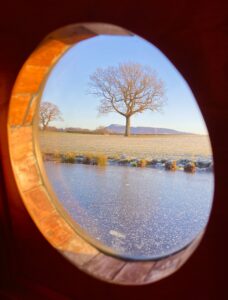
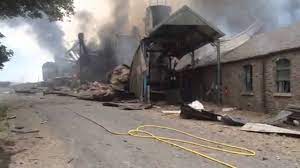
When I see The Cloud, I can’t help but remember the disaster that happened in 2015 when the local wood treatment mill which is in the valley on the other side, had a series of explosions which killed four people. The mill and workers cottages are still fenced off and it’s a very sad sight to drive past the boarding. The criminal trial against the company and the managing director only concluded in June 2021. The company was fined £75,000 and the managing director was fined £12,000 and given a 9-month suspended sentence for breaches in Health and Safety. You can read the full story here
We’ve been stuck in the ice for just over a week and it looks like we’ll be here until the thaw in about 4 days – we hope. As liveaboards, this presents a few challenges. Everything on board is limited, fuel, food and water being the essentials, and we only have what’s on board.
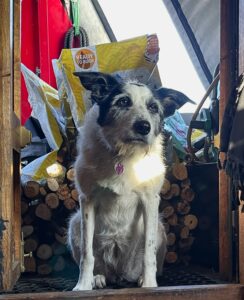
Even though we’re not moving, we still have to run the engine for several hours each day, this charges the leisure batteries to give us lighting and power for TV and also supplies our hot water. The solar panels aren’t much use in the winter as the sunshine is too weak to recharge the batteries. The bow of the boat has its cratch cover closed so that we can use it as a storage area for coal (smokeless) and wood (scavenged). We have a very efficient multifuel stove in the saloon. We have two gas bottles in the front bow locker, one is a reserve and as luck would have it, we had to start on the reserve bottle last night.
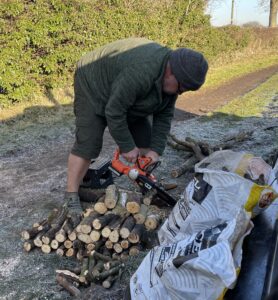
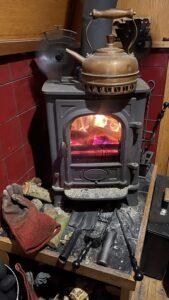
Our days are centred around keeping warm and keeping the boat functioning. If we weren’t on the boat, there is a distinct probability that the interior would freeze, and pipes could burst. The outside temperature has been as low as -8 C, whilst inside we’re roasting at 28C!
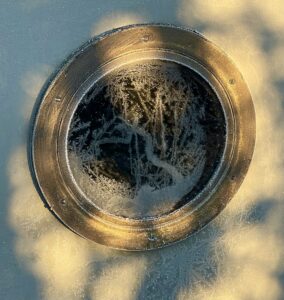
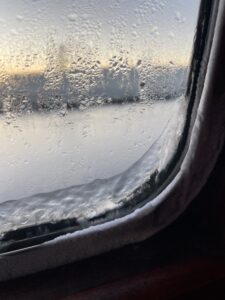
Our ten bags of coal are now down to four, we go scavenging for wood every other day to help stretch out the coal. Ian has had to start bringing water to the boat in 10 litre water carriers. He had to walk back to his Mum’s house to get the car! Hopefully the thaw will also allow the local fuel boat to reach us so we can restock.
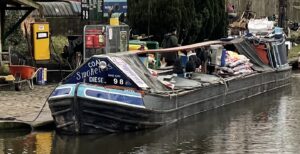
This is beginning to sound like hard work, and it is, but it’s also a way of life and we love it. The scenery is stunning and watching the stars from your snug cabin bed is a dream come true.
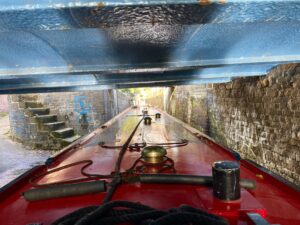
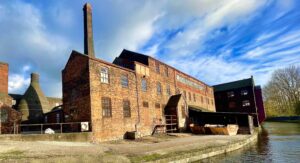
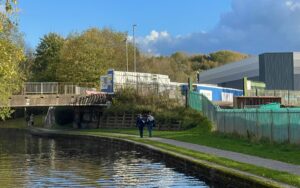
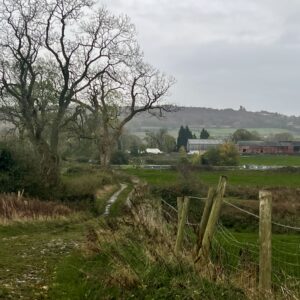
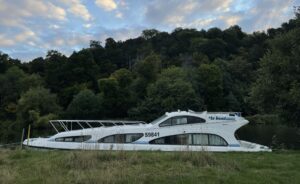
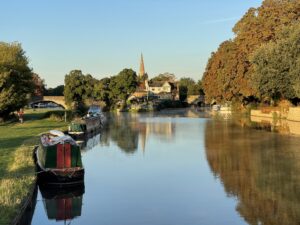
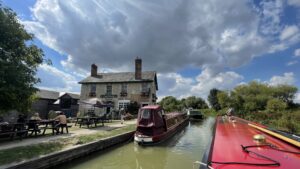

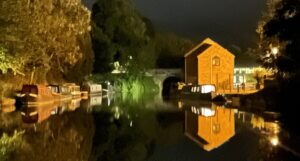
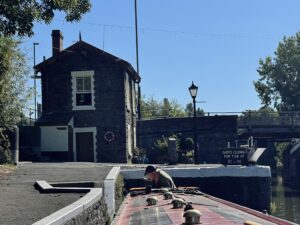
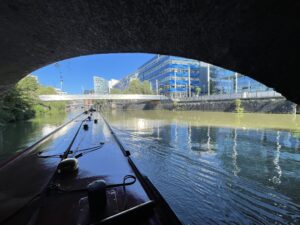
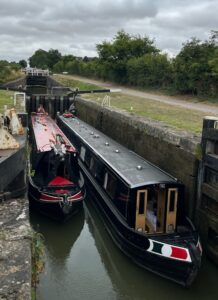


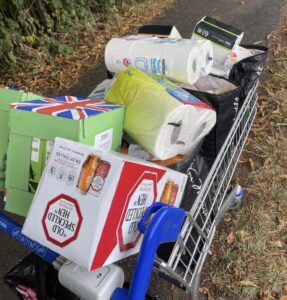
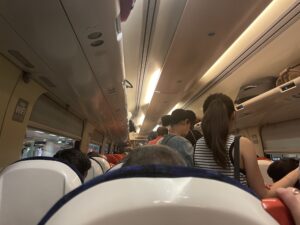 The forecast was for the hottest day on record and some trains had already been cancelled. Our train ended up with standing room only and someone collapsed from heat stroke in the vestibule section. They were fine, but this area of the carriages is not air conditioned and gets up to 40+ degrees. We were then held up at Banbury for nearly 2 hours as the rails had buckled. I tried to take the dog for a walk in the shade, but the platform thermometer said 42, so we quickly returned to our seats! The boatyard in Jericho, that was “boat-sitting” Heron for us, was due to close at 4pm, we made it with 15 minutes to spare. The 3 hour journey had taken over 6 hours. So, after sending Ian to fetch some groceries, we untied and headed out of the city to the cool of the countryside.