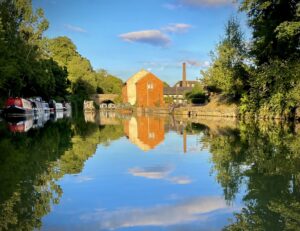
You know when you’ve previously lived near to some where for 13 years and think you know it- well think again. When you’re living a different style of life, you find yourself seeing a place in a new light, discovering features and hidden gems that were in plain sight.
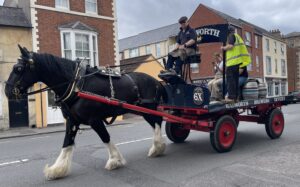
We used to live in a village not far from Devizes, but the only way I used to see the town was when I was working, on blue lights and sirens negotiating the roundabouts and pedestrian crossings that skirt the town centre. A few weeks ago, when we were enroute to Bristol, I walked into Devizes marketplace and recognised a bus stop that I’d previously driven to from Swindon and, at the time, had a nightmare finding (there are quite a few bus stops in the town centre). When I first started working on ambulances, my colleagues would point out locations and describe incidents to me that they’d attended. At the time I hadn’t appreciated how long you retain the images of the places and jobs you attend, but I do now, and it can be quite a shock encounter!
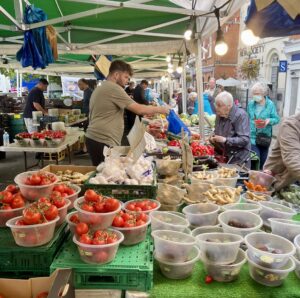
My respect and attitude towards this little town has changed completely, it’s a lovely little place, bustling with people of all ages from all walks of life. The marketplace has weekly markets. We stayed for an extra day so we could stock up from the fresh fruit and veg stalls, the colourful sight of the stalls and the sounds of the traders calling out offers brought back a host of childhood memories.
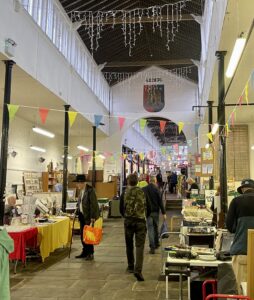
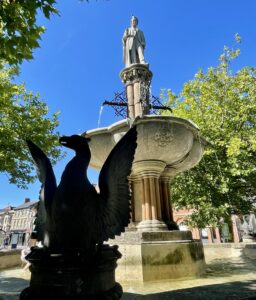
But be warned and pay your dues, this place has history and an inscription on the market cross states:
“On Thursday the 25th of January 1753, Ruth Pierce of Potterne in this County, agreed with three other women to buy a sack of wheat in the market, each paying her due proportion towards the same. One of these women, in collecting the several quotas of money, discovered a deficiency, and demanded of Ruth Pierce the sum which was wanting to make good the amount. Ruth Pierce protested that she had paid her share, and said, ‘She wished she might drop down dead if she had not.’ She rashly repeated this awful wish; when to the consternation and terror of the surrounding multitude, she instantly fell down and expired, having the money concealed in her hand”
The coroner recorded that she had been “struck down dead by the vengeance of God.”
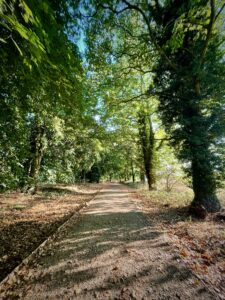
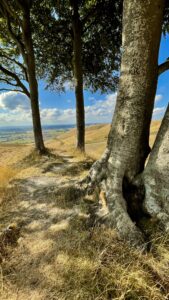
Devizes sits at one end of the Vale of Pewsey and Ian found Quakers Way, a gorgeous tree-lined avenue leading from the town up towards Roundway Down where you can see the Devizes White Horse and explore Oliver’s Castle. This iron aged fort was nick-named Oliver’s Castle after Cromwell’s troops had an encampment there during the Civil War. There are eight White Horses in Wiltshire and I was rather disappointed to discover that the majority were created in the 1800s. In contrast, the famous, and very uniquely stylised, Uffington Horse in Oxfordshire dates from the late Bronze Age or early Iron Agenda was created sometime between 1380 BC and 550 BC. The White Horse at Devizes was carved into the chalk hillside in 1999 to celebrate the new Millennium, but for some reason it is the only one of the Wilshire Horses that faces left to right.
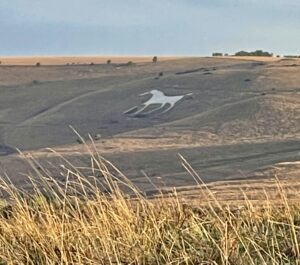
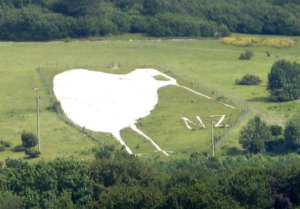
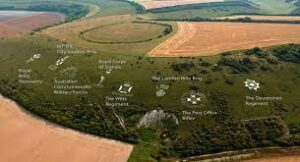
The chalk landmarks in Wiltshire feature more than just horses, during World War l and ll this region was used as a major staging post for troops. There were multiple air fields and train lines criss-crossing the landscape. The waiting soldiers also left their mark on the nearby chalk hills. At the end of the First World War, some New Zealand troops were based at Bulford waiting for their ship home. When they threatened to riot, the commanders kept them busy by carving a Kiwi into Beacon Hill. At Fovant, near to Salisbury, there are nine regimental badges carved into the hillside below Chiselbury Camp (Iron Age Fort). it is believed that the original badges were created during World War l by soldiers garrisoned nearby, in honour of those who did not make it home. Others were added during World War II and up to the late 1940s.
It’s a fascinating place and I’m glad that I’ve seen it from a new perspective. Life is full of surprises.
So pleased you are enjoying life, sounds like it’s good fun and very interesting xx
Wow, definitely some interesting surprises there! Thanks for sharing.
Love the Kiwi story, very far from home as were the Anzacs. Also reminds me of a white horse joke, Eric, but that’s another tail. Many thanks for your posts Sis, it’s a fascinating way to see the world. Keep it up 😎🤗
Wonderful