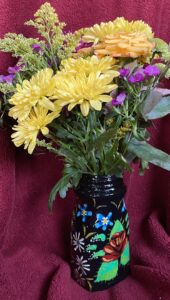
Bit of a colourful one this week. Ian keeps buying me flowers and I don’t have a vase, so I decided to get crafty and upcycle a large instant coffee jar by painting it in a traditional canal style called “Roses & Castles” (Yes, I know I’ve missed off the castle!).
This got me thinking about where this style of art came from and if it reveals anything to do with the heritage and origins of the first English bargees and boatmen back in the late 1700s.
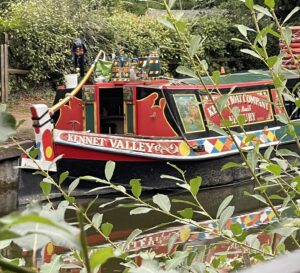
The theories on the origins of this “chocolate box style” of painting are varied. The first idea I found was that the moniker of water-gypsy was given to boatmen as a nod to them previously being Irish travellers or Romany gypsies, but there is no evidence for this.
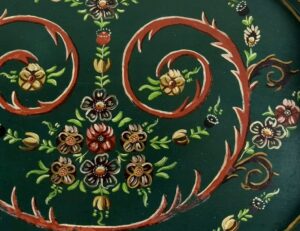
The style of this artwork does have similarities to traveller culture and folk art from Germany, Holland, Turkey and even Bangladesh. The Dutch art style of Hindeloopen is a perfect example and illustrates how flowers are depicted with simple brush strokes. Unfortunately, as the influence of this style is so widespread across Europe (and Asia), it doesn’t provide any concrete evidence for a specific group or ethnicity of people being the original bargees or boatmen.
The Roses & Castles style didn’t start to appear on boats until the 1830s. This coincided with a period when the competition from the railways increased causing a cost of living crisis for the boaters. Up to then, the boats had been run by one man with a boy employed to lead the horse. The boatman’s family would live in a house on land. Now they couldn’t afford to maintain a family home, so their families had to travel with them as unpaid labour. It was at this time that everything became decorated with these colourful designs, from the horse’s harness to the drinking cans, cupboard doors and the butty rudder. But it’s a myth that there’s only roses and castles. The designs feature any flower, river, building or animal that the boater liked the look of.

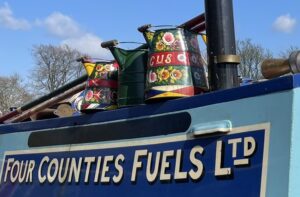
The one thing that the historians of the Roses & Castles style do agree on is the purpose of this bold show of colour and painted extravagance. During the industrial revolution there was a negative attitude towards the bargees and their families from the land people. They were chastised as being dirty and illiterate. So, although many boats were owned by canal carrying companies and had to show the colours of their livery, the families that lived on them kept the cabins spick and span. The brass work was polished, delicate lace curtains and pretty China plates were hung and bright, romantic, rich-coloured pictures adorned panels and buckets. The whole boat was an exhibition to the grimy world that they travelled through, a bold statement of their pride in themselves and their community.
The battle to show their worth didn’t just stop with decorating the boats and horses. During the Victorian period, the boat people gradually evolved their own style of dressing, that marked them as a recognisable trade. The men had bright neck scarves and corduroy trousers, the women wore long white aprons and pleated bonnets. A trade uniform that, despite the hardships of their work, identified them as an elite and proud society.
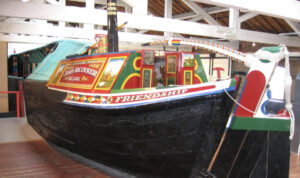
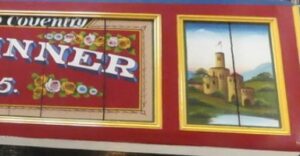
I did find one suggestion that made me wonder about how innocently myths start. Apparently, there was a gardener who lived near to the Llangollen Canal at Chirk. His garden had a beautiful array of flowers that framed a view of Chirk Castle and that is said to have inspired the first panel of Roses & Castles to be painted. It must have been an impressive display. And as to the earliest bargees and boatmen, they weren’t on England’s canals or in the 1700s. The first recorded bargees were Egyptian in about 2,400BC!
Love your art work on the coffee jar- very bright and floral 😊
Interestingly too learn more about the canal art style that we readily recognise.
Wow, great coffee jar! Is this the start of many? Shall we start saving coffee jars for you?🙂
Errr, thanks but no thanks, that was just a bit of fun so nothing serious and no need for more. You could always have a go yourself😃