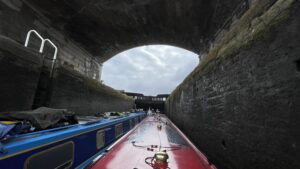
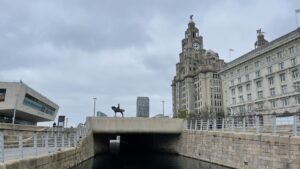
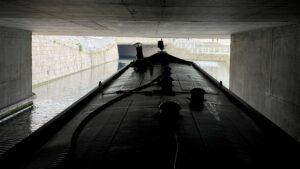
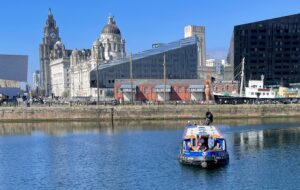
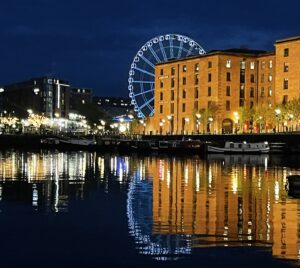
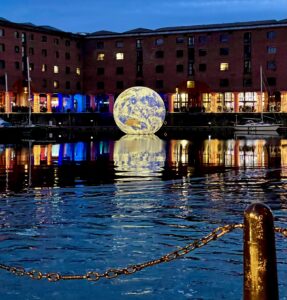
We made it to Liverpool. There must be a popular sport associated with this place, as we passed 20 footballs floating in the canal! We also had to go down the weed hatch a few times (I say we, I do mean Ian!). Stuff that has fallen into the water can get wrapped around the propeller, this time we had a pair of underpants, a cushion and a shirt. The cityscape shows a dramatic contrast between old and new architecture, both in style and materials. Within the last twenty years there’s been a huge regeneration of the docklands. On a narrowboat you enter the heart of Liverpool via the Old Stanley Lock Flight close to Vauxhall. These are series of four massive locks and we were very grateful to have volunteers helping us through them. The flight descends from the canal into Stanley Dock. You then follow a new channel known as Sid’s Ditch, named after a 36 year veteran Canal and River Trust worker who still looks after boaters (and us) in Liverpool. Finally a couple of new locks give access to the 3 new tunnels that bring you under the new waterfront by the Liver Building (it was quite daunting, but very exciting).
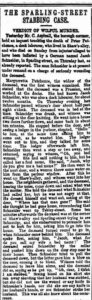
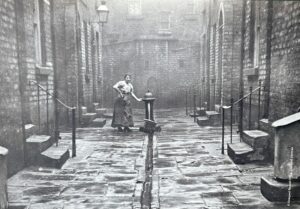
The city is steeped in history. For hundreds of years, it was one of the main British ports, having strong links (literally) to the canals and, as it turns out, to Heather’s family. She’s discovered that, from the 1700s, generations of her family worked as coopers (barrel makers) in Liverpool, and from the mid 1800s she’s also descended from German immigrants who came to work as labourers in the docks. What has been distressing was to discover the tragic early death of her Great Great Grandfather in 1875. Peter Patchence, an immigrant from Prussia (in what is now Germany), was stabbed on a street corner by a fellow German dockhand. The perpetrator was taken to the local bridewell (police holding cells) before being formally charged with wilful murder. The details of what happened were recorded at the Coroner’s Court and reported in the The Daily Post. Click on the picture below to view the complete newspaper page; look for “THE SPARLING STREET STABBING CASE” (top of 2nd column) we’ve included the whole page of the paper as it gives a fascinating snapshot of daily life in the late 19th century (make a brew and sit th’down for a right good read).
The Bridewell, where Peter’s attacker was held, is still standing on Argyle Street. It had 7 cells that accommodated about 100 guests every month, mostly over excited and inebriated seamen and dockers; floor space and bread were free, but anything more had to be paid for. Charles Dickens spent a night there in 1860 whilst he was researching his novel “The Uncommercial Traveller”; he was sworn in as a special constable. It closed in 1932, but the building was eventually rescued from dereliction in the 1980s when it was used as a rehearsal space for local Liverpool bands such as the newly formed Frankie Goes to Hollywood – most of the album “Welcome to the Pleasuredome” was written there.


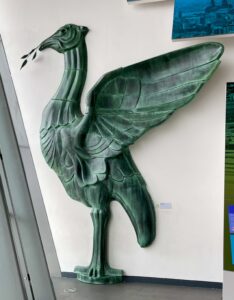
The Liver Building dominates this area, but if you’re a twitcher, you’ll be disappointed to discover that the Liver birds, the mascots of the city, that grace the two clock towers are not eagles or cormorants, which they appear to resemble. They are, in fact, mythical birds rather like a griffin or a phoenix. Originally they were bright but now the copper sheet metal has oxidised to green. They are called Bertie (looks over the city) and Bella (watching for returning sailors), each are 18ft high and have wing-spans of 24 ft.
And having wondered for years where the term Scouser comes from, it turns out to be the name given to Liverpudlians because they used to eat a lot of scouse, a type of meat and veg stew, a recipe that they took a fancy to and brought back from Scandinavia.
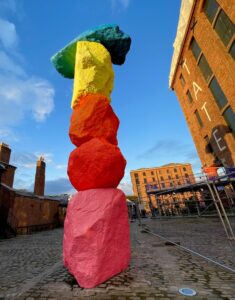
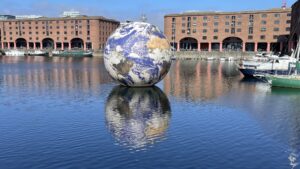
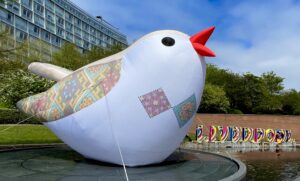
During our visit, Liverpool was gearing up to host the Eurovision Song Contest on behalf of the Ukraine. There’s a bit of a buzz about the place and a lots of people. It’s been a great visit, but time for a change of scene for us.
awesome 🙂
always so interesting to follow your blog & travels. having family history brought in to the mix brings home the tough life those before us had.
enjoyed your football counting and removal of unsavory items from the propeller – what a job !! well done Ian
Fascinating stuff! How exciting boating through Liverpool!
Another great blog – fascinating!
Fascinating update. Cheers – Tim