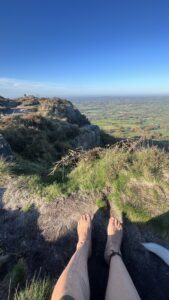
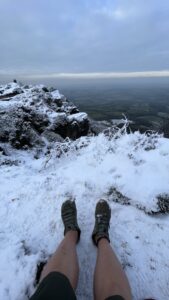
“Aren’t they cold?”
“Are you on a pilgrimage?”
“You’re a proper boatman!”
“Why…”
I’ve heard all these comments and more this year – the last one from Heather. This is the story of how I accidentally became a barefoot walker.
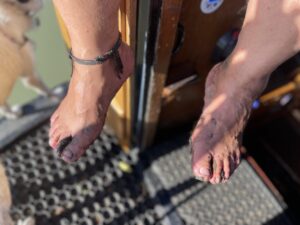
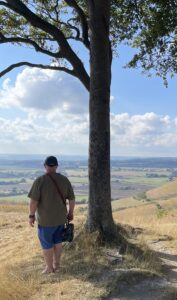
Living on the water for a long, dry summer probably helped. I’d stopped wearing anything on my feet inside the boat a few years ago. To make it easy, I had taken to slipping on flip flops when getting off the boat for locks or other boat related tasks. But flip flops can get in the way when climbing over lock gates or they fall off or slip at just the wrong moment, so I often took them off and went barefoot. Eventually, I stopped bothering with them at all.
As I started to spend more time barefoot and walk greater distances, I did notice that my feet, ankles and calves were getting much more of a workout and they let me know about it too! But they were also getting stronger, and the soles of my feet were becoming tougher. At the same time, I realised I was getting much less lower back and knee pain. I began going barefoot on longer walks, even hiking in the hills. I had unintentionally become a barefoot walker.
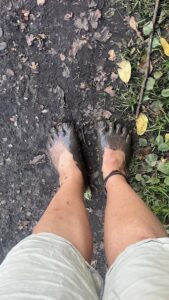
Little children run around in bare feet. But, as we get older, we are told to wear ever more supportive and restrictive footwear. Even though barefoot felt right, I wondered if going barefoot was wrong. So, I took to Google – and quickly discovered that there is a whole community of people out there who are going barefoot. There’s research that shows that many of the benefits I experienced are real. It shouldn’t be a surprise, take a step back and consider the fact that we evolved to walk bare foot. If you transition to barefoot walking gradually, your feet, ankles and legs can revert to working the way they were designed to. Your arches will return, your feet will become more supple, your ankles will strengthen. Your calf muscles, which have been shortened by years of raised and cushioned heels, will stretch to their natural length. The strain on your knees reduces as your whole foot acts more like the shock absorber it is supposed to be.
There are some purists who shun any form of footwear. That’s too extreme for me, but what can you do if you need to wear something on your feet, but “normal” footwear now feels too uncomfortable? This could be In urban settings where there is a greater risk of injury (or dog poop!), or when it gets too cold or wet? Even the most toughened feet don’t have much grip in the wet and it’s not much fun if they go numb because of the cold.
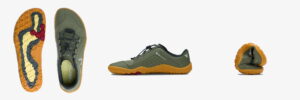
Well, there are a growing number of businesses that make barefoot shoes. Sounds like a contradiction but they give many of the benefits of being barefoot, but in shoes. Key features of barefoot shoes are a wide toebox, a zero drop heel, thin soles and flexibility.
Going barefoot means you are more in touch with your environment. Some advise that it is good for your mental health. You are certainly healthier and more aware of the changing seasons and temperature of the ground. You even notice more about the vegetation around you – especially if there’s brambles or hawthorn!