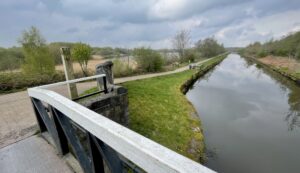
When we were young (that is BC – Before Children), we hired our first narrowboat from Burton upon Trent and cruised the Trent and Mersey Canal to Great Haywood before turning around and heading straight back. Since then, we have travelled most of the canals in the midlands and the south, but we’ve never headed further north then Astley Green on the Bridgewater Canal (where we once got iced in and had to smash our way home). So this week is the start of a new chapter, for the first time in quite a few years, we are on a new canal and it feels like we’ve moved from a country lane onto a dual carriageway! 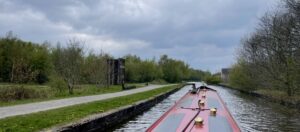 This is the Leeds and Liverpool Canal (L&L) and it’s a beauty. It’s deep and wide, built for big coal barges with reinforced edges to allow for bigger washes from the boats. We’ve been travelling along the Leigh Branch of the L&L canal heading towards Wigan, passing areas of outstanding beauty which are actually reclaimed slag heaps that have sunken and created beautiful flashes and wildlife reserves. This was the Wigan coalfield that had over thirty collieries operating during the 19th and 20th centuries.
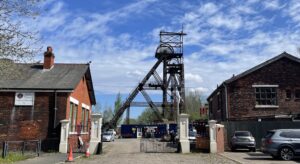
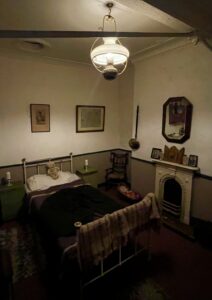
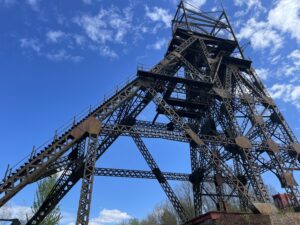
Last week, we visited the Lancashire Mining Museum at Astley Green Colliery (1908-1970). Most of the original buildings have been dismantled but No1 Engine House dominates the site and houses the largest surviving colliery winding engine of its type in Europe. It has four cylinders in twin tandem compound arrangement and can develop 3300 horsepower at 58 rpm. It’s now run on compressed air, and they operate it on published dates throughout the year. If you like engineering then this place is worth a visit as they also have 28 colliery locomotives, the largest collection of its type in the United Kingdom. There’s a replica miners’ cottage and opportunities to dress up for a photo shoot. The mine shaft was two and a half times higher than the Eiffel tower, that’s about half a mile deep. The under ground tunnels then stretched for over 3 miles out from the pit shaft.
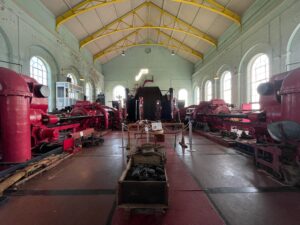
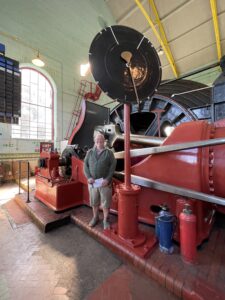
Since 1983 the museum has been run by volunteers of the Red Rose Steam Society, some of whom are retired miners and their wives. Many are now in their eighties (possibly nineties) and keen to tell you stories of their lives and of the mine. In 1984 striking miners from Yorkshire arrived at the gates to set up a picket line – unfortunately for them, the mine had been closed for 14 years and the retired Lancastrian miners, who were at the site that day doing safety checks, laughed at them and pointed out the lack of cables running from the Engine House to the head of the winding gear.
Walking back from the mine, we met an elderly gentleman standing on the canal bridge who was keen to reminisce about his life in the village. He pointed to the pub on the other side and said that in his youth the pub had been level with the canal, it now sits about 2 metres (6ft) below it. This amount of subsidence from the mining is obvious throughout this entire region, as the canal stands proud of the sunken landscape. Since the 1930s the canal has had embankments built up on either side with slag (waste from the mines) to keep it level and prevent it from breaching. This has happened to such an extent that two sets of original locks have been removed as the sides of the lower canal have been raised and the higher sections have dropped.
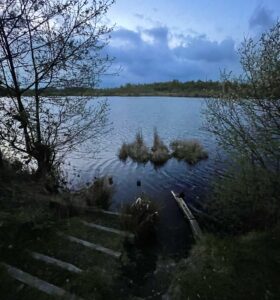
The Flashes at Wigan, lakes created by deep pits opening up, are now huge nature reserves and very popular with walkers, cyclists and twitchers (bird watchers). Spring is in the air with wildflowers unfurling on the banks and tiny ducklings scuttling along the edges of the water. The swans are nesting, and the weather just can’t seem to make its mind up!

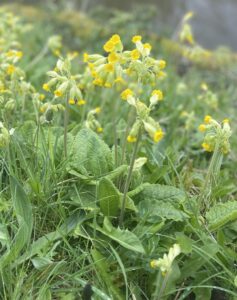
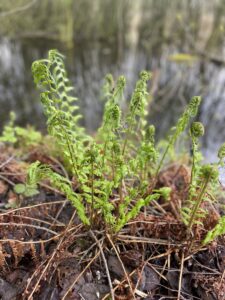

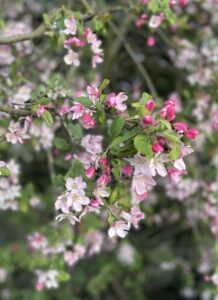
Thank you for your lovely blog . What beautiful spring flowers. Going at canal speed enables you to enjoy the landscape around you and get off to ‘smell the roses’ .
mmm love ❤️ roses- but the wild garlic is particularly pungent at the moment!!
Amazing engineering, hopefully the canal is not over one of the old mines, settlement could be a problem…